








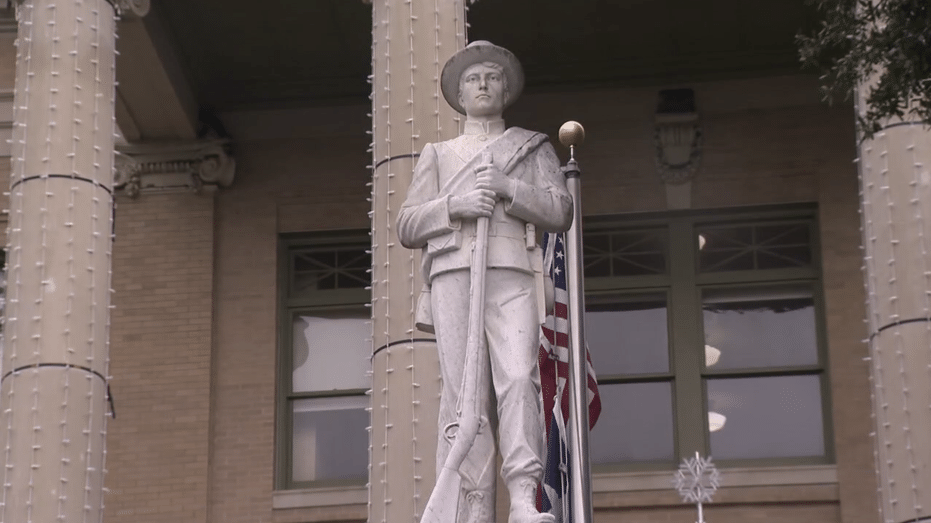
A renewed discussion surrounding a 110-year-old Confederate statue in Georgetown, Texas, has emerged as local residents petition newly elected Williamson County officials to reassess its presence outside the historic courthouse. The statue, erected in 1916 by the United Daughters of the Confederacy, has been a point of contention within the community, which remains divided over its significance and appropriateness in the town square.
Opponents of the statue argue that it commemorates an adversary of the United States on public property, while proponents believe it should remain as a testament to local history. The Sons of Confederate Veterans have received inquiries regarding the matter, but no official statement has been issued as of yet.
Jason Norwood, director of the advocacy group WilCo Patriots, voiced strong opposition to the statue, emphasizing that it represents an organization responsible for significant harm in American history. “There is a monument to an enemy of the United States that sits on federal property,” Norwood stated. He highlighted that this debate transcends political affiliations, framing it as an ethical concern rather than a partisan issue.
“This is an issue of ethics, right? If you can understand that this is abhorrent ethically, then is it right?” Norwood questioned, referring to the Confederacy’s role in perpetuating slavery and violence. He also criticized the use of taxpayer funds for the monument’s upkeep, pointing out the symbolism present in its design.
Concerns regarding representation have also been raised by community members. Peyton Brown, a student at Southwestern University, expressed doubts about the monument’s inclusivity, questioning who is represented by the word “our” inscribed on the statue. “This Confederate statue doesn’t represent everybody who lives here in Georgetown,” Brown remarked.
In contrast, supporters of the statue argue for its retention as an essential element of both local and national heritage. Axel Alba, a Georgetown resident, defended the monument’s presence, asserting that it is an integral part of history that should not be erased. “I’m not saying we should glorify it, but it is a part of history, and that needs to be there, and it needs to be taught,” Alba stated.
Opponents counter that historical context should be conveyed through educational channels such as textbooks and museums, rather than being prominently displayed in public spaces. As the debate continues, representatives of the Sons of Confederate Veterans have indicated that the matter has been referred to their Texas division, although a definitive comment has yet to be provided.