








The recent election may have concluded, but the journey towards holding Texas officials accountable is just beginning.
For the last two months, Kelci Jagge has faced challenges in enrolling her adopted son, Ruslan, in a public school in San Antonio. Ruslan, who has cerebral palsy and a seizure disorder, struggled to attend even a single full day of classes at East Central ISD. “He’s profoundly disabled,” Jagge explained. “He’s nonverbal, non-ambulatory, and G-tube fed. He just could not tolerate it. He would be screaming and they would call me to pick him up every day.”
Jagge and her husband adopted Ruslan from Ukraine in 2022. While he had a “really great” teacher, the family decided to pursue year-round homeschooling after realizing that conventional schooling could not provide the one-on-one attention he requires.
The introduction of Texas’ new $1 billion school voucher program has been a “huge blessing” for Jagge’s family. This initiative offers families up to $2,000 in public funds to cover homeschooling costs, which Jagge has used to purchase various educational tools, including interactive buzzers, jumbo crayons, and a $119.95 early literacy program featuring engaging books.
Jagge noted, “I wouldn’t have normally bought those buzzers myself because I questioned whether he would use them. But we have utilized them quite a bit. I could never have afforded those reading materials out of pocket.”
Through the Texas Education Freedom Accounts (TEFA) program, Jagge acquired materials like special scissors and large crayons designed for easy gripping. However, the future of this program is uncertain, especially after Democrats achieved significant victories in the recent election, winning every open statewide office and gaining a majority in the state House for the first time in over twenty years. Governor-elect Gina Hinojosa vowed to “work tirelessly to repair the damage of the Texas vouchers scam.”
Opponents of the voucher program argue that the state should invest more in public schools rather than subsidizing private or unregulated educational options that lack accountability. They contend that the program diverts hundreds of millions in state funds from struggling districts as students opt for vouchers to leave their neighborhood schools, which receive funding based on attendance.
Hinojosa has the authority to veto any funding for the program in the next state budget. Although she hasn’t indicated her intentions, lawmakers have already introduced bills aimed at fully repealing the program. This has left parents across Texas concerned about the ramifications for their children with disabilities, such as autism, dyslexia, and auditory processing disorders. Many parents express that the voucher funding has been “life-changing” for their children, countering claims that the program is a “scam.”
While many families already had their children in private schools or were homeschooling prior to this year, they noted that state funds allowed them to allocate resources for behavioral therapy, specialized tutoring, and sensory products, as well as educational materials.
Joy Smith, a mother from Roanoke, shared her experience, stating, “It’s making all the difference right now. I wouldn’t have been able to afford the curriculum or any of the manipulatives. Every therapy known to man my child has been through, and it was life-changing to not have to worry about where the funding would come from.”
Other families reported that the vouchers enabled them to send their children to private schools that focus on serving students with disabilities. Many are now uncertain about how to adjust their budgets for the next school year if funding ceases, fearing the potential consequences of policy reversal.
The TEFA program allows participating families with children in private schools to receive approximately $10,500 annually, while homeschoolers can access up to $2,000. Children with disabilities may qualify for up to $30,000, although few have received the maximum amount. According to the comptroller’s office, over 18,800 Texas students with disabilities are utilizing school vouchers this year, with at least 60% of participants being low-income and about 17% having disabilities. All eligible Texas children can apply, regardless of disability or income, though priority is given to those with qualifying disabilities from low-income families.
Jagge, a mother of six who also has two other children benefiting from the program, expressed concern that the program’s termination would severely limit her options for Ruslan’s education. “We don’t have much extra wiggle room to try different things for him,” she said. “I would use what we have. It would be really disappointing, but I would not try public school again. It does not work for him.”
As families react to Hinojosa’s victory, many are grappling with the possibility of losing the support that has proven beneficial for their children. Some parents recounted experiences of public schools failing to comply with federal special education laws, eroding their trust in the system. Others highlighted that their children faced significant learning challenges in traditional settings despite the best efforts of school staff.
Elizamae Dowd, a mother of three autistic children, shared that her 11-year-old daughter had been bullied at her previous public school, leading to frequent distress. After transferring to Oak Creek Academy, a private institution specializing in neurodivergent education, her daughter thrived. Dowd expressed her devastation at the thought of losing the voucher that has afforded her child this opportunity.
Governor-elect Hinojosa and Lt. Gov-elect Vikki Goodwin have yet to comment on the future of the voucher program, particularly regarding how they plan to support low-income parents and families with children who have disabilities if the program is repealed.
Following the election, several Texas Democratic lawmakers indicated their willingness to explore ways to sustain support for families benefitting from the program. Representative Diego Bernal, vice chair of the House Public Education Committee, commented that while the voucher program may face significant changes, the primary goal is to ensure all students receive high-quality services in traditional public schools. He emphasized the importance of maintaining support for families of students with disabilities if the existing program is abolished.
As known as Texas Education Freedom Accounts, the voucher program was established under state law passed last year. The ambitious efforts by Democrats to remove vouchers entirely may encounter hurdles, especially considering the need for legislative support from the Republican-majority Senate that initially advocated for the program.
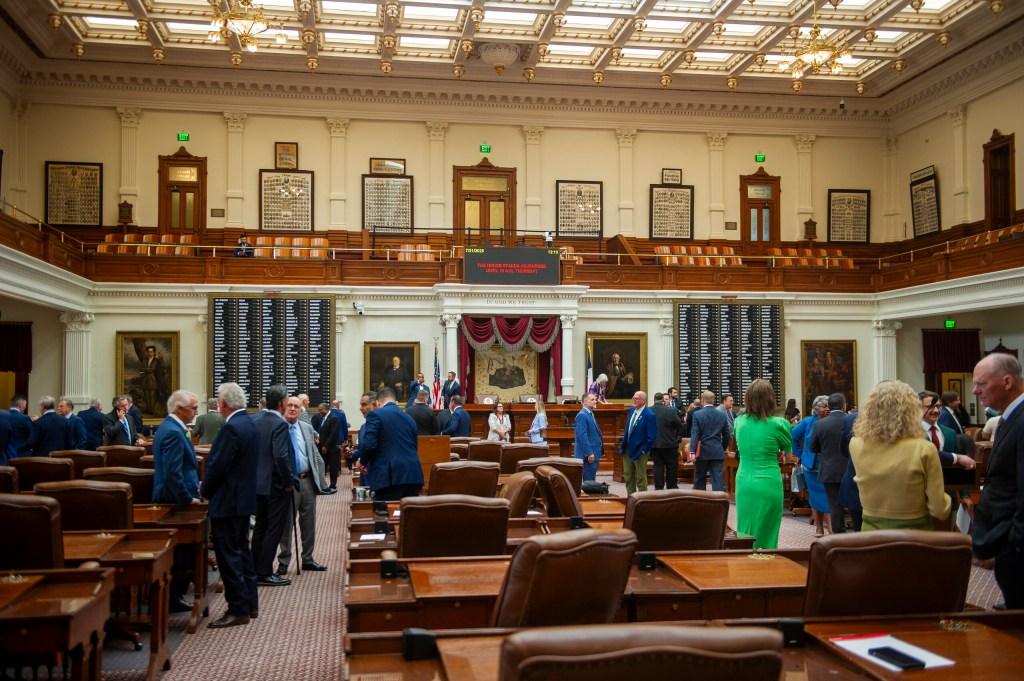
During the upcoming legislative session in January, lawmakers will need to decide how much funding, if any, to allocate to the program for the next two-year budget cycle. Hinojosa has line-item veto authority over the budget, allowing her to eliminate funding for the education savings accounts, with any veto overrides requiring a two-thirds majority in both the Texas House and Senate.
Outgoing Republican Comptroller Don Huffines previously urged lawmakers to significantly increase funding for the private school voucher program, aiming for over $2 billion. If the state also funded the thousands of students on the waitlist, the total could rise to approximately $4 billion over the next two years.
With Democrat Sarah Eckhardt set to oversee the program as the incoming chief financial officer, she recently announced an audit of the program, indicating her intent to scrutinize vouchers closely. Eckhardt has expressed her opposition to the program but acknowledged her responsibility to implement the law.
Currently, at least nine Democratic senators have sponsored a bill to repeal the program, while several House Democrats have introduced separate legislation aimed at terminating vouchers. Others have suggested reforms, including requiring private schools to adhere to federal special education laws for program eligibility.
Critics of the voucher system argue that Texas must prioritize funding for special education in public schools, which serve over 910,000 students with disabilities. Carrie Griffith, executive director of Our Schools Our Democracy, stated, “The next legislature will have the opportunity to fully fund special education so that all families can receive the services their children need, rather than diverting public funds to private entities.”
Representative John Bucy, who has proposed legislation to repeal the voucher program, described its implementation as detrimental to public schools, estimating that public schools will lose at least $227 million this school year due to students leaving for vouchers.
Bucy expressed interest in gathering feedback from families about the perceived benefits of the vouchers, indicating willingness to consider targeted solutions, especially for students with disabilities currently enrolled in the program.
Texas’ history of serving students with disabilities has been fraught with challenges. A 2018 investigation by the U.S. Department of Education revealed that the state unlawfully capped the percentage of students eligible for special education services, leading to some districts denying necessary support.
State leaders are urged to find ways to rebuild parental trust in public schools and create pathways for students who have transitioned to private options to return and thrive. Brenda Rangel, assistant dean at Rice University’s Center for Education, emphasized that withdrawing vouchers could be disheartening for families, particularly those in low-income rural areas unable to afford private education.
Jennifer Keese, a mother of two autistic children, shared her son’s struggles with sensory sensitivities in public school, which caused significant distress. With the help of the voucher, she was able to enroll him in a private school, allowing her to allocate funds for additional support for her younger son. As the head of a microschool specializing in autism education, she noted that many students have shown marked improvement thanks to the funding.
While Keese