







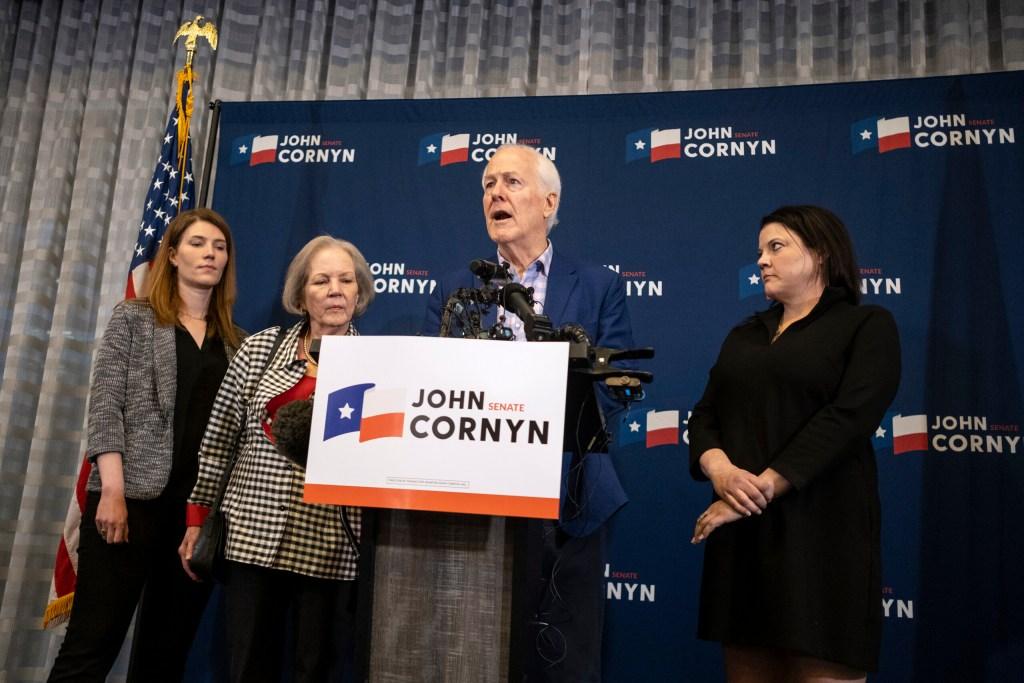
The election cycle may have concluded, but the endeavor to hold Texas officials accountable is just beginning. The spotlight now falls on the contentious judicial nomination process, particularly as Senator John Cornyn takes a firm stance against a late-stage attempt by the Trump administration to fill a judicial vacancy in Texas.
Senator Cornyn is opposing the nomination of Elliot Gaiser, who serves as the head of the Justice Department’s Office of Legal Counsel, to become a U.S. district judge for the Northern District of Texas. In an interview, Cornyn emphasized that Gaiser does not hail from Texas and has not undergone the necessary vetting process, leading him to refrain from returning his “blue slip,” a procedural step that allows the Judiciary Committee to advance nominees from their home states.
Previously serving as Ohio’s solicitor general, Gaiser has a background in legal matters primarily rooted in Ohio and Washington, D.C. He was also part of Donald Trump’s 2020 presidential campaign. Cornyn expressed his reservations, stating, “He’s not from Texas. He hasn’t been vetted. And this is a lifetime job, and there’s better qualified people to hold that job.”
With time running out for Republicans to confirm nominees before the Democratic majority takes over the Senate in January, the urgency of the situation is palpable. The Northern District of Texas, based in Dallas and responsible for overseeing 100 counties, currently faces two judicial vacancies. This district has been a significant platform for conservative lawyers, with seven of its ten active judges having been appointed by Trump.
This judicial vacancy arose following Judge Jane Boyle’s announcement in late August that she would assume senior status effective October 1. However, the Senate was not in session throughout October and the first week of November, complicating the confirmation process.
Gaiser has an impressive track record, having clerked for Supreme Court Justice Samuel Alito and accumulated extensive experience in conservative legal circles. He also contributed to Senator Ted Cruz’s 2016 presidential campaign. Last year, Gaiser was confirmed for his role at the Justice Department through a party-line vote, with Cornyn and Cruz both in favor.
During a recent Senate Judiciary Committee hearing that featured seven judicial nominees, including Texas Supreme Court Justice James Sullivan, Gaiser was notably absent, likely due to Cornyn’s lack of support. Sullivan, who recently lost his election bid, has been nominated for a federal judgeship in the Western District of Texas.
Senator Cornyn has expressed his desire to see the vacancy filled and has recommended Steve Fahey, a partner at Kirkland and Ellis in Dallas and a former chief of the criminal division in the Northern District’s U.S. Attorney’s Office. Cornyn indicated that the White House has shown interest in Fahey.
Feeling regret for Gaiser’s predicament, Cornyn remarked that Gaiser has been “used basically as a pawn in this process,” while also asserting his constitutional duty to provide advice and consent on nominations. “It’s hard to provide advice and consent when there’s zero consultation, which happened in that case,” he added.
Traditionally, Cornyn and Cruz collaborate on judicial nominations through their bipartisan federal judicial evaluation committee. However, Cornyn noted that Gaiser’s nomination did not follow the usual protocol. “The White House is doing this even after Senator Cruz and I sent them a number of well-qualified nominees that they could have sent down here and avoided this,” he stated.
The situation surrounding Gaiser exemplifies the ongoing tensions between Cornyn and the White House, particularly following Cornyn’s recent primary runoff loss after Trump endorsed his opponent, Attorney General Ken Paxton. Cornyn has previously leveraged his position to secure assurances regarding a controversial settlement fund and to unlock funding for global HIV/AIDS prevention efforts.
Conversely, Senator Cruz has expressed support for Gaiser, having met with him and actively sought to facilitate his confirmation. Gaiser’s committee questionnaire reveals that Cruz’s office reached out regarding the vacancy shortly after the election, while discussions with Cornyn’s office occurred shortly thereafter, coinciding with Gaiser’s consideration for a federal judgeship.
Trump officially nominated Gaiser on November 9, with the nomination sent to the Senate a week later. In a statement, Cruz described Gaiser as “exceptionally well qualified,” voicing concerns over the limited timeframe available for a new nominee to navigate the vetting process, which could hinder any future appointments once Democrats assume control in January. “Gaiser is also the only nominee who could actually be confirmed by the end of the year,” Cruz highlighted, noting Gaiser’s completed FBI background check as an asset.
Without Cornyn’s blue slip, however, Gaiser’s nomination remains stalled. During Sullivan’s nomination hearing, Cornyn commended the Austin native, emphasizing his strong ties to Texas and previous vetting by the federal judicial evaluation committee.
Once the Democratic majority is sworn in, Senator-elect James Talarico will also possess a blue slip. This development means that any judicial nominee from either party will require approval from both Talarico and Cruz, complicating future nominations.