








Yoichi’s impressive pedigree is matched only by the excellence of its cuisine.
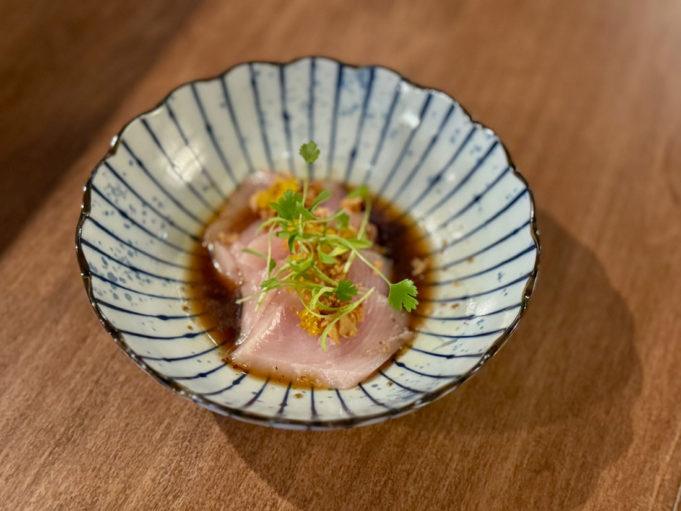
The delicate hamachi, or yellowtail, at Yoichi, was a delightful introduction to the evening. This mild fish was elegantly presented in a scalloped bowl, accompanied by a zesty mustard-garlic ponzu sauce and topped with crunchy onion chips and a hint of Thai chili.
Located at 711 W Magnolia Ave in Fort Worth, Yoichi Omakase and Handroll Bar operates from 4:30 PM to 9:30 PM Sunday through Thursday, and 4:30 PM to 10:30 PM on Friday and Saturday. The restaurant, which translates to “night market” in Japanese, softly opened its doors in early October, taking over the former Shinjuku site. It primarily focuses on the omakase and handroll experience, familiar to fans of the beloved Hatsuyuki in the West 7th corridor.
Chef Ian Kim, who skillfully wields his knife with precision, is joined by partners Chef Won Suhr, a graduate of the Tsuji Culinary Institute in Osaka, and Chef Mark Kim, who brings two decades of sushi-making expertise. Each has built a solid reputation working in some of Dallas’ top sushi establishments, including Nobu, Uchi, Crown Block, and Sushi by Scratch. Together, they have enriched Fort Worth’s dining landscape with their culinary talents.
The appetizers offer a range of options, from traditional miso soup and shishito peppers to edamame. However, the wasabi-flavored baby octopus stands out, delivering a robust flavor without overwhelming the palate.
In Japanese culture, it is considered bad luck to pour your own sake, so my dining companion and I took turns serving each other from a chilled, unfiltered bottle as we savored an array of crudo—raw fish or seafood simply dressed with citrus, vinegar, or olive oil.
The subtly sweet rice-based sake complemented the Bluefin tuna crudo beautifully, which was enhanced by a vinegary coconut zu and garnished with coconut jelly, honeydew squares, and mint leaves, adding a refreshing touch. The silky salmon crudo, served with a crispy rice cracker known as bubu arare, paired wonderfully with a blend of white truffle oil and sesame miso sauce. Additionally, the sweet-and-sour onion pear zu paired nicely with the relish and crispy kataifi, providing an exciting contrast to the slices of snapper crudo.
The restaurant features a paper menu alongside wooden blocks on the brick wall displaying daily specials. The friendly staff is always ready to assist with any questions. My companion and I chose two specials for our nigiri: the salmon toro, with its rich, velvety texture and subtle sweetness, and the sawara, a Japanese Spanish mackerel, lightly torched and brushed with brown butter garlic sauce. We both agreed that this was the standout bite of the evening.
From the regular menu, we selected the hotate (Hokkaido scallop), which offered a charred, delectable flavor, and the botan ebi (sweet shrimp), which lived up to its name. A unique aspect of the dish was the flash-fried shrimp head. Chef Won suggested biting into the underside of the fused head and thorax to enjoy the meat, encouraging diners to embrace the entire experience.
Shifting to the handrolls, we opted for a spicy tuna and a crab roll, both generously filled with seafood and rice, making them a great value. There are also pre-chosen options available that include three to five rolls at slightly reduced prices compared to ordering a la carte. Additional selections include shrimp katsu, unagi, and negi hama, along with vegetarian options such as avocado, eggplant, and seasoned Japanese gourd shaving. Adventurous diners can indulge in an omakase experience, featuring the chef’s selection of the season’s finest dishes for $85.
The restaurant’s logo, an owl with one eye hand-drawn by Chef Ian, symbolizes a collaborative growth between Yoichi and the surrounding community, representing the convergence of experiences and stories that form a deeper co
ection.
Yoichi Omakase and Handroll Bar offers a diverse menu with prices such as:
- Tuna $18
- Hamachi $16
- Salmon $16
- Spicy tuna roll $6.75
- Crab roll $6
- Fatty salmon belly roll $5.50
The coconut zu and gelled coconut cubes added a delightful sweetness to the Bluefin tuna crudo, while the salmon crudo was a smooth, luxurious bite, particularly when paired with the accompanying sauce.