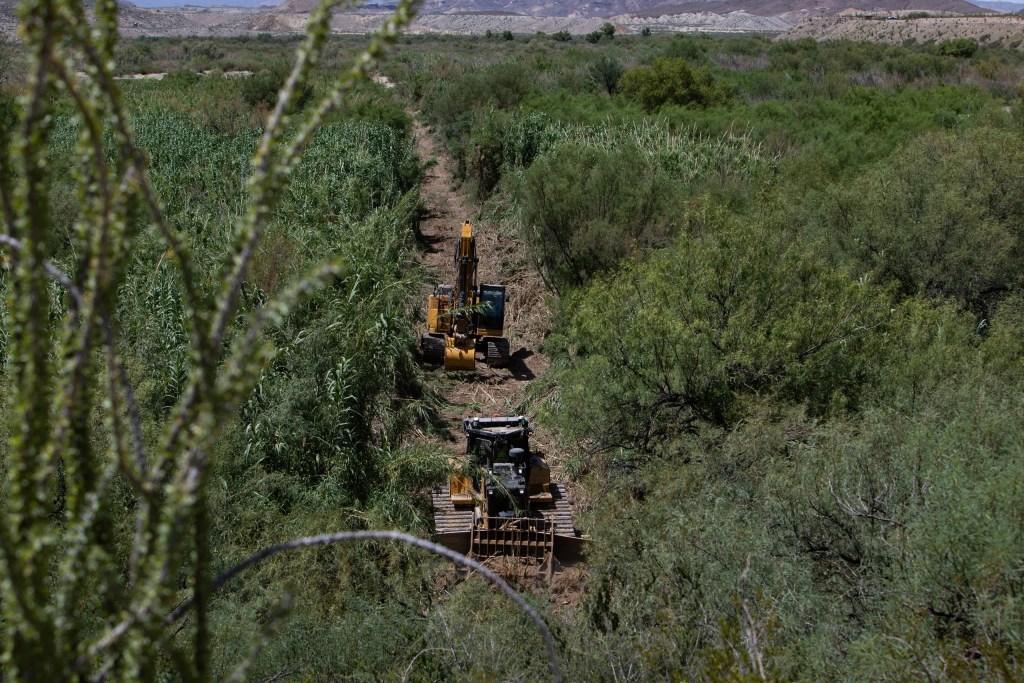


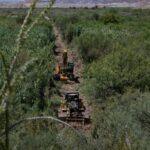



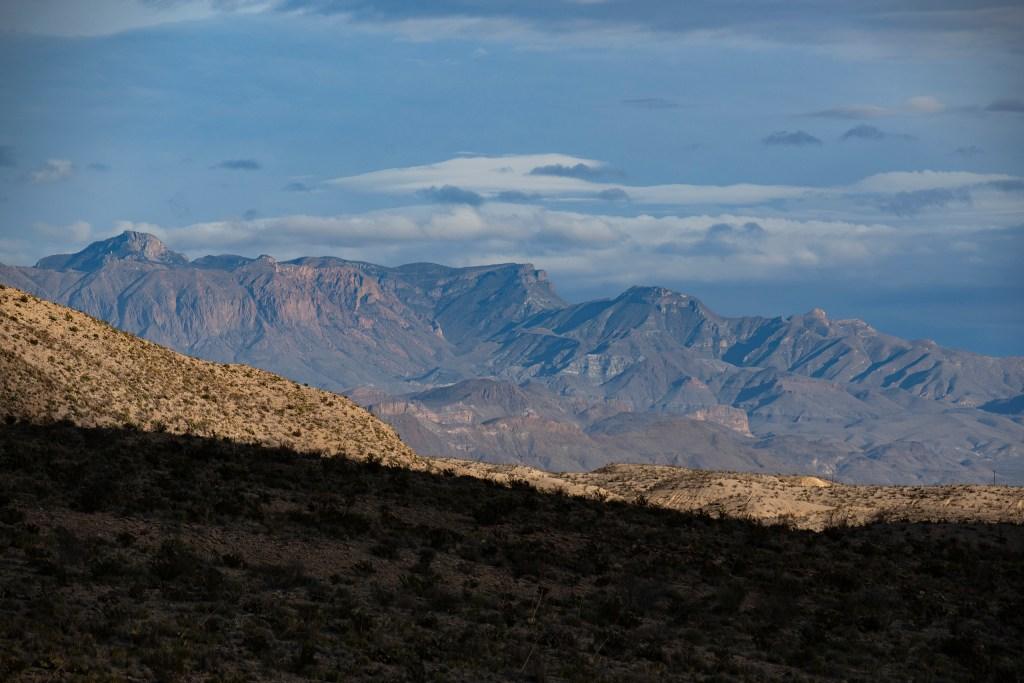
In February, the Trump administration made a significant move by waiving more than two dozen environmental regulations to facilitate the construction of a 150-mile border barrier across West Texas. This project would impact areas such as Big Bend National Park and the adjacent state park, both known for their rugged terrain and stunning canyons along the Rio Grande.
As news of the planned 30-foot-high barrier to prevent illegal crossings circulated, opposition swiftly emerged from individuals and officials across the political spectrum. Isaac Saul, a political newsletter writer and resident of Brewster County, which encompasses Big Bend, described the idea of a border wall in this region as “absurd, wasteful, and counterproductive,” emphasizing that it is widely despised by locals and visitors alike.
A coalition of sheriffs from Brewster, Culberson, Hudspeth, Presidio, and Terrell counties, representing both Democratic and Republican perspectives, issued an open letter denouncing the wall. They argued that their extensive experience with the local terrain leads them to believe that a continuous border wall would not be the most effective or strategic means of enhancing border security in the area.
Local government officials in places like Alpine, along with those from Presidio and Hudspeth counties, have adopted resolutions opposing the wall, reflecting a broad consensus against the project.
Following this backlash, the Trump administration seemingly altered its course. As of April 2, a map on the U.S. Customs and Border Protection (CBP) website no longer shows plans for a border wall extending from the state park to the Amistad National Recreation Area in Del Rio.
A representative from the Border Patrol’s Big Bend Sector informed Marfa Public Radio that there are currently “no plans for border wall construction” in the state park adjacent to Big Bend National Park.
While no official announcements have been made by the Trump administration regarding its final plans, the CBP website indicates a shift towards implementing “virtual wall” technologies in the mountainous region, designed to alert Border Patrol agents to illegal crossings.
The permanence of these updated plans remains uncertain, as the map’s details have fluctuated in recent weeks.
Residents and advocates have expressed relief that their efforts appear to have stalled the proposed border barrier through the state park, yet they maintain that the battle is not over. Anna Claire, a 29-year-old photographer living near Terlingua, who spearheaded an online petition garnering over 100,000 signatures against the barrier, stated, “I don’t consider this a win yet because there’s still a lot of unanswered questions.” She emphasized that true victory would mean no border wall at all, arguing that the foundation for the wall is based on a non-existent crisis, a claim unsupported by data.
Documents obtained by Inside Climate News reveal that the Border Patrol has been seeking access to Big Bend Ranch and other nearby state parks for the purpose of preparing for border barrier construction. Correspondence sent from the Border Patrol to the Texas Parks and Wildlife Department included detailed maps outlining proposed locations for the border barrier within Big Bend Ranch, Seminole Canyon, and Bentsen-Rio Grande Valley state parks.
The Border Patrol’s Big Bend Sector, which covers 517 miles of the nearly 2,000-mile U.S.-Mexico border, has traditionally been the least active of the nine sectors. In fiscal year 2025, the sector recorded 3,096 apprehensions, representing a mere 1.3% of the total 237,538 apprehensions documented across the entire U.S.-Mexico border.
Last year, Congress allocated $46.5 billion for the Trump administration to build border barriers and enhance detection technologies along the extensive U.S.-Mexico border. While construction has commenced in areas of California, Arizona, and New Mexico, Texas presents unique challenges due to the prevalence of privately owned land along the border, leading to significant opposition and obstacles for the administration.
Some landowners along the river have received letters from the government threatening eminent domain proceedings if they do not voluntarily grant access to their properties. Luis Armendariz, an 83-year-old owner of approximately 1,000 acres of farmland and a hardware store in Presidio, located around 100 miles upstream from Big Bend, reported receiving one of these letters. He expressed concern about the necessity of a barrier in the area, fearing that it could obstruct his access to irrigation water from the river. “If the wall is going to get in my way, I don’t want it,” he stated.