








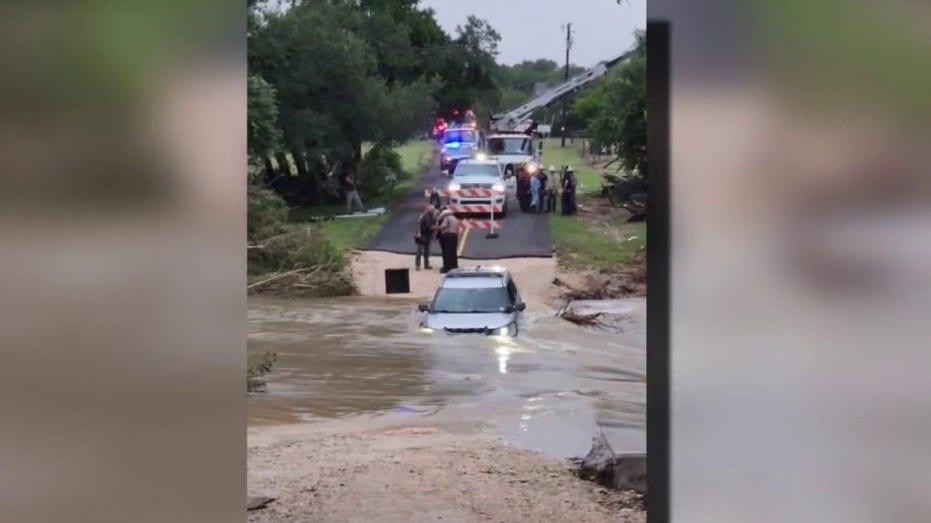
As Texans prepare for potential flash flooding this week, the Travis County Commissioners are making strides toward implementing flood warning sirens. This initiative follows the tragic flooding incident that devastated the Sandy Creek neighborhood in July of last year.
Residents and county officials have encountered significant disagreements regarding the flood mitigation technologies to be adopted. Many survivors advocate for the River Sentry flood warning system, while the county emphasizes the need for a siren network that can effectively communicate with stream gauges.
Brandy Gerstner, a Sandy Creek resident, reflects on the day her life changed irreversibly. “It was an absolutely beautiful place. And in a matter of hours, everything we owned was wiped off the planet,” she recalled, highlighting the emotional toll of losing her home and belongings during the catastrophic floods.
The floods that occurred in July 2025 claimed over 100 lives in the Hill Country, including more than a dozen in the Austin area. Gerstner described the devastation: “We lost three homes, five cars, our bees, our business, our livestock. We lost everything and we just kind of got left with this flat piece of earth.”
In light of these events, the county has provided updates on Senate Bill 3, designed to enhance Texas’ readiness for future flooding. This legislation mandates the installation, maintenance, and operation of an outdoor warning system, a measure Travis County has not previously undertaken.
Chuck Brotherton, representative of Travis County Emergency Services, noted, “I would remind the court that this is something that Travis County has not done in the past. We have not had a county-wide flood monitoring and alert system in place.” The county has enlisted a contractor to develop a project plan, which is expected to be submitted to the Texas Water Development Board by year-end.
Additionally, a pilot project is underway to assess the necessary technology for flood monitoring and alerting, as outlined in Senate Bill 3. Brotherton envisions a comprehensive stream gauge network that can be remotely monitored and linked to sirens that activate automatically during emergencies.
To facilitate this, Travis County is collaborating with OmniWarn to establish a pilot warning system across three locations: Sandy Creek, Maha Creek, and Onion Creek. Similar systems were previously installed in Kerr County ahead of the summer flooding.
However, some survivors are expressing dissatisfaction with the proposed notification system. Gerstner voiced concerns about the distance of the siren tower, stating, “Sandy Creek, in the entirety of the community, is a very spread-out community. There is no way in the middle of a flood that you’re going to hear that siren.”
Members of the Sandy Creek Alliance, formed in response to the flooding, echoed these worries. They fear that the sirens may not be loud enough to alert residents during critical situations. Resident Auburn Gallagher emphasized the challenges posed by the community’s spread, mentioning, “A stream gauge measures the water where the gauge sits, not where people live, and a community as spread out as Sandy Creek, that distance matters. I’m more than 2,000 feet from the projected site; I will never hear that siren.”
While residents advocate for the River Sentry technology, the county maintains that any siren system must be compatible with the stream gauges. Additionally, the components of the alerting system need to be positioned out of floodplains, a requirement that the River Sentry does not meet, rendering it non-compliant with Senate Bill 3 guidelines. The final selection of the warning system has yet to be determined.