








The election may have concluded, but the imperative to hold Texas officials accountable has just begun. A commitment to pursuing the truth is essential.
Clayton Tucker, who is set to become Texas’ next agriculture commissioner, aims to reshape perceptions of his department’s potential. He envisions the agency as a guardian of both the populace and the land.
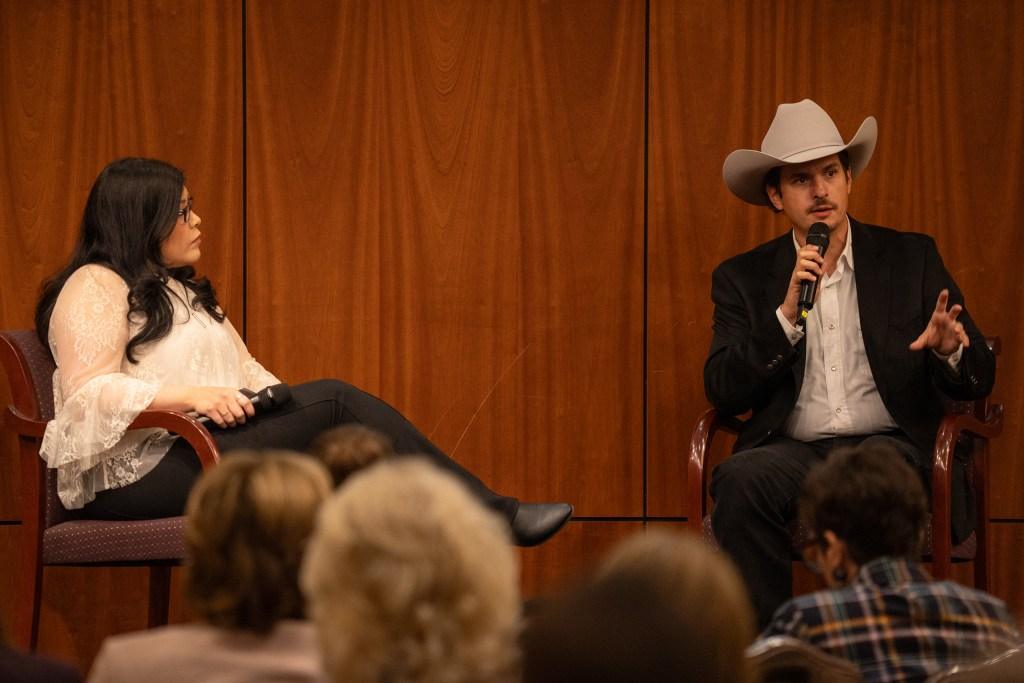
During his address at The Texas Tribune’s biennial rural symposium in Abilene, Tucker expressed concern over the plight of rural America, stating, “Rural America is under attack. Rural America is being chipped away.” He highlighted the deterioration of rural healthcare as symptomatic of a broader issue.
Tucker is among a group of Democrats who secured statewide positions in November, marking the onset of a new governance era in Texas. He will take over from Sid Miller, a conservative figure whose notoriety primarily stems from his cultural comments rather than agricultural policies.
A fifth-generation Texan and rancher from Lampasas, Tucker is committed to enhancing healthcare access in rural regions and aims to reopen closed facilities. He underscored the need for integrated mental health care, arguing that physical and mental health should not be treated as separate entities.
He also emphasized that the future of Texas agriculture hinges on attracting younger generations to the field. Noting that the average American farmer is now 59 years old, Tucker warned that the state has only about a decade to implement strategies that encourage youth to engage in agriculture and manage family farms.
For Tucker, this means restoring financial viability to farming and ranching. “It’s a real crisis. We are on the precipice of a major collapse in our farm system if we don’t get this right,” he remarked.
He expressed that certain segments of the agricultural sector could benefit from transitioning to regenerative practices, which prioritize soil health and the sustainable productivity of farmland.
On his first day in office, Tucker intends to prioritize transparency regarding the environmental effects of large-scale projects such as data centers. He advocates for environmental impact studies that explicitly outline water consumption and electricity usage by these facilities.
Tucker voiced concerns about allowing companies to conduct their own environmental assessments unchallenged. “I don’t want this to be us trusting Big Tobacco’s research on nicotine kind of situation,” he stated.
He suggested that collaborating with lawmakers, including the governor-elect and lieutenant governor-elect, could lead to the establishment of effective regulations or even a moratorium on specific developments.
Another crucial element of his strategy is bolstering the market for locally produced food. Tucker proposed policies that mandate food served in Texas public schools be sourced from Texas farmers and ranchers and processed within the state.
“I’m a Catholic, and I honest to God feel that allowing kids to be hungry in the state of Texas—a state as rich, prosperous, and agriculturally viable as ours—the fact that there are hungry kids here is a sin,” he remarked.
Tucker aims to eradicate childhood hunger over the next four years and develop systems that encourage purchasing from Texas farms and ranches, including creating designated venues for locally produced goods.
As he prepares to assume his new role, Tucker revealed plans to establish a transition council representing various facets of Texas agriculture and the state’s food systems. He is set to announce details about this transition team soon and has not indicated whether he will retain Todd Smith, one of Miller’s key aides. Smith had previously pleaded guilty to commercial bribery related to a hemp licensing scheme in 2024.