








Subscribe to The Brief, the daily newsletter from The Texas Tribune, designed to keep readers informed on the most crucial Texas news.
To enhance accessibility, audio recordings are automated. The content has been crafted and reviewed by human editors. Feedback on our AI policy is always welcome.
In response to the tragic floods that occurred on July 4, Texas officials are making significant changes to camp oversight. This includes a proposal to dramatically increase annual licensing fees for camp operators while also reducing the number of camp representatives on the advisory committee that guides industry regulations.
This past Tuesday, the Texas Department of State Health Services announced a series of new regulations slated to take effect next year, which include increased licensing fees determined by the size and type of camps. Currently, the initial licensing fee stands at $250 for day camps and $750 for residential camps, such as those for overnight summer stays. The annual renewal fees range from $52 to $155 for day camps and from $103 to $464 for residential camps.
Under the proposed changes, the start-up licensing fee for a day camp with a maximum of 99 campers would rise to $950, while those accommodating 5,000 or more could see fees soar to $3,500. For residential youth camps, the initial licensing fee would escalate to $2,150 for camps with 99 or fewer campers and could reach up to $21,000 for camps hosting 10,000 or more. Annual renewal fees would vary significantly, ranging from $750 to $19,500 based on camp size and type.
Dan Neal, a representative of the Camping Association of Mutual Progress and owner of Camp Doublecreek in Georgetown, expressed that the fee increase will be a considerable adjustment for many. Nevertheless, he noted that most camp owners understand the necessity of these increases, which aim to enable the Department of State Health Services to hire more inspectors and revitalize the youth camp program.
“We are optimistic that once the program is fully established and running smoothly for several years, we can revisit the fee structures and potentially lower them,” Neal remarked.
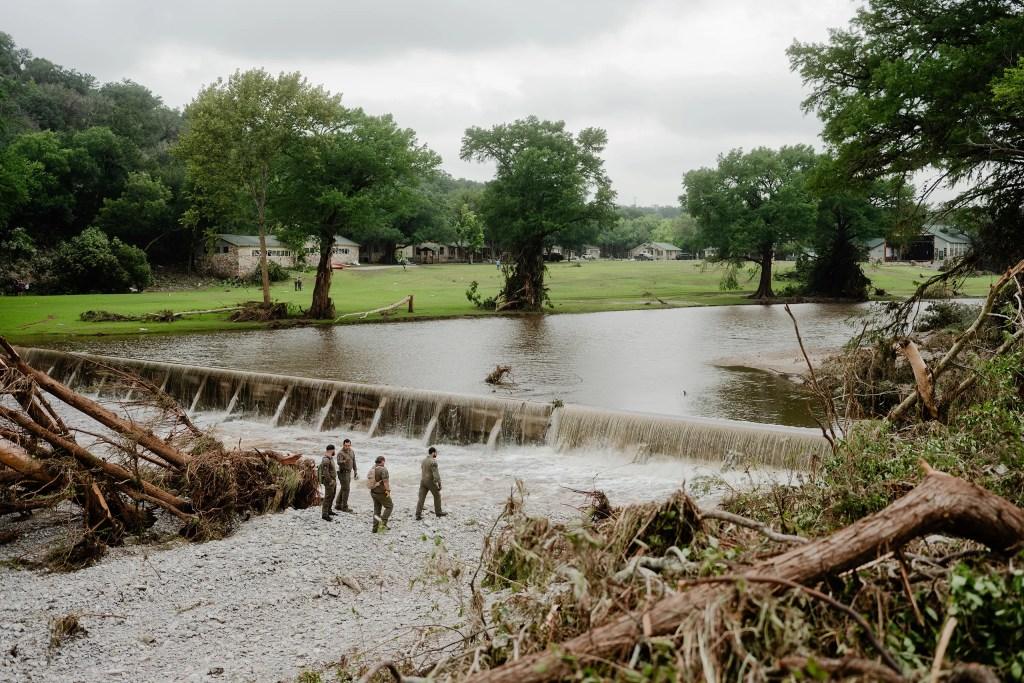
Last month, during a meeting to discuss the implementation of two camp safety bills prompted by the devastating July 4 floods, officials hinted at these extensive changes. The floods claimed at least 137 lives, including 27 campers and counselors from Camp Mystic.
During that meeting, as well as in a survey conducted by the state in the fall, numerous camp operators voiced concerns that the new licensing fees and requirements could jeopardize the livelihoods of many small nonprofit camps. A response from Boxwoods camp in Livingston highlighted that the increased costs resulting from this legislation should not be passed along to the camps.
In addition to the fee adjustments, there is a proposed overhaul of the Youth Camp Advisory Committee, which convenes twice a year to request rule modifications from the state health agency and lawmakers during legislative sessions. Historically, this committee has been composed primarily of camp leaders. While they cannot create rules, their influence can significantly affect the industry. Britt Eastland from Camp Mystic currently serves as a member of this committee.
The proposed changes to the advisory committee would reduce the number of camp operators from seven to four, replacing them with specialized positions, including a parent of a camper from the past two years, an expert in camp activities, and a professional in child abuse, psychology, or psychiatry.
Neal, who chairs the state’s camp advisory committee, stated that the new structure would offer a balanced representation of various youth camp types. “We welcome the inclusion of a camper parent, a safety expert, and a youth mental health expert. Their insights will be invaluable in creating a more comprehensive committee,” he said. “The Youth Camp Advisory Committee will be pivotal in the upcoming years as we implement the provisions of Heaven’s 27 and the Youth CAMPER Act.”
Other proposed regulations include restrictions on locating cabins within a Federal Emergency Management Agency-designated 100-year floodplain unless they are positioned on still bodies of water or are not connected to watercourses, with additional stipulations for cabin placement and safety measures.
Moreover, youth camp operators would be mandated to provide and maintain broadband internet services through fiber-optic facilities, along with a secondary internet connection. This requirement has raised concerns among camp operators in remote areas, as highlighted by a response from Forest Glen Camps in Huntsville, where the estimated cost for fiber-optic installation was quoted at a staggering $1.7 million, rendering it financially unfeasible.
Stakeholders, including camps, are encouraged to submit their feedback on these proposed rules by December 19.
Terri Langford contributed to this report.
Disclosure: AT&T has financially supported The Texas Tribune, a nonprofit, nonpartisan news organization funded partly by donations from members, foundations, and corporate sponsors. Financial supporters do not influence the Tribune’s journalism. A complete list of supporters can be found here.
Learn more about The Texas Tribune’s policies, including the partnership with The Trust Project for increased transparency in news reporting.
You have read this article this month and have unlimited access to articles since there is no paywall.
Texans deserve accurate information. Support our reporting efforts.
Independent reporting in Texas relies on your support. The Texas Tribune provides fact-based journalism for Texans, by Texans. Our members, who contribute financially, help sustain our work. Will you support our nonprofit newsroom with a donation of any amount?
Support Independent Texas News. Become a member. Join today.
Independent reporting in Texas relies on your support. The Texas Tribune provides fact-based journalism for Texans, by Texans. Our members, who contribute financially, enable our work. Will you support our nonprofit newsroom with a donation of any amount?
$18 $20 $25 Other Donate Now
Tagged: Texas Legislature, Stephen Simpson, Mental Health Reporter, stephen.simpson@texastribune.org
Stephen Simpson is the mental health reporter based in Austin, focusing on behavioral health in schools, treatment within the judicial system, substance abuse, and the state mental health framework.
Terri Langford, Health and Human Services Reporter, terri.langford@texastribune.org
Terri Langford serves as the health services reporter at the Tribune, bringing years of experience from her work at various media outlets.