








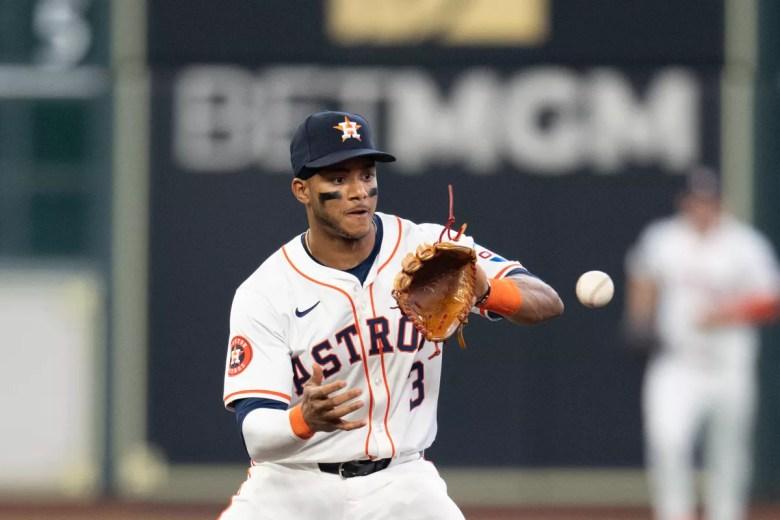
In the realm of sports, mediocrity stands as a formidable adversary for franchises, often relegating them to a state of perpetual disappointment. For organizations and their supporters alike, being caught in the limbo between contention and irrelevance can be exasperating. The Houston Astros find themselves teetering on this precarious edge, and the upcoming winter may not provide the answers they seek.
General Manager Dana Brown faces the daunting task of navigating an aging and incomplete roster, characterized by both congestion in certain areas and glaring deficiencies in others. The team’s minor league system has been notably depleted, a consequence of years spent leveraging its assets to enhance the major league lineup and facilitate impactful trades.
While a playoff absence might prompt thoughts of a significant overhaul, the situation is more intricate. The Astros still possess key players in their prime, alongside a cadre of promising young talent poised to enter their peak years. Owner Jim Crane is hesitant to dismantle a lineup he believes can maintain competitiveness, a conviction he has expressed consistently during his tenure.
So, what options lie ahead for Brown? There are several paths to consider.
Implement Minimal Strategic Adjustments
Despite Crane’s commitment to winning and his willingness to invest financially in recent seasons—often pushing against the luxury tax threshold—only a handful of teams are willing to exceed these limits due to the substantial costs involved. Consequently, it seems likely that the Astros will adopt a cautious approach this winter.
Anticipate modest trades involving roster players like Jake Meyers, Christian Walker, or Isaac Paredes, coupled with a few signings aimed at strengthening the pitching staff. Major acquisitions are unlikely. Currently, Meyers stands out as the most attractive trade asset the team might be willing to part with, which speaks volumes about the state of their minor league system.
While free agency may yield some reliable additions, any deals resembling Dylan Cease’s contract are off the table. In essence, Framber Valdez is not expected to receive a competitive offer from Brown, and the team is unlikely to distribute $200 million contracts to any player.
The outcome of this conservative strategy, combined with hopes for the return of injured players, may lead to yet another lackluster season with a slim chance of playoff contention. With potential labor disputes on the horizon and fresh draft opportunities emerging, this could be another transitional phase for a franchise facing an uncertain future.
Consider a Bold All-In Approach
Given the advancing ages of stars like Carlos Correa and Jose Altuve, the Astros might consider making substantial moves this offseason to seize one final opportunity for a championship while these key players remain effective.
This approach would likely entail further depleting their limited minor league assets and potentially trading significant players such as Yainer Diaz or even Jeremy Peña to acquire high-profile talent, both to enhance their pitching depth and to inject some much-needed offensive firepower into a lackluster lineup. However, the likelihood of Crane authorizing the trade of young stars for a last shot at glory seems slim, particularly as it would almost certainly push the team over the luxury tax threshold.
Many fans might advocate for this aggressive strategy, prioritizing victory over financial considerations. While such a gamble proved successful in the past, it was largely due to the contributions of homegrown talents from those championship teams. Additionally, there were several shrewd, low-profile acquisitions that bolstered the roster—like Diaz, who was included as a secondary piece in a relief pitcher trade.
While an adventurous offseason could be thrilling, it offers no guarantees of success—just ask the New York Mets. In fact, it could leave the Astros in a worse position the following season than if they chose to maintain the status quo.
Embrace a Complete Rebuild
The idea of a full-scale rebuild may evoke painful memories for Astros fans. When Crane took ownership of the team, the experience was jarring, with moments when local viewership reached a dismal zero. Despite the vibrant baseball culture in Houston today, the 2011 season, in which the team managed only 56 wins, saw a stark lack of interest.
It is difficult to envision the Astros—transformed by 15 years of success—selling off their best players to rejuvenate their farm system and start anew. The current talent pool far exceeds that of the 2011 squad led by Hunter Pence and Carlos Lee. Although a few strategic moves could elevate their minor league system to among the best in baseball, such an outcome seems unlikely and potentially counterproductive.
History teaches us that patience is crucial, especially in baseball, where even the most talented teams can falter while underdogs succeed. The recent successes of the Los Angeles Dodgers complicate this narrative, but unless the organization is prepared to endure another series of 100-loss seasons in hopes of ushering in a new golden era for Houston baseball—without any guarantees in an ever-evolving MLB landscape—it may be wise to avoid courting misfortune.