






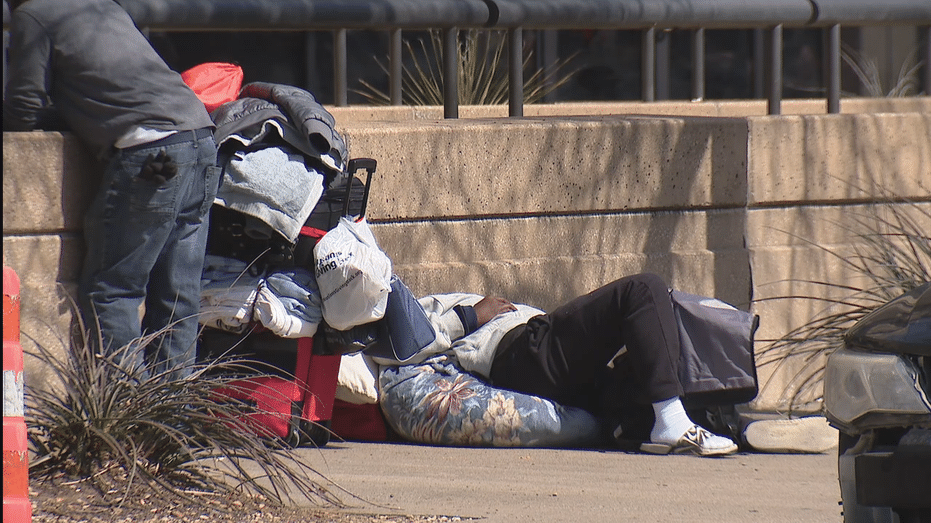
The upcoming midterm elections in Dallas County will see voters faced with Proposition A, a proposed property tax increase aimed at generating approximately $103 million annually to bolster homelessness services. Supporters of the measure argue that the funds could assist over 4,500 households in escaping homelessness, while detractors express concerns regarding the lack of transparent performance oversight and cost management.
Dallas County Judge Clay Jenkins is advocating for the approval of Prop A, emphasizing that the tax hike would provide essential funding to expand homelessness services throughout the county. The proposition was placed on the ballot following a narrow 3-2 vote by the Dallas County Commissioners Court, with Commissioners John Wiley Price and Elba Garcia voting against it.
Understanding Proposition A
The Dallas Regional Chamber has voiced its support for Prop A, highlighting the urgency of addressing homelessness as both a community priority and an economic imperative. The proposed tax increase would elevate the county tax rate, with the expectation that it would facilitate assistance to an estimated 4,500 additional households each year.
Judge Jenkins noted that homelessness is not confined to downtown Dallas but affects neighborhoods throughout the county. He pointed out that the current response to homelessness in the downtown area has contributed to improved public safety, with reports indicating a lack of violent crime in the central business district this year.
Broader Impact on Homelessness Services
According to Jenkins, the additional funds would enhance the county’s homelessness response beyond the downtown area, allowing around 150 community organizations to apply for funding through a competitive proposal process, ensuring accountability for measurable outcomes. Jenkins remarked, “I’ve never asked for a tax increase before. I’ve lowered your taxes since I’ve been in office. But, you know, I know a good investment when I see it.” He assured voters that if approved, encampments would be cleared swiftly as they come to light.
Financially, Jenkins stated that the proposed increase would amount to approximately $5 per month for the average homeowner. He acknowledged the rising costs of living but emphasized the necessity of investing in homelessness services to enhance public safety and quality of life in Dallas County. “Money is tight right now. Gas prices are crazy high,” he noted, “But at the same time, we have got to address public safety and quality of life here in Dallas County if we want to continue to grow.”
The Dallas Regional Chamber reiterated that Prop A aims to replicate the successful strategies implemented in downtown Dallas across the entire county while advocating for transparent public reporting on the program’s outcomes as it expands.
Opposition and Concerns
Conversely, Commissioner John Wiley Price raised concerns over the potential lack of information available to voters regarding the total costs of the tax and the outcomes it would generate for taxpayers. He emphasized the need for comprehensive reporting that details the full financial implications, the rate of return to homelessness, and whether the same level of funding would be required annually.
Price clarified that while Prop A would permit a higher county tax rate for homelessness initiatives, it would not directly allocate $100 million to Housing Forward. He pointed out that the final decisions regarding contracting, appropriations, oversight, and implementation would remain under county control.
Jenkins highlighted that homelessness is consistently ranked among the top concerns of Dallas County residents, alongside public safety. He noted that around 11,000 individuals face homelessness each year in the county, while existing programs manage to assist approximately 6,000 people. The success of the downtown response has been significant, with Jenkins stating that 93% of individuals who received aid have remained stably housed.
In a recent report, Housing Forward indicated an 87% reduction in daily street counts in downtown Dallas. Price contended that while progress has been made, it does not, by itself, justify the establishment of a recurring property tax. He urged that the county should first explore funding options from federal, state, or behavioral health sources before imposing a long-term tax obligation on local taxpayers.
What’s Next
Dallas County voters will have the opportunity to cast their ballots on the proposed property tax increase during the election set for November 3rd.