






Subscribe to The Brief, the daily newsletter from The Texas Tribune, designed to keep you informed on the most important news from Texas.
This audio recording is automated for accessibility purposes, while humans have written and edited the accompanying story. We welcome your feedback on our AI policy.
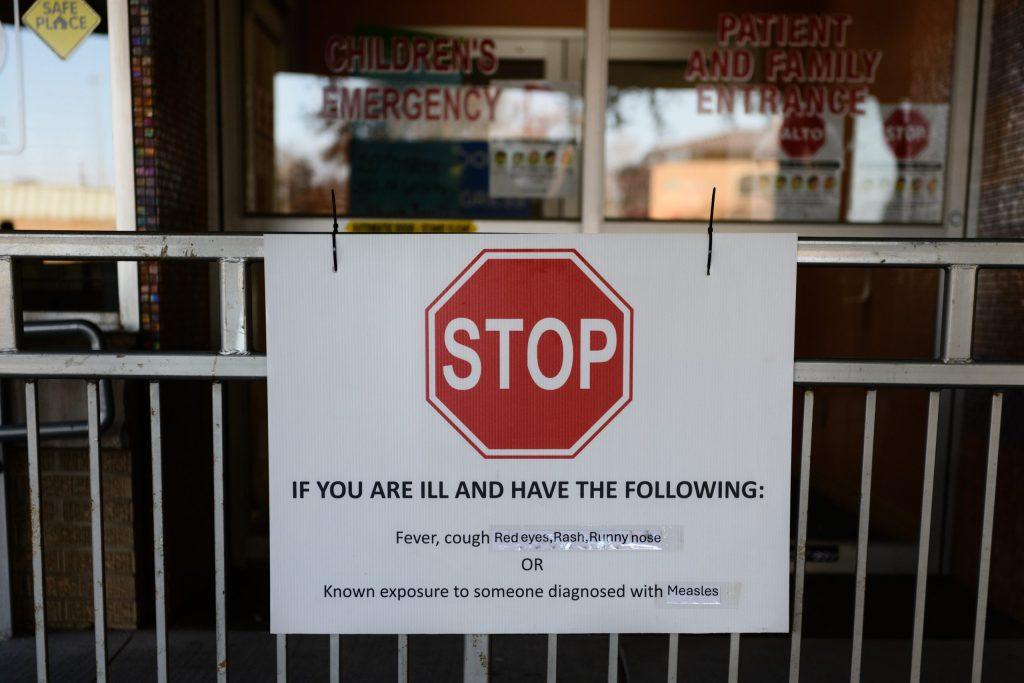
The United States is at risk of losing its measles-free designation next year, which could lead to a resurgence of outbreaks across the country. Should this status be lost, more children may face hospitalization due to this preventable illness, with some potentially losing their hearing and others possibly dying.
Measles also comes with significant financial implications. A recent study, not yet published in a scientific journal, estimates that the public health response to outbreaks involving just a few cases costs approximately $244,000. When a patient requires hospitalization, the average cost rises to around $58,600 per case. The study estimates that an outbreak similar to the one that occurred in West Texas earlier this year, which involved 762 cases and 99 hospitalizations, could cost around $12.6 million.
The future of America’s measles-free status depends on whether the primary outbreaks this year can be traced back to the significant outbreak that began in West Texas on January 20. If these outbreaks are connected and continue through January 20 of the following year, the U.S. may no longer be classified alongside nations that have eradicated the disease.
“Many individuals dedicated significant effort over many years to achieve elimination—establishing vaccine availability, ensuring high vaccination coverage, and implementing rapid responses to outbreaks to curtail their spread,” commented Paul Rota, a microbiologist who recently concluded a nearly 40-year tenure at the Centers for Disease Control and Prevention (CDC).
Instead of swiftly addressing the potential for a measles resurgence, Robert F. Kennedy Jr., a lawyer who founded an anti-vaccine organization and now leads the Department of Health and Human Services, has compromised the ability of public health officials to manage and mitigate outbreaks by undermining public trust in vaccines. The measles vaccine is both safe and effective, with only 4% of more than 1,800 confirmed U.S. measles cases this year involving individuals who had received two doses of the vaccine.
Kennedy has dismissed experts from the CDC’s vaccine advisory committee and has made unsubstantiated claims linking vaccines to autism, brain swelling, and death. On November 19, he ordered changes to a CDC webpage that previously contained scientific information regarding vaccines and autism, substituting it with misleading assertions.
“Do we want to revert to an era before vaccines, where 500 children die from measles each year?” questioned Demetre Daskalakis, a former director of the CDC’s national immunization center, who resigned in protest over Kennedy’s actions in August. He, along with other scientists, has noted that the Trump administration seems more focused on minimizing the measles resurgence than on actively combating the disease.
Andrew Nixon, a spokesperson for HHS, stated that vaccination remains the most effective strategy for preventing measles, and emphasized that the “CDC, along with state and local health agencies, continues to collaborate to assess transmission patterns and ensure an effective public health response.”
CDC scientists are actively monitoring measles outbreaks in partnership with researchers at health departments and universities. They are investigating the genomes of measles viruses to determine whether outbreaks are interconnected, which could provide insight into their origins and scale, as well as alert officials to any undetected spread.
While genomic analyses of HIV, influenza, and COVID-19 have been conducted for years, applying this method to measles is relatively new due to the virus’s absence as a significant issue in the U.S. for decades, noted Samuel Scarpino, a public health specialist at Northeastern University in Boston. “Establishing a surveillance network is crucial so that we can rapidly scale up our response when necessary,” he added.
“We are collaborating with the CDC and other states to ascertain whether we are witnessing one extensive outbreak with ongoing transmission across state lines,” stated Kelly Oakeson, a genomics researcher at the Utah Department of Health and Human Services.
The ongoing outbreak in Utah and Arizona, which reported 258 cases as of December 1, appears to be linked to the Texas outbreak, as both are caused by the same strain of measles, D8-9171. However, this strain is also circulating in Canada and Mexico, suggesting that the outbreaks might have originated independently from international infections. If this is the case, it could potentially preserve the U.S. from losing its measles-free status, as being measles-free means the virus is not circulating continuously within a country year-round.
Canada lost its measles-elimination status in November because authorities could not demonstrate that various outbreaks involving the D8-9171 strain were unrelated, according to Daniel Salas, executive manager of the comprehensive immunization program at the Pan American Health Organization (PAHO). This organization, which collaborates with the World Health Organization, includes health officials from North, South, and Central America, as well as the Caribbean, and makes determinations on measles elimination based on reports from member countries.
Early next year, PAHO will evaluate information from U.S. scientists. If their analyses indicate that measles has circulated continuously for one year within the U.S., the organization’s director may revoke the country’s measles-free status.
“We expect countries to be transparent about the information they possess,” Salas stated. “We will pose inquiries regarding how findings were determined and whether alternative perspectives were considered.”
In preparation for PAHO’s assessment, Oakeson and other researchers are examining the genetic similarities of the D8-9171 strains in Utah. Instead of analyzing only short segments of genes that define the strain, they are studying the entire genome of the measles virus, which consists of roughly 16,000 genetic letters. Over time, natural genetic mutations occur; the accumulation of these changes can serve as a clock, indicating the time elapsed between outbreaks. “This reveals the evolutionary history of the samples,” Oakeson explained.
For instance, if one child infects another, their measles viruses will be nearly identical. However, the viruses infecting individuals at the inception of a large outbreak will exhibit slight variations compared to those infecting people months later.
Although the outbreaks in Texas and Utah are caused by the same strain, Oakeson noted that “more detailed analysis is leading us to believe they aren’t closely related.” To determine the degree of difference between the outbreaks, scientists are comparing them to measles virus genomes from other states and countries.
Ideally, genetic studies would complement traditional investigative methods to trace the origin of each outbreak. Unfortunately, many investigations have proven fruitless due to initial patients failing to seek medical care or notify health departments. Similar to the situation in West Texas, the outbreak in Utah and Arizona is primarily occurring within close-knit communities that are hesitant about vaccinations and distrustful of government authorities and conventional medicine.
Researchers are also aiming to ascertain the number of undetected measles cases. “Confirmed cases necessitate testing, and in some communities, there are costs associated with visiting the hospital for testing: gas expenses, finding childcare, and missing work,” explained Andrew Pavia, an infectious disease doctor at the University of Utah. “If a child has a measles rash but isn’t severely ill, why would a parent bother to seek treatment?”
Pavia is part of a nationwide outbreak surveillance network led by the CDC. A direct method of gauging the scale of an outbreak would be through surveys, but this becomes complicated in communities that lack trust in public health officials.
“In a collaborative environment, we could distribute questionnaires to determine if anyone in a household had a rash or other measles symptoms,” Pavia remarked, “but the very issues that complicate vaccination and quarantine efforts also hinder this.”
Consequently, Pavia and other researchers have turned to genomic analyses. A significant amount of genetic variation can indicate that an outbreak has been spreading undetected for weeks or months, infecting far more individuals than officially recognized.
Another less intrusive surveillance method involves testing wastewater. This year, the CDC and state health departments have initiated efforts to analyze sewage from homes and buildings for traces of measles viruses shed by infected individuals. A study conducted in Texas indicated that this approach could serve as an early warning system, alerting public health officials to an outbreak before patients begin appearing in hospitals.
The quiet research efforts of CDC scientists stand in stark contrast to the lack of visible public actions. The CDC has not conducted a single press briefing on measles since the Trump administration took office, and its last publication on the disease in the Morbidity and Mortality Weekly Report occurred in April.
Rather than swiftly mitigating the Texas outbreak, the Trump administration hindered the CDC’s ability to communicate effectively with Texas officials and delayed the release of federal emergency funds, as uncovered by investigations by KFF Health News. Meanwhile, Kennedy has disseminated mixed messages regarding vaccines and promoted unproven treatments.
Daskalakis noted that as the Texas outbreak escalated, his CDC team encountered silence when they sought to brief Kennedy and other HHS officials.
“Objectively, they weren’t contributing to the Texas outbreak response, so if we lose our elimination status, perhaps they’ll adopt an indifferent attitude,” Daskalakis remarked.</p