








Sign up for The Brief, a daily newsletter that keeps readers informed on the most significant news from Texas.
In the week following the implementation of Texas’ new “bathroom bill,” which targets transgender individuals, opponents of the legislation have begun to question both the intent and the practical enforcement of the law.
Senate Bill 8, known as the Texas Women’s Privacy Act, restricts the use of public restrooms, locker rooms, and similar facilities to transgender individuals based on their sex assigned at birth. While the law does not enforce a specific policy, it requires local governments and public agencies to take “every reasonable step” to prevent individuals from using restrooms that do not align with their assigned sex at birth.
Proponents of the law have spent over ten years advocating for these sex-based restrictions, arguing that they protect women’s private spaces. Conversely, critics contend that the lack of clear enforcement guidelines will result in inconsistent, ineffective, and potentially intrusive enforcement. To illustrate this concern, a group of protesters gathered at the Texas Capitol on December 6, seeking to challenge the law.
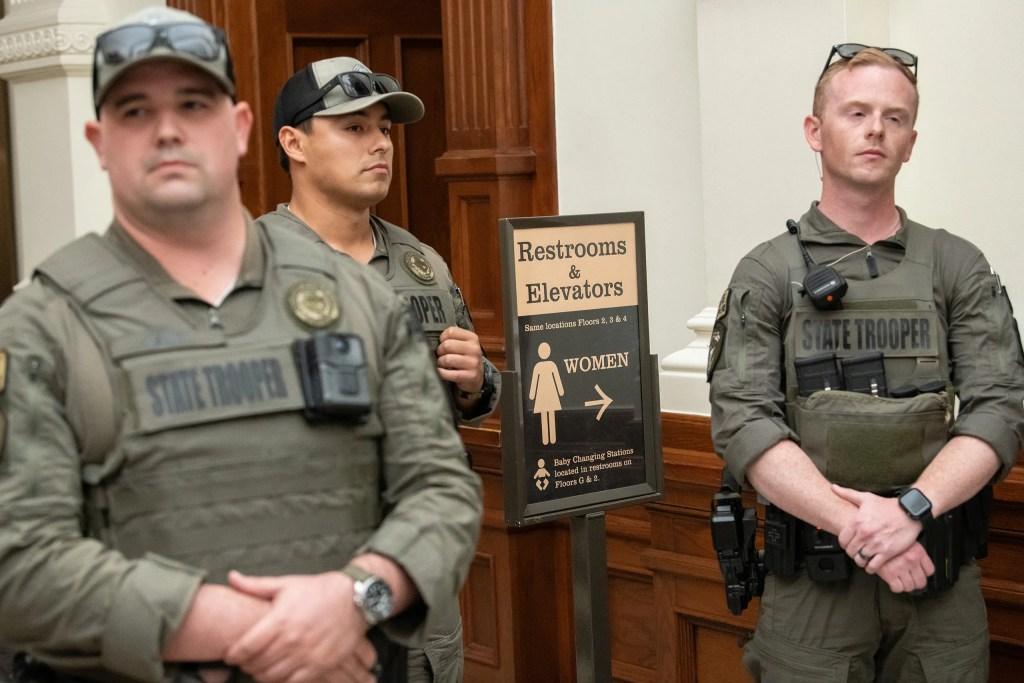
Initially, the protesters were able to access restrooms corresponding with their gender identity and delivered speeches in the Capitol rotunda. However, they were later prevented from re-entering the bathrooms by several officers from the Department of Public Safety (DPS). Some individuals trying to enter the women’s restroom were asked to present their IDs, which DPS described as voluntary checks for compliance, though they did not clarify why those who declined to show identification were denied access.
DPS referenced an updated public restroom policy from the State Preservation Board, which, as of February, “expects” visitors to use restrooms that correspond with their “biological sex.” Notably, this policy does not outline any required verification process. Officers eventually permitted two transgender women to use the restroom after they provided IDs with female markers, as shown in footage shared by the 6W Project, the advocacy group that organized the protest. Protesters also reported that men’s restrooms were not monitored by officers.
Matilda Miller, president of the 6W Project, stated, “I think that the Texas government just established that they have no consistent enforceable standards for this law,” following the demonstration.
Ry Vazquez, a co-founder of the 6W Project, was briefly detained by DPS during the protest and received a criminal trespass warning along with three other individuals. As a transgender woman, Vazquez pointed out that the absence of DPS officers at the men’s restroom and the admission of the two trans women demonstrated that SB 8 cannot be uniformly enforced, posing a risk to individuals scrutinized by authorities.
“What we did was not radical, it was not profound,” Vazquez remarked. “People use the restroom every day in a public setting, and for it to become what it is now, where it is now an active threat to someone who is not prepared, is utterly abysmal.”
Both Vazquez and other opponents of the law have expressed concerns that it could incite harassment or photographing of individuals in public restrooms, an issue that predates the implementation of SB 8. In 2023, Williamson County GOP Chair Michelle Evans posted a photo of a transgender woman in a Texas Capitol bathroom, which led to officers confiscating Evans’ phone. Travis County District Attorney Jose Garza subsequently initiated an investigation to determine whether Evans had violated state law.
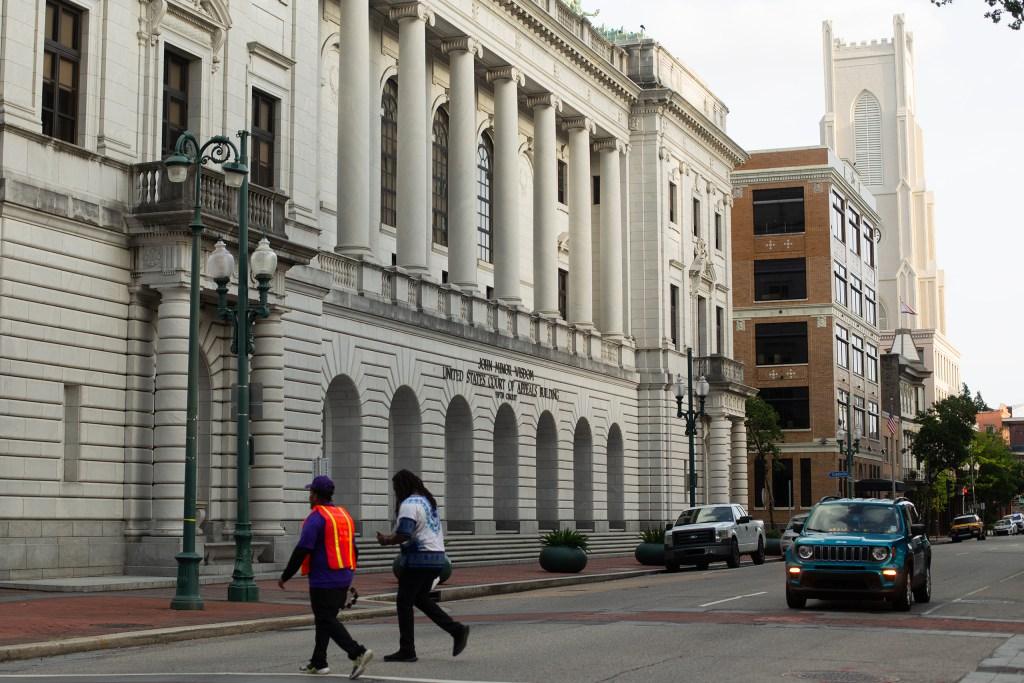
Evans filed a lawsuit against Garza to halt the investigation, asserting her First Amendment rights to share the photo. Recently, the Fifth Circuit Court of Appeals ruled in favor of Garza, allowing the inquiry to proceed.
While SB 8 does not impose individual penalties on those who enter the “wrong” restrooms, it does enforce significant fines on institutions where violations occur. The penalties begin at $25,000 for the first infraction and escalate to $125,000 per day for each subsequent violation. Such fines are only applied after complaints are lodged with the institution and the Attorney General’s office, followed by an investigation. Individuals also have the option to sue institutions for violations.
In addition to complying with SB 8’s restrictions, cities and counties are working to address the law’s implications. The Austin City Council recently passed a resolution aimed at finding alternatives to multi-occupancy restrooms impacted by SB 8, intending to create single-occupancy facilities. Council members expressed hope that this resolution would foster a more inclusive environment for transgender and gender-nonconforming residents.
Austin City Council member Mike Siegel stated, “We don’t know if anyone else has done this. In some ways, Texas is the testing ground for new discriminatory and hateful policies, and we’re just responding as creatively as we can.”
According to an October report from Austin Facilities Management, the City of Austin operates approximately 287 restroom facilities, 72 of which currently lack single-occupancy options. Siegel clarified that any renovations would be funded through sources other than the city’s general fund, such as voter-approved bonds, with a report on the program expected by March.
Despite the resolution’s efforts to distance Austin from the law’s intent, supporters of SB 8 have praised the city’s actions. Mary Elizabeth Castle, director of government relations for Texas Values, a conservative advocacy group, remarked that the resolution is a positive step toward adherence to the law.
“Your resolution states that the city does not seek to invade the privacy of any individual or violate their civil rights,” Castle stated. “That’s excellent news to hear because every time a man is allowed to enter a female restroom or locker room, that is exactly what happens.”
In light of the uncertainty surrounding enforcement, Texas Values has sent letters to various public agencies, cities, and school districts urging them to adopt new policies to assist in complying with SB 8. Castle affirmed that Austin’s resolution and Arlington’s decision to suspend discrimination protections for LGBTQ+ individuals were appropriate measures to align with the law.
Nevertheless, Austin City Council members have acknowledged their hope that the resolution will serve as a temporary remedy to what they believe is an unconstitutional law that will be overturned in the future.
“This is very much likely an unconstitutional law. It is motivated by discriminatory animus,” Siegel stated during a press conference following the resolution’s passage. “It is not backed by crime data or any evidence of safety needs. It’s designed to divide us, to conquer us and to promote cynical political goals.”
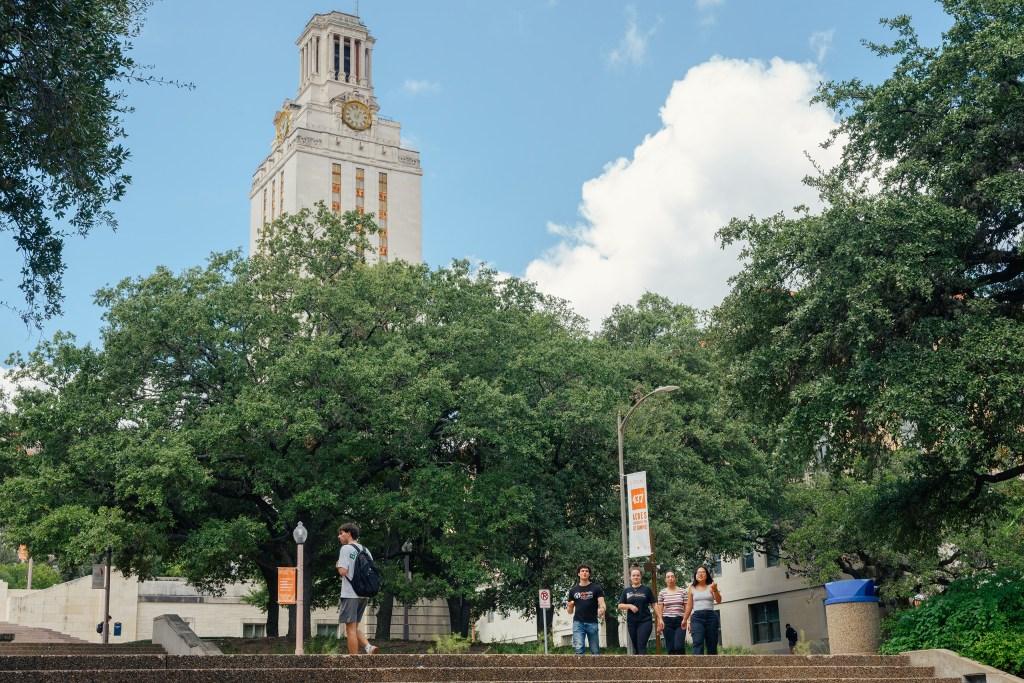
Several Texas colleges and universities have begun adjusting their campus policies to comply with SB 8. The University of Texas at San Antonio relocated approximately 30 on-campus students to adhere to the law. Similarly, Texas Tech University System established a new regulation reflecting much of SB 8’s language, though it does not specify penalties for noncompliance.
Community colleges statewide are also implementing new guidelines and signage in response to the law. At Texarkana College and Blinn College, restroom signs clarify that facilities are designated for individuals with matching “biological sex.” Tarrant Community College has provided online guidance for students and faculty regarding the law’s implications, emphasizing that reporting violations is voluntary and not mandatory.
Public schools are also impacted by SB 8; however, it remains uncertain whether the Texas Education Agency will offer implementation guidance to districts. Some school districts, such as Carroll Independent School District, have been enforcing individual restroom usage policies based on biological sex since 2023. The TEA has not responded to inquiries regarding SB 8.
Disclosure: The State Preservation Board, Texas Tech University System, and the University of Texas at San Antonio have financially supported this reporting.
Learn more about our policies, including our partnership with The Trust Project to enhance transparency in journalism.
Texans deserve the truth. Support independent reporting.
Your contribution helps us provide fact-based journalism for Texans, by Texans. Join our community of members who make this work possible. Will you consider supporting our nonprofit newsroom with a donation?
Support Independent Texas News. Become a member today.
Independent Texas reporting relies on your support. Help us deliver in-depth news and information to you and millions of others.
Donate Now
Tagged: bathroom bill, Department of Public Safety, Texas Legislature, transgender
Ayden Runnels is the afternoon/evening reporter. Previously, they worked as a breaking news reporter for the Las Vegas Sun. Ayden is a graduate of the Mayborn School of Journalism at the University of North Texas.
Alejandro Serrano covers Texas politics and government, focusing on immigration and education issues.