





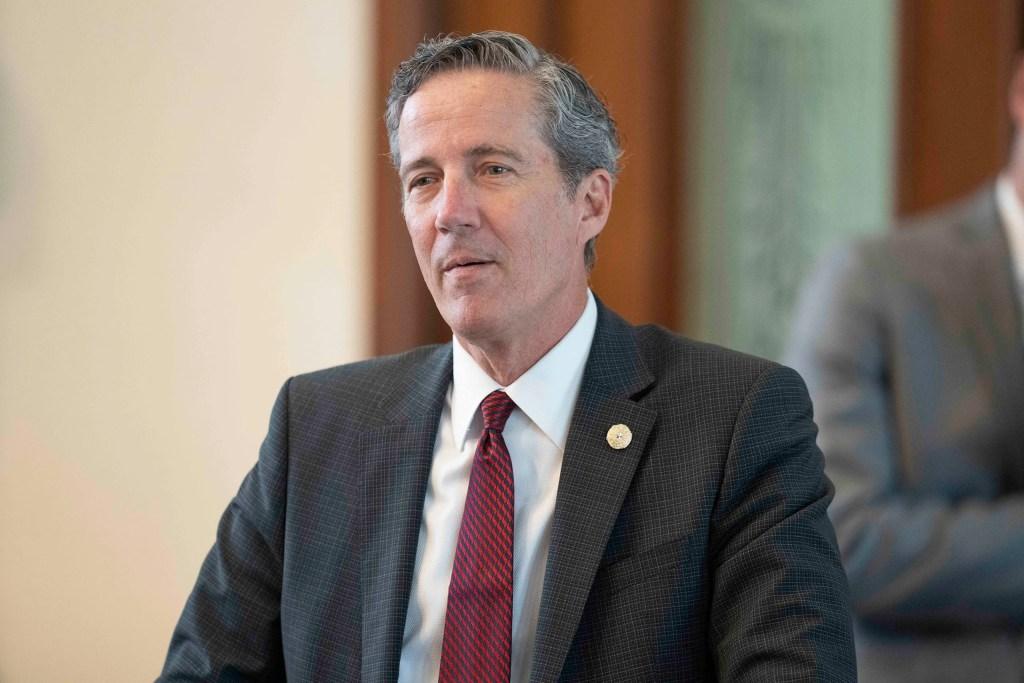
Kelly Hancock, the Acting Texas Comptroller, is seeking clarification from the Texas Attorney General’s Office regarding the potential exclusion of certain schools from the state’s newly established school voucher program. This inquiry centers on schools that may have affiliations with the Council on American-Islamic Relations (CAIR), a U.S. Muslim advocacy organization, or alleged connections to the Chinese government.
In a formal request submitted to Attorney General Ken Paxton on December 12, Hancock inquired whether schools could be barred from participating in the voucher program if they are associated with a “foreign terrorist organization” or a “foreign adversary.” He specifically mentioned schools that have hosted events for CAIR, which Governor Greg Abbott has recently classified as a terrorist organization.
CAIR has initiated legal action against Abbott, asserting that the designation is defamatory and lacks legal grounding.
Hancock also claimed that one Texas school is under the ownership or control of a group linked to an adviser for the Chinese government, which he suggested raises concerns under new laws that restrict property ownership, control, and financial influence by foreign entities in Texas. Senate Bill 17, effective September 1, prohibits individuals and entities from China, Russia, Iran, and North Korea from owning land in the state.
In a statement, Hancock noted that his request was prompted by “credible concerns” regarding the affiliations of some pre-approved providers for the voucher program, necessitating legal guidance. The Houston Chronicle was the first to report on Hancock’s request.
“This request does not prejudge any institution or presume any outcome,” Hancock emphasized. “It simply reflects our obligation to protect personal data from foreign adversaries and to ensure that public funds are not utilized in a manner that contradicts Texas law or jeopardizes our state’s security interests.”
Hancock did not specify which schools or how many might be impacted by the Attorney General’s forthcoming determination. While Attorney General opinions are not legally binding, they serve as guidance for state agencies.
A spokesperson for CAIR Texas responded by stating that the events held at the schools were “Know Your Rights” sessions aimed at educating students about civil rights protections at both state and federal levels. The spokesperson questioned whether any provisions in Senate Bill 2, which established the new voucher program, or other relevant laws, permit the exclusion of schools from participating in the program.
“Hosting civil rights education for students is lawful, as is teaching them about their rights under the U.S. and Texas Constitutions,” the spokesperson stated. “Any attempt to penalize schools for educating students about their civil rights, particularly when the organization providing that education is one that Governor Abbott disapproves of, would raise significant First Amendment concerns.”
Since applications for the new voucher program opened, approximately 600 Texas private schools and 200 vendors have applied, according to the Comptroller’s office. Applications will be accepted on a rolling basis. The voucher program has been a long-standing objective for Governor Abbott, with rules for the program approved in late November. Applications for Texas families will commence on February 4.
Governor Abbott’s designation of CAIR as a foreign terrorist organization is part of a broader trend of increasing scrutiny and criticism from Texas politicians towards Islam and Muslim organizations within the state. This growing scrutiny was partly ignited by several investigations earlier this year into the East Plano Islamic Center’s “EPIC City” development in North Texas.