







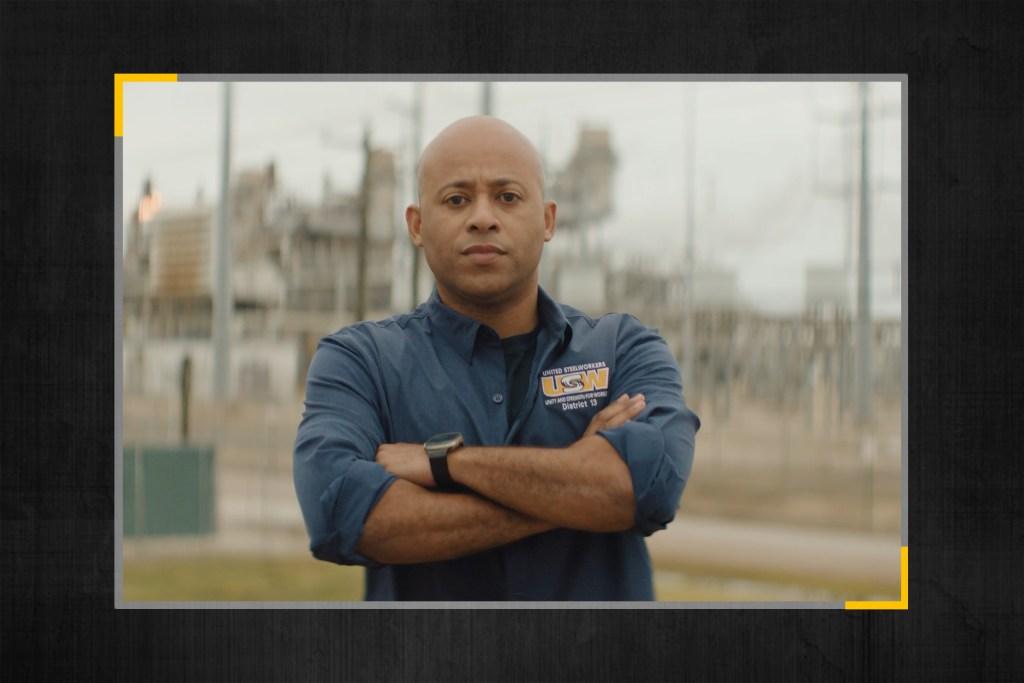
Marcos Vélez, the leader of the steelworkers union, has emerged as a surprising contender in the Democratic primary for lieutenant governor of Texas. His campaign is primarily funded by contributions linked to the Texas Majority PAC, a key ally of the Texas Democratic Party.
Recently, Vélez received a significant endorsement from the Texas AFL-CIO Committee on Political Education, which represents the largest labor union federation in the state. This endorsement is considered one of the most prestigious for Democratic candidates.
The combination of labor backing and substantial financial support positions Vélez favorably against his primary opponent, Vikki Goodwin, a four-term state representative from Austin. The candidate who secures the nomination will face the formidable challenge of unseating incumbent Lt. Gov. Dan Patrick, a powerful figure in the Texas Senate with nearly $40 million at his disposal for campaigning.
With less than 40 days until the March 3 primary, Vélez has been gaining traction, receiving endorsements not just from labor groups, but also from organizations like the Houston LGBTQ+ Political Caucus, which is notable for its long-standing commitment to civil rights. Expressing gratitude for the AFL-CIO’s support, Vélez stated he is “honored” to have the backing of their vast network of union members.
“I may not be a career politician, but I am the candidate who understands the challenges faced by working Texans and who will address those issues in office,” said Vélez, who serves as the assistant director of the United Steelworkers union’s District 13.
A native of Pasadena, Vélez has remained relatively unknown to the wider electorate but has attracted attention through noteworthy financial channels. Since mid-2025, following the election of Kendall Scudder as chair of the Texas Democratic Party, they have worked closely with Texas Majority PAC on a coordinated campaign known as Blue Texas. This organization, backed by liberal donor George Soros, aims to bolster Democratic representation outside urban centers, with the ultimate goal of flipping the state.
While Texas Majority PAC usually maintains neutrality during primaries, recent campaign finance disclosures indicate indirect support for Vélez. On December 23, the PAC contributed $60,000 to Houstonians for Working Families. Just a week later, this PAC transferred $30,000 to Vélez’s campaign and provided an additional $25,000 to assist with his campaign launch video.
The $60,000 from Texas Majority PAC constituted two-thirds of Houstonians for Working Families’ receipts in the latter half of 2025. Meanwhile, the contributions to Vélez have made up nearly 75% of his total fundraising since he launched his campaign on November 17.
Despite this financial support, Goodwin held a substantial advantage at the end of the year, reporting a campaign war chest of $161,000 compared to Vélez’s $51,000. She also significantly outspent him in the latter half of the year, with expenditures amounting to $492,000 against Vélez’s $6,000. A third candidate, Courtney Head, reported having $17.35 on hand.
In an interview, Goodwin mentioned her conversation with Scudder, who assured her that Texas Majority PAC is not directly involved with Vélez and that the party’s focus is on rebuilding rather than taking sides in the primaries. “People can donate however they wish,” Goodwin remarked, emphasizing her commitment to building trust and engaging with voters across Texas. “This is a tough statewide race in a large state with many people.”
Texas Democratic operatives expressed surprise at the apparent involvement of Texas Majority PAC in supporting any candidate in a contested primary, particularly against an incumbent Democrat. Katherine Fischer, the PAC’s executive director, refuted claims of support for Vélez, asserting, “We’re not endorsing anyone in that race. I think he’s a very exciting candidate, but we are primary-neutral.”
Interestingly, Vélez’s campaign manager, Plácido Gómez, has a background with Texas Majority PAC, having previously worked as a grants manager and training director.
When questioned about the PAC’s support for his campaign, Vélez deferred to them for clarification. “I can tell you that they’ve been extremely warm in their reception of my idea to run,” he stated. “But as a candidate, I’ve found that they’ve been very receptive to the idea of labor candidates.”
In a recent interview, prior to securing the AFL-CIO endorsement, Vélez outlined his agenda for the lieutenant governor’s office. He aims to address the economic struggles of working-class Texans, highlighting the impact of rising living costs on their aspirations for prosperity. He pointed out that many public sector employees he represents earn between $40,000 and $50,000 a year despite holding advanced degrees.
Vélez criticized the state for not capitalizing on potential revenue sources, such as hemp-derived THC products and legalized gambling—positions that stand in stark contrast to Patrick’s advocacy for a total ban on THC and his opposition to gambling legalization.
“We realized that advancing the interests of working-class people requires someone who truly understands these issues in office,” Vélez stated, reflecting on his background as a former mechanic and oil industry worker. “I saw an opportunity to run based on my values, and so I decided to enter the race.”
He further noted that labor protections championed by his union have consistently failed to pass in the state Senate, which has shifted significantly to the right under Patrick’s leadership.
If a Democrat were to win the lieutenant governor’s office, the new officeholder would face additional challenges. The Senate’s rules, which dictate the lieutenant governor’s powers, are established at the beginning of each legislative session. With Republicans maintaining a strong majority when lawmakers reconvene in January, they are likely to limit the powers of a Democratic lieutenant governor, which include committee formation, bill management, and scheduling legislation for debate.