






Residents in South Texas are expressing strong opposition to the installation of floating barriers in the Rio Grande, a project initiated by the federal government aimed at curbing illegal immigration. The initiative has raised significant concerns among the local community in Laredo, as well as among scientists who are questioning the potential long-term environmental consequences of these barriers.
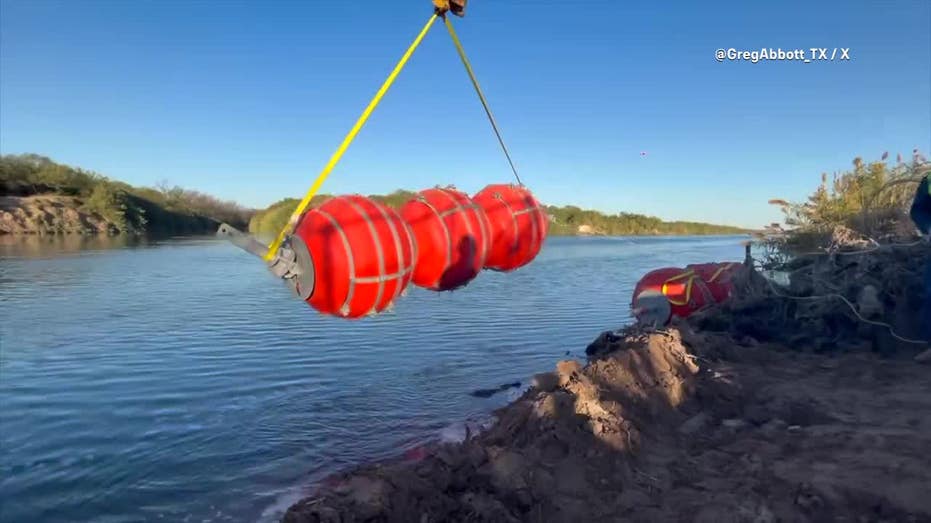
The U.S. government is implementing protective barriers over more than 500 miles of the Rio Grande, which stretches from the Gulf of Mexico into South Texas. This extensive project follows a smaller scale effort in Eagle Pass in 2023, where only 1,000 feet of buoy system was installed. The new cylindrical barriers are designed specifically to deter unauthorized crossings from Mexico into the United States.
Customs and Border Protection (CBP) has stated that these waterborne barriers are engineered to endure a 100-year flood event, adhering to the same standards as the border wall. They also claim that the design accounts for potential increases in water currents and levels.
Local Concerns
The initiative has sparked considerable unease among Laredo residents, who voiced their concerns at a recent city council meeting. Karen Munoz, a local resident, described the border wall and buoy system as an existential threat to Laredo, particularly affecting the city’s most vulnerable neighborhoods.
Another resident, Rosemary Welsh, emphasized the gravity of the situation, stating, “This is a life or death issue.” Their concerns are compounded by the fact that the Department of Homeland Security has waived certain environmental regulations to facilitate the installation of the buoys, raising alarms among environmental scientists.
Adriana Martinez, a geomorphologist, highlighted the potential ecological ramifications, noting that the buoys could disrupt the natural flow of water in the river. She explained that while the buoys are anchored to concrete blocks at the riverbed, the cables and chains used may not be sufficiently long to handle significant flood events, particularly near the Gulf.
Martinez questions whether the financial investment in this project is justified, suggesting it may do more harm than good. “The amount of money that we are spending doesn’t really make sense in terms of how it’s really not impacting immigration, but it does impact the river and the environmental consequences we have already seen occurring in Eagle Pass and Maverick County,” she stated.
The situation continues to unfold, with residents and experts alike closely monitoring the implications of this ambitious barrier project on both the local community and the environment.