








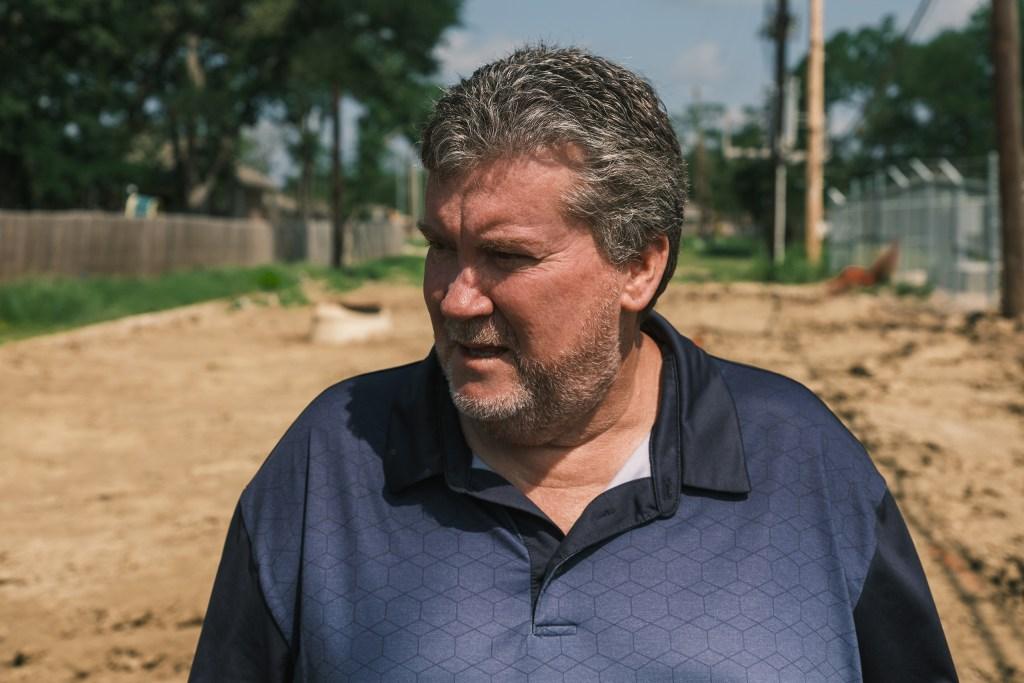
Jim Wallingsford navigated his white Chevy truck along North Walnut Street in Lacy Lakeview one morning last month, carefully avoiding potholes en route to inspect a sewer lift station repair project. As the public works director for this small Texas suburb, home to 8,000 residents, Wallingsford continually assesses the city’s pressing infrastructure needs, which include deteriorating streets, aging pipes, and an old water tower requiring a $1 million renovation.
The Connally Lift Station, currently undergoing repairs, is crucial for pumping sewage from deep underground to higher elevations. “Our streets are in rough shape, and unfortunately, our water and sewer mains mirror that condition. We replace what we can and repair what we must,” he stated.
Out of the two water towers in Lacy Lakeview, one is in dire need of significant repairs, including a new catwalk and paint. Wallingsford is cautious about safety, asserting, “I wouldn’t send anyone up there.” The town’s infrastructure, much of which was installed over 50 years ago, is typical of many small Texan communities that struggle to maintain aging facilities.
Mayor Chuck Wilson has highlighted the city’s maintenance backlog as a rationale for pursuing a new data center. He aims to collaborate with Infrakey on a proposed $10 billion development north of the town, which could potentially transform Lacy Lakeview’s tax base from $6.5 million to $50 million annually. However, this ambitious project has sparked opposition from local residents and neighbors of the proposed site, particularly after the recent election of city council member Amy Gage, who is against the data center plan.
Wallingsford believes that new developments are essential; otherwise, existing taxpayers and utility ratepayers will bear the financial burden of necessary improvements. He remarked, “Everything we purchase is becoming more expensive. Our only alternative is to raise rates to keep pace with these costs.”
He emphasized that replacing older equipment is a priority, particularly a dump truck that is essential for maintenance. “We need at least one new dump truck, but ideally two in the next budget,” he expressed, noting that the current fleet is over 25 years old and requires extensive upkeep.
During his inspection at the Meyers water pump station, which is also under repair due to leaks, Wallingsford acknowledged that while the consequences of pump failures are significant, the pumps are still operational. “We only need one pump to function, and we have three for backup,” he explained.
Reflecting on the infrastructure’s lifespan, Wallingsford noted that utility systems typically last around 50 years. He mentioned that best practices in public works recommend allocating 2% of the system’s cost annually for replacement, a practice he has never seen implemented in his career.
Visible signs of wear and tear plague Lacy Lakeview’s 30 miles of city streets. When asked which streets require repaving, he responded without hesitation. “All of them. We have about 15 critical streets that need immediate attention.”
The city is currently working on street repairs funded by a $9.5 million bond issue approved by voters in 2024. To economize, the city is utilizing its workforce and equipment to recycle pavement, which is then compacted and resealed. Among the most urgent projects is Walnut Street, which will undergo reconstruction alongside the replacement of essential utilities, with completion expected by February 2027.
Wallingsford detailed the process: “Our team spends about eight months a year using this zipper machine to break down old asphalt. We then compact it with a rolling machine and chip seal the roads. This method is cost-effective and provides citizens with smoother driving surfaces.” Previously, the maintenance department was limited to patching potholes.