








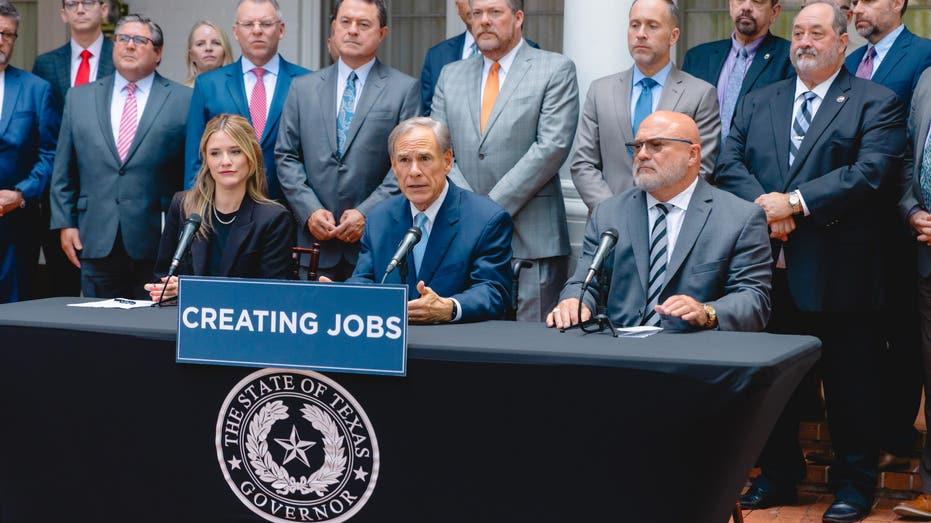
Governor Greg Abbott has instructed four state agencies in Texas to enhance workforce training programs, apprenticeships, and vocational education initiatives. These directives are aimed at addressing the growing demand for skilled labor in high-demand sectors by modifying age requirements for apprenticeships, introducing trade programs in rural schools, and attracting qualified professionals to teach these courses.
During a press conference held at the Governor’s Mansion, Abbott unveiled these directives, which were developed by the Texas Jobs Council—a group established in March to explore ways to fortify the workforce pipeline through executive actions. “The demand for a high-skilled workforce has never been greater,” Abbott stated, emphasizing the importance of having the best-trained workforce in the nation.
Among those present at the announcement were Megan Mauro, interim president of the Texas Association of Business, and Brent Taylor, Southern Region vice president of the Teamsters, who co-chair the Texas Jobs Council.
The directives will impact the Texas Workforce Commission, Texas Education Agency, Texas Higher Education Coordinating Board, and Texas Department of Licensing and Regulation. Specifically, the Texas Workforce Commission has been tasked with several key initiatives:
- Expanding apprenticeship opportunities.
- Creating a centralized online hub for career planning resources and developing pathways for Texans facing employment barriers, including veterans, foster youth, and individuals with disabilities.
- Improving connections between employers and job seekers by launching digital Learning and Employment Records through the Tri-Agency Workforce Initiative.
In relation to enhancing vocational education, the Texas Education Agency has been directed to:
- Recruit more skilled trades professionals to teach career and technical education courses in high schools.
- Update industry certifications to align more closely with workforce needs and expand practical “try the trades” programs in rural and small school districts.
- Increase access to workforce-focused dual-credit opportunities for students.
The Texas Higher Education Coordinating Board will initiate efforts to promote careers in the skilled trades and other high-demand fields that do not necessitate a four-year degree, while also providing community colleges with data to identify valuable credentials and workforce programs.
The Department of Licensing and Regulation will evaluate policies to enable younger Texans to enter apprenticeships and training programs earlier, waive fees for career and technical education instructors, and expand options for licensing examinations.
Abbott indicated that these initiatives are a response to workforce demands stemming from Texas’s robust economic growth and the influx of businesses relocating to the state. “We know that Texas leads the country in businesses relocating to our state,” he remarked, noting the corresponding need for a highly skilled workforce.
He further urged school districts to broaden their career and technical education offerings, ensuring that more students graduate with the necessary training to enter skilled professions directly after high school. “We want to make sure that there are offerings that are provided so that when a student graduates from high school, they’ll have the training they need to go directly into one of these high-skilled programs,” Abbott said.
Mauro added that the council’s recommendations are designed to yield immediate results and reflect a collaborative effort among business leaders, labor organizations, and state agencies. “The Texas economy has always been successful because of the strength of its workforce,” she stated.
Looking ahead, the Texas Jobs Council is expected to reconvene this fall to formulate recommendations for lawmakers in preparation for the 2027 legislative session, with a comprehensive report due in November.