








The election has concluded, but the task of ensuring accountability among Texas officials is just beginning. Texas Democratic lawmakers are determined to address significant financial deficits plaguing public schools by proposing increased investment strategies. Their ideas range from raising student allotments to fundamentally restructuring district funding mechanisms.
As the legislative session approaches in January, a number of education bills have already been introduced. Among these proposals are the repeal of the state’s $1 billion school voucher program, reforms to the state’s process for taking over struggling districts, and the introduction of universal pre-K for four-year-olds.
Following their decisive victories in the midterm elections, which granted them control of the Texas House and statewide offices, Democratic lawmakers express optimism that the priorities they have long championed may finally receive the attention they deserve.
“The change in leadership doesn’t mean a change in priorities. These issues have been on the table for a while,” stated Rep. Diego Bernal, vice-chair of the House Education Committee. “Now, there may be more opportunity for discussion, which previously was largely ineffective.”
While there is a sense of hope among lawmakers regarding their proposals, potential challenges loom in the Senate, where the Republican majority remains firm. Requests for comment from Republican leaders Donna Campbell and Paul Bettencourt regarding their priorities have gone unanswered.
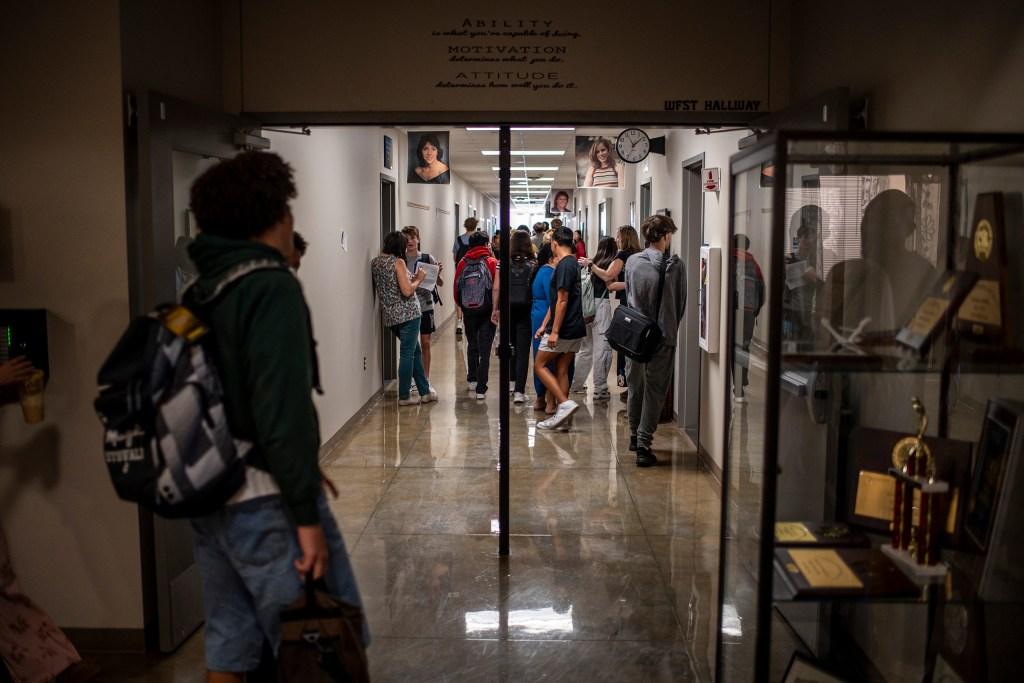
This year, public schools are predicted to experience the largest enrollment decline in Texas history, primarily attributed to lower birth rates, a decrease in immigration, and an increase in students opting for homeschooling or private education via the state’s voucher program. A reduction in student numbers translates to diminished funding for over 1,200 districts and charter schools.
As a result, many districts are closing campuses and grappling with severe budget deficits. Some school leaders have been forced to cut staff bonuses or delay planned raises after voters rejected more than $6 billion in bond proposals intended for infrastructure improvements, including repairs and replacements of outdated facilities and technology.
Democrats, including Gov.-elect Gina Hinojosa, Lt. Gov.-elect Vikki Goodwin, and state Rep. Senfronia Thompson, who is anticipated to become the House speaker, have yet to publicly declare their legislative priorities for public education. Typically, the state’s top legislative figures outline their official agendas after the new year begins.
Requests for clarification on priorities from representatives of these leaders have not been met. However, both Hinojosa and Goodwin campaigned on key issues such as reducing standardized testing, abolishing education savings accounts, halting state takeovers of districts, and increasing funding and salaries for teachers.
The financial framework for Texas schools relies on a complex combination of formulas heavily dependent on student attendance and specific needs. During the last legislative session, lawmakers allocated billions in new funding for schools, yet many advocates argue this amount failed to account for inflation since the last significant overhaul of school finance in 2019.
Administrators continue to struggle with rising costs, which include compliance with various unfunded legislative mandates, such as the requirement for three-point seat belts on school buses and the presence of armed security officers on all campuses.
Since 2023, over 180 public and charter school campuses across Texas, including locations in Austin, Fort Worth, and Houston, have closed, as reported by Our Schools Our Democracy.
Several lawmakers support increasing the per-student funding amount from state and local sources, known as the basic allotment. Some propose linking this increase to inflation. Currently, the allotment stands at $6,215 per student, having seen a marginal increase of $55 last year. Chandra Villanueva, senior director of policy for Every Texan, indicated that to adjust for inflation since the last major increase in 2019, the allotment would need to exceed $8,000 per student.
A significant shift in funding strategy would involve transitioning from an attendance-based model to an enrollment-based approach. Texas is one of only five states utilizing the attendance model, which has drawn criticism for its reliance on daily student attendance figures.
Hinojosa has previously introduced legislation aimed at moving to an enrollment-based funding system, but her intentions for the upcoming session remain uncertain. Data indicates that chronic absenteeism rates surged during the pandemic and have persisted, particularly in low-income districts.
Advocates for the enrollment-based model argue that it would offer more reliable funding and alleviate unpredictability tied to fluctuating attendance. “The current system is outdated and inappropriate for funding schools,” asserted Rep. John Bucy, an Austin Democrat advocating for the enrollment model. “A child’s absence shouldn’t impact necessary expenses like electricity.”
Chloe Latham Sikes, director of policy, advocacy, and community engagement for the Intercultural Development Research Association, emphasized that equitable funding, including an increase to the basic allotment and a shift to enrollment-based funding, is vital for investing in students’ futures.
Such proposals could require billions in additional funding, a prospect that has previously deterred GOP lawmakers, who cite concerns over costs and the potential for schools to prioritize enrollment over attendance.
Texas Education Commissioner Mike Morath expressed caution regarding a shift to enrollment-based funding, suggesting that the current attendance model is linked to a 5% reduction in chronic absenteeism rates. He warned that removing this incentive might lead to an increase in absenteeism.
Teacher advocates are calling for further pay increases for all school personnel. Last year, lawmakers approved salary increases for more experienced educators and expanded the Teacher Incentive Allotment, which rewards teachers in certain districts based on performance metrics.
This year, proposals include establishing a $1,000 grant per teacher for classroom supplies and annual cost-of-living adjustments for state retirement benefits. Hinojosa, who campaigned on enhancing teacher salaries, aims to transition away from the current performance-based pay model in favor of a more equitable structure for all Texas teachers.
Supporters of the Teacher Incentive Allotment argue that it allows top educators to earn competitive salaries, which aids in retention and boosts student achievement. A recent study from Texas Tech University highlighted the program’s positive impact.
State data indicates that first-year teachers earn an average salary of $56,662, placing Texas 18th in the nation for entry-level salaries and 36th for overall teacher salaries, according to a National Education Association analysis.
Texas AFT President Zeph Capo emphasized the need for increased funding to ensure all campus employees receive pay raises. “School districts are facing pressure from top to bottom, but our support staff, who have not received their fair share, are feeling the strain the most,” he stated.
Clay Robison, spokesperson for the Texas State Teachers Association, advocated for across-the-board salary increases while calling for the elimination of merit pay through the Teacher Incentive Allotment, which he argues unfairly excludes deserving teachers.
The school voucher program, supported by outgoing Republican leaders Gov. Greg Abbott and Lt. Gov. Dan Patrick, began this year and provides public funds for students attending private schools or homeschooling. Families with children in private school can receive approximately $10,500 annually, while those opting for homeschooling can access up to $2,000 per year. Students with disabilities may qualify for up to $30,000, though few have received the maximum funding.
Democrats are advocating for the repeal or reform of the $1 billion education savings account program established by the Republican-controlled Legislature in 2025. Should funding for vouchers pass, Hinojosa could potentially utilize the governor’s veto power to eliminate it from the state budget. She has not yet committed to this course of action.
Proposed reforms to the voucher system include regulations for participating private schools, such as adherence to federal special education laws and transparency regarding accommodations for students with disabilities.
“While I would prefer a full repeal, I’m also in favor of not funding the program or repealing the statute altogether if funding becomes a point of contention,” stated Sen. Royce West, D-Dallas, who has introduced a proposal to end the program, co-authored by nine other senators.
Critics of the voucher program contend that the state should allocate the estimated $2 billion projected cost over the next two years directly to public schools instead of subsidizing private education options, which are not held to the same academic standards. They argue that such programs divert essential funding from struggling districts.
“It is the constitutional obligation of Texas lawmakers to provide free public education to 5.4 million students and their families,” asserted Carrie Griffith, executive director of Our Schools Our Democracy. “Public funds should remain within public schools that serve all communities.”
In light of the political shift, proponents of the education savings accounts are working to inform lawmakers about the program’s benefits for over 110,000 participating students. According to the state comptroller’s office, around 60% of these students are low-income, with approximately 17% having disabilities.
<p“Our aim is to protect the Texas Education Freedom Accounts program, ensure its continuation, and secure scholarship funding for families already enrolled,” stated Laura Col