








Nueces County, Texas, is grappling with a looming water crisis as its two primary reservoirs dip to historic lows amid a relentless drought. City officials have warned residents that significant water cuts are imminent, potentially requiring a 25% reduction in water usage or incurring additional fees.
Industry representatives from major companies, including Valero and LyondellBasell, have cautioned local leaders that failure to secure additional water supplies may force them to scale back operations or even shut down entirely.
The city’s long-anticipated response to the impending crisis—a desalination plant designed to convert millions of gallons of seawater into freshwater—collapsed last year. This was due to mounting criticism from environmental advocates and local officials over its soaring costs and potential negative impacts on the ecosystem of Corpus Christi Bay. Efforts to resurrect this project or initiate a similar one are in progress, but could take years to materialize.
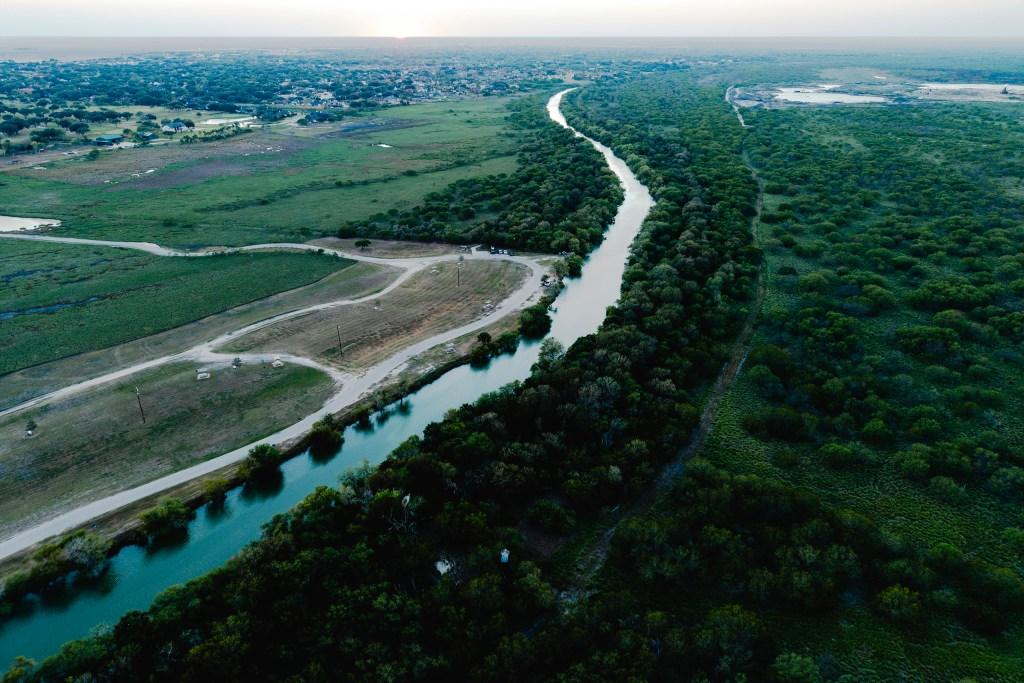
In an urgent bid to maintain water supplies for refineries, residences, and businesses, the city has shifted its focus to a so-called “drought-resistant” water source: groundwater extraction. Currently, eight city wells in rural Nueces County are extracting approximately 8 million gallons of groundwater daily from the Evangeline Aquifer, which is then discharged into the Nueces River, the source for the city’s water treatment facilities. An additional 12 wells are either under construction or undergoing testing, along with plans for two more groundwater projects.
Ashley Marion, a spokesperson for the city’s water department, stated that the addition of groundwater to the city’s water supply is part of a “diversified water strategy,” and emphasized that the current water supply is not fully allocated to existing users.
However, experts caution that reliance on groundwater is not sustainable in the long run due to the potential for over-extraction of aquifers, which do not recharge quickly enough. Amy Bush, a hydrologist and former general manager of a groundwater conservation district, compared the situation to a bank account with finite resources. “You cannot keep taking out hundreds and putting in dimes,” she warned.
Concerns about the future of the region’s water supply are echoed by city council member Rolando Barrera, who has been a vocal advocate for the desalination project. “Oh, I’m terrified,” he admitted, expressing frustration towards fellow council members who opposed the initiative. “Unfortunately, my colleagues don’t realize the severity of the situation.”
Conversely, council member Sylvia Campos, who voted against the desalination plan, remains optimistic about the city’s water future. She believes that utilizing groundwater and encouraging industrial users to conserve and recycle water can provide adequate solutions.
Nevertheless, the city’s groundwater extraction initiatives may pose risks to rural Nueces County residents who depend on the same aquifer for their water supply. A collective of farmers, gardeners, and a retired refinery manager has reported declining well pressure and increasing salinity in their water since the city began its drilling efforts. “Several of us have lost pressure to our wells,” stated Daniel Brodhag, a retired machinist living nearby. “The water levels and the amount of pressure that the wells have now has dropped considerably.”
The situation in Corpus Christi is emblematic of a broader trend across Texas, where surface water from rivers and reservoirs is becoming increasingly scarce and unreliable, exacerbated by climate change. State projections indicate a 73% increase in population by 2070, making groundwater an attractive option for many municipalities.
For instance, San Antonio has contracted a firm to drill 18 wells into the Carrizo-Wilcox Aquifer, now pumping billions of gallons annually through a long pipeline to meet the needs of its growing population. In East Texas, a developer has plans for over 40 high-capacity wells to transport substantial quantities of water to the state’s water-stressed regions.
In areas lacking groundwater conservation districts, the “rule of capture” doctrine allows landowners to pump as much groundwater as they wish, regardless of the impact on neighboring properties. This creates conflicts, especially when large-scale water extraction occurs.
Kelly Harlan, a pilot whose family has farmed in the area for generations, voiced concerns over the city’s planning decisions. “Poor planning on [the city’s] part does not constitute an emergency on us,” he remarked.
Alarmed residents are now advocating for the establishment of a groundwater conservation district in Nueces County to regulate the city’s pumping activities. Currently, about 72% of Texas aquifers are managed by such districts, which aim to mitigate depletion by controlling extraction rates.
While a new district could impose restrictions on drilling permits and limit the amount of water landowners can extract, it cannot single out individual well owners. Water expert Robert Mace explained that any new district would have to treat all users equally, making it unlikely that they could completely cut off Corpus Christi’s access to groundwater.
Over the years, Corpus Christi has supplied water not only to its residents and small businesses but also increasingly to heavy industries surrounding Corpus Christi Bay. Despite a modest population growth of around 12,000 in the last decade, overall water demand has surged, primarily driven by industrial usage. Jim Klein, former city council member and president of the local Sierra Club, noted that the city’s water has predominantly been allocated for industrial purposes.
This trend intensified following a significant federal policy change in 2015 that lifted the ban on crude oil and natural gas exports, leading to a construction boom around the Port of Corpus Christi. This shift has fundamentally altered the local economy and water planning, with city leaders promising water supplies to attract new industrial users.
In this context, Corpus Christi proposed its most ambitious water project to date: a seawater desalination plant intended to provide a reliable water supply for both residents and industries. The facility was expected to produce about 30 million gallons of water daily by 2028, with a significant portion allocated to industrial clients.
However, as costs escalated—from an initial estimate of nearly $760 million to over $1.2 billion—local opposition grew, particularly from environmental groups concerned about the potential ecological impacts of discharging concentrated brine into the bay. By 2022, a newly-elected city council expressed reluctance to support the project without comprehensive environmental assessments and clear funding strategies.
Ultimately, the council voted to terminate the desalination plan, which had already received some permits and state funding. Bob Paulison, executive director of the Coastal Bend Industry Association, emphasized that this decision disrupted the region’s long-term water strategy, leaving officials scrambling to find an alternative source to meet the demand for 30 million gallons of water per day.
Plans for a separate regional desalination plant led by the Nueces River Authority are still years away from realization, with a target completion date of at least December 2029.
Meanwhile, residents near the city’s well fields are witnessing firsthand the impact of groundwater extraction. Many landowners report declining well pressures and rising levels of dissolved solids in their water, which can damage crops and household plumbing. Harlan, who is spearheading efforts to establish a groundwater conservation district, believes that the current pumping rate exceeds the aquifer’s ability to recharge.
Local residents have submitted a petition to the Texas Commission on Environmental Quality (TCEQ) for the creation of a groundwater district, a move that would require subsequent voter approval. However, the likelihood of TCEQ approval is uncertain, as most districts are established through legislative action rather than citizen petitions.
The city is exploring the establishment of a management district that would allow it to oversee the pumping from its wells without external regulation. Critics argue this is an attempt to avoid oversight and self-regulate the extraction process. A hearing regarding these actions is scheduled for February.
For residents who depend on the aquifer for their water supply, the stakes are high. Scott Barraza, who relies on his well for his family’s needs, expressed his concerns about the future of their water source. “If it goes dry, I have no water,” he said. “If there’s no water on my land, my land is worth nothing.”