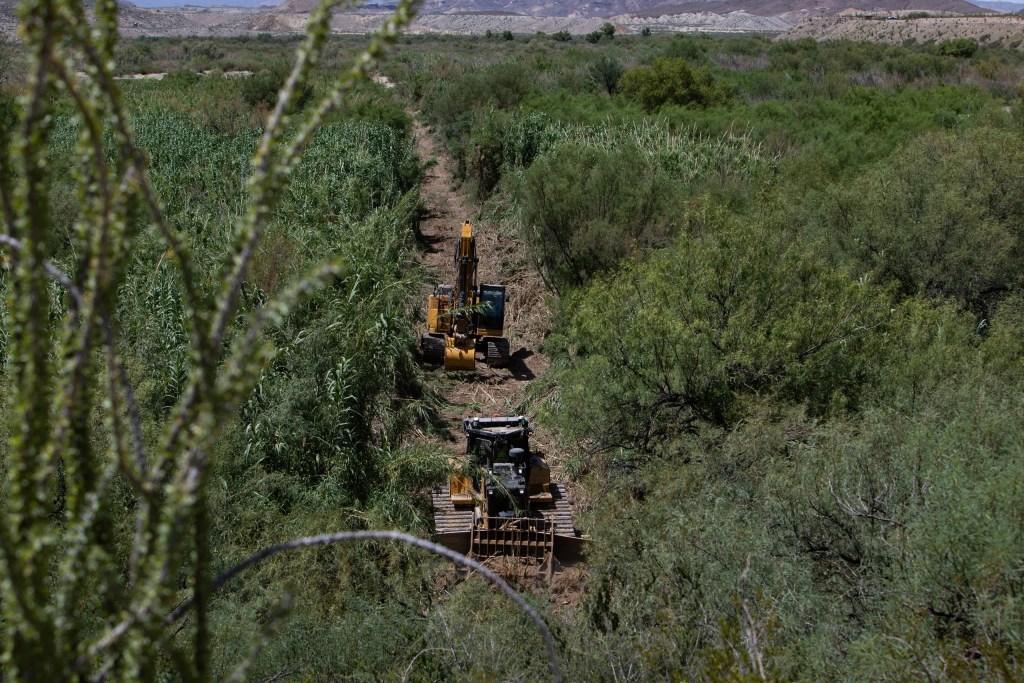


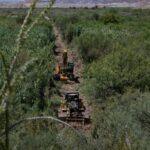



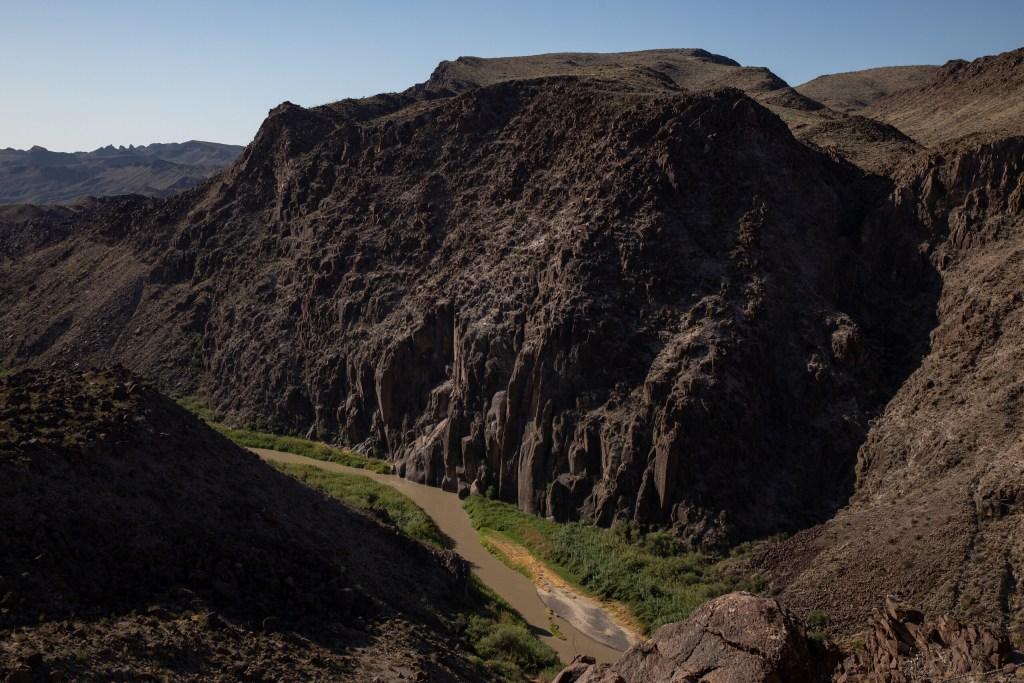
A recent update from U.S. Customs and Border Protection (CBP) outlines plans for the construction of 30-foot wall segments in two areas of Big Bend Ranch State Park, adding to the ongoing uncertainty surrounding border wall developments in the region.
According to the CBP’s “Smart Wall Map,” these wall segments are slated to extend through approximately two miles of the park’s westernmost sections adjacent to the U.S.-Mexico border. This map has undergone numerous modifications over the past few months, including instances where it was temporarily removed from the CBP website.
The updated map was first reported by Bloomberg, which indicated that CBP has confirmed construction in the area, including the state park, is expected to commence in September.
In a statement, a CBP spokesperson noted that while there are identified “priorities for new border wall and detection technology” in and around state and national parks, these initiatives remain in the planning phase as the agency prioritizes areas with higher operational needs.
“CBP continues to develop its plans for border barrier construction funded by the One Big Beautiful Bill Act, concentrating on locations with historically high rates of illegal entry where individuals frequently attempt to cross into the United States,” the spokesperson explained.
Despite the Big Bend Sector being the least active among Border Patrol’s nine sectors—accounting for only about 1.3% of over 237,000 apprehensions along the U.S.-Mexico border in fiscal year 2025—officials from the Trump administration have characterized the area as having significant illegal entry issues.
The revised wall construction plans reflect the ongoing mixed messages from Trump administration officials regarding the extent of border construction in this area. Earlier, CBP Commissioner Rodney Scott had stated in a May interview that plans for a wall in or near the state park had been abandoned in favor of alternative monitoring technologies. Just a week later, however, a $1.7 billion contract was awarded for border wall construction in Big Bend.
The CBP spokesperson clarified that the $1.7 billion contract would not be used for constructing a wall in the parks or the nearby Black Gap Wildlife Management Area.
Additionally, a $2.6 billion contract was awarded in early June for the design and construction of border barriers in Terlingua, a small town located a few miles west of Big Bend National Park.
As the Trump administration continues to navigate these conflicting messages, efforts to facilitate wall construction in Big Bend have intensified. Environmental regulations have been waived, and CBP has reached out to around 400 landowners in the area, urging them to allow contractors to survey their properties or face potential eminent domain actions.
Opposition to the wall, particularly in the parks, has been both vocal and bipartisan, but efforts to halt construction have largely fallen short. A recent proposal to prohibit wall construction in the region was rejected by a congressional funding panel in June.
Several advocacy groups, along with Presidio County, have filed lawsuits against the Trump administration, arguing that the wall’s construction would lead to significant environmental harm and increase flooding risks in the area.