





Since assuming office again in January 2025, President Trump’s administration has intensified its initiatives to construct border barriers in sections of the U.S.-Mexico border that currently lack such structures. This includes the Big Bend region in far West Texas, which encompasses both Big Bend National Park and Big Bend Ranch State Park, areas targeted for border security enhancements.
Historically, the Big Bend region has seen the lowest number of illegal border crossings along the entire southwest border. Nevertheless, the Trump administration has allocated billions in contracts for infrastructure aimed at deterring illegal entries, while assuring local residents that no border wall or fence would be erected within the national park.
Despite these assurances, local residents, environmental advocates, and a diverse coalition of elected officials—including sheriffs and county judges—continue to urge the administration to halt all construction activities.
Details on Construction Plans in the National Park
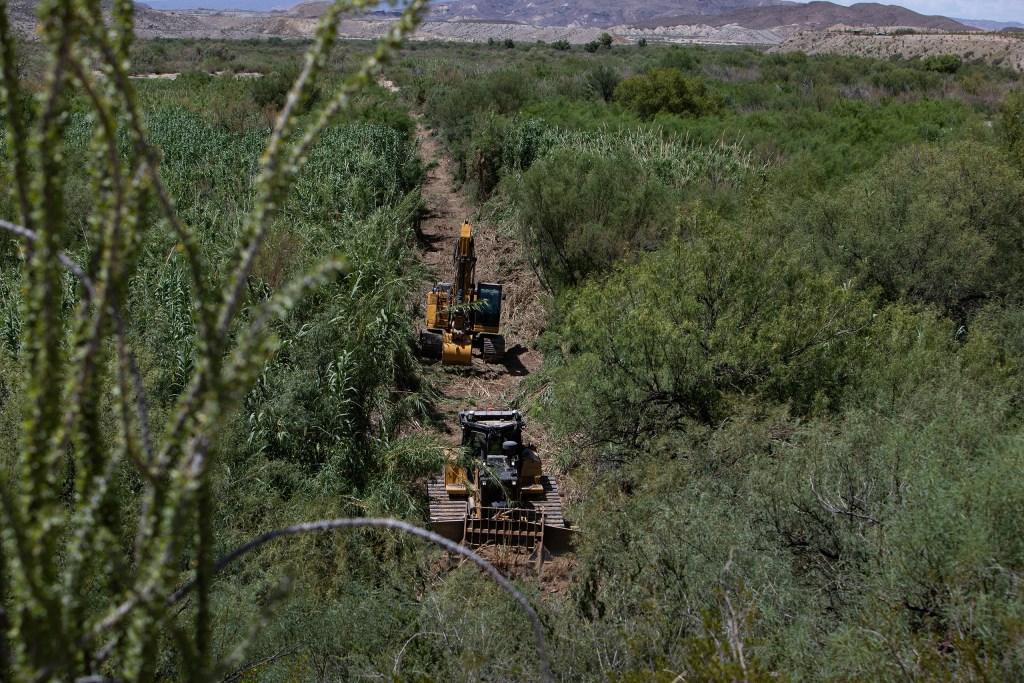
In August, the arrival of bulldozers at Big Bend National Park signaled the start of survey and design efforts by U.S. Customs and Border Protection (CBP) to create an access road and install vehicle barriers. CBP claimed that these enhancements were essential for border security while aiming to maintain visitor access and protect the landscape.
CBP Commissioner Rodney Scott stated, “These improvements will help our agents detect illegal crossings, respond faster, and assist visitors in danger.” He emphasized that strengthening border security throughout the southwest should not leave Big Bend vulnerable to exploitation by cartels.
However, following significant local opposition, Scott announced on August 17 that construction in the national park would be put on hold to allow for an “on-the-ground evaluation.” This decision came after construction crews had already begun their work.
“I put a pause on all activity in that park, as far as construction goes, until I can get down there and do a personal evaluation, talk to some stakeholders, and consult with local law enforcement,” Scott communicated via social media. The duration of this pause remains uncertain.
Illegal Crossings in the Big Bend Region
Despite claims from former U.S. Department of Homeland Security head Kristi Noem that the Big Bend Sector is a “high illegal entry” area, it is the least trafficked of all Border Patrol sectors. Covering 77 Texas counties and 517 miles of the 1,954-mile U.S.-Mexico border, it includes state and national parks. In fiscal year 2025, CBP recorded only 3,096 migrant encounters in this sector, accounting for a mere 1.3% of the total 237,538 apprehensions along the entire border.
Apprehensions have decreased significantly, dropping 74% last year compared to the previous two fiscal years, with the Big Bend sector mirroring this trend. In the first seven months of the current fiscal year, encounters fell by 42.5% compared to the same period the previous year.
Barrier Plans in the National Park
Officials from the Trump administration have clarified that no 30-foot-tall barriers will be constructed in the national park. Instead, they intend to implement alternative deterrents, such as vehicle barriers and technology for detecting illegal crossings.
“Big Bend National Park features some exceptionally high granite cliffs. Erecting a 30-foot border wall atop a 90-foot granite cliff would be impractical,” Scott explained in a May interview. Governor Greg Abbott also confirmed that he was informed no tall barriers would be placed within the park.
Confusion Surrounding the Project
The frequent changes in CBP’s plans have led to widespread confusion. Information available to the public has often indicated intentions to build a border wall in both state and national parks. Additionally, contracts awarded for the project have been labeled as pertaining to border barriers, even though officials have stated that plans could evolve based on the needs of Border Patrol agents.
Landowners in the region have received notices from CBP threatening to seize their properties through eminent domain, yet many express frustration over the lack of clarity regarding government intentions for the land.
Border Barriers Outside the Park
CBP plans to install border barriers outside the national park on private land. An interactive map on CBP’s website indicates that contracts have been awarded for 30-foot barriers across 175 miles in Hudspeth, Jeff Davis, and Presidio counties.
Opposition to the Administration’s Efforts
Opposition to the Trump administration’s border initiatives has been both wide-ranging and bipartisan. Local residents argue against the necessity of any border infrastructure in such a tranquil area, fearing loss of farms, businesses, and homes due to property seizures. Environmentalists caution that any construction could disrupt sensitive desert ecosystems and threaten endangered species.
The National Park Service lists several protected species in the area, including the black-capped vireo and the Mexican long-nosed bat. Archaeologists have also expressed concerns that construction may damage historical sites significant to Native American and Mexican families with deep ancestral ties to the region.
A coalition of local elected officials, from both parties, has stated that the region’s natural features, such as cliffs along the Rio Grande, already provide effective barriers. County judges, mayors, and sheriffs have collectively requested meetings with Trump administration officials to explore alternative border security measures that do not involve a wall.
State officials have joined these calls for reconsideration. In July, Texas Land Commissioner Dawn Buckingham sent a cease and desist letter to CBP and its contractor, Barnard Construction, alleging illegal land clearing in Presidio County. U.S. Senator John Cornyn also urged officials to engage with local residents before proceeding with further construction.
Legal Actions Taken Against Construction
On August 14, the People of La Junta for Preservation, a nonprofit linked to the Lipan Apache community, and the Far Flung Outdoor Center, a local business, filed a lawsuit against the Department of Homeland Security and other federal entities to prevent construction in Big Bend National Park. They argue that the project violates U.S. law and threatens constitutionally protected religious freedoms.
This lawsuit represents the latest legal challenge against the federal government’s border construction initiatives in the area. Previous lawsuits have been filed by various groups, including Friends of the Ruidosa Church and Democracy Forward, highlighting concerns over environmental impact, property rights, and flood risks associated with building a wall in flood-prone areas.