








As rural schools grapple with decreasing enrollment, evolving educational models, and mounting pressures on limited resources, the implications reach far beyond the classroom. A collaborative investigation by six newsrooms, utilizing field reporting from the INN’s Rural News Network and analytical data from Big Local News at Stanford University, explores the crucial role rural schools play in their communities, the impact of diminishing support, and the potential effects on community sustainability.
Liberty County’s Educational Landscape
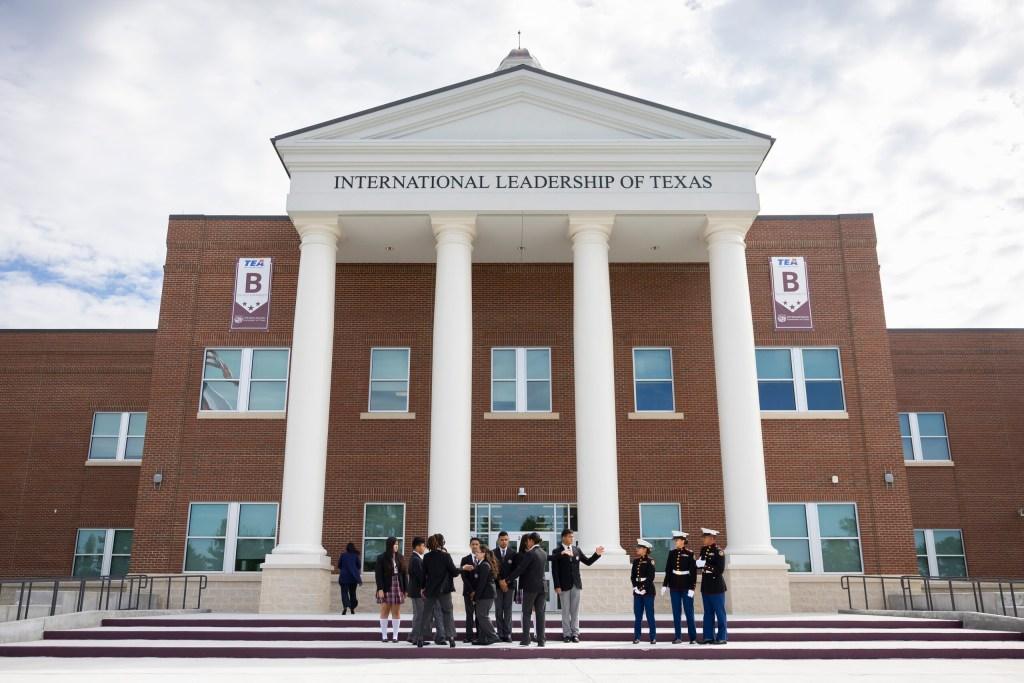
Five years ago, Texas Education Commissioner Mike Morath reached out to Eddie Conger, the superintendent and founder of the International Leadership of Texas (ILTexas). Liberty County, a historically agricultural region between Houston and Beaumont, was experiencing rapid growth, overwhelming the Cleveland Independent School District (ISD), the area’s largest district.
“Cleveland ISD was growing too fast, and that is why the state asked us to come down here,” Conger explained.
ILTexas, a free public charter school system established in 2012, currently operates 26 schools statewide, including in major cities like Dallas and Houston.
Upon his arrival, Conger discovered Colony Ridge, a predominantly Latino community, struggling with insufficient educational resources and a lack of nearby schools. This low-income yet fast-developing area, characterized by mobile homes alongside new construction, is home to families yearning for better educational prospects for their children, yet it lacked a high-performing school district.
“I wouldn’t say we are filling a gap. We are just offering a different model, a different opportunity for families to choose to send their kids,” he stated.
While Cleveland ISD continues to face financial difficulties, including staff reductions and declining state academic ratings, ILTexas is seeing an increase in student enrollment and is in the process of constructing three new campuses to accommodate the expanding Colony Ridge community and other areas in Liberty County.
For the first time, the growth of charter schools in Liberty County has surpassed that of traditional schools. In the 2021-22 school year, charter schools had 71 students compared to 22,224 in traditional districts. Since then, charters have added six schools and 3,379 students, while traditional schools have only increased by 2,090 students.
Challenges for Traditional Districts
Cleveland ISD officials acknowledge that their struggles are largely beyond their control. State law mandates that districts must expand to meet enrollment demands, but financial constraints hinder their ability to do so effectively.
“We were adopting a negative budget every year I was there,” said Stephen McCanless, the former superintendent of Cleveland ISD. “We were cutting expenses left and right, and still adopting a negative budget. It wasn’t good for teachers. It wasn’t good for students. It wasn’t good for parents. But we had to come to work every day and do the best we could with what we were given.”
Tonya Clark, Cleveland ISD’s executive director of communications, emphasized that the district does not attribute the drop in student numbers to local charters but rather to families exercising their educational choices, similar to the previous surge in enrollment.
“Several years ago, the immediate question was how Cleveland ISD could expand quickly enough to accommodate an extraordinary number of students,” Clark noted. “Today, the challenge is appropriately aligning staffing and resources with current enrollment and available funding while sustainably operating the larger school system created during that period.”
Education experts predict that the trend of families migrating to Liberty County, located an hour from downtown Houston, will continue as more Texans seek affordable housing in rural areas.
This trend poses significant challenges for underfunded rural schools. The current funding structure in Texas exacerbates the situation, creating burdens for traditional public schools while benefiting charter schools, though the longevity of this advantage remains uncertain.
<p“A lot of these districts are experiencing pretty significant proportional growth and might not have the infrastructure in place to support that at the moment,” said Erin Baumgartner, director of the Houston Education Research Consortium at Rice University.
Rural Growth Amidst Challenges
While many rural schools nationwide are shutting down due to falling enrollment numbers, data indicates that Texas’ steady population growth offers a different narrative. Research from the Texas Tribune reveals that rural districts across the state have gained 156,204 students, marking a 13% increase since 2021, whereas urban districts have seen a decline of 89,707 students during the same timeframe.
However, many traditional rural districts lack the necessary resources to manage such growth, primarily due to the state’s funding mechanisms. Although lawmakers designed the fast-growth allotment to provide additional funding for public schools experiencing rapid enrollment increases, the cap of $320 million annually often leads to proportional reductions in funding for eligible districts.
For instance, during the 2023-24 school year, Cleveland ISD was entitled to $17 million from this allotment but only received $13 million. Over six years, the district was owed approximately $83 million but only received $69 million, resulting in a shortfall of $14.6 million.
The scarcity of local and state funding forces rural districts like Cleveland ISD to anticipate growth and build facilities ahead of receiving the necessary funds, an approach that many advocates argue is unfeasible for historically underfunded public schools. Since 2019, Cleveland ISD has sought voter approval for loans multiple times to finance the construction of a middle school and other essential facilities.
“The district had to expand staffing, transportation, instructional programs, and operational capacity to educate a much larger student population,” Clark outlined.
In contrast, charter schools such as ILTexas can swiftly assess community needs and establish suitable locations and programs without relying on voter approval or local school boards. Although charters cannot levy local property taxes, their operational flexibility allows them to respond more quickly to student needs without the risk of overcrowding, as they are not required to accept all students within their region.
Consequently, charter schools in the area benefit from modern facilities, specialized student programs, and resources drawn from other successful campuses within their networks.
Future Implications for Rural Education
Despite a statewide decline in public school enrollment, the situation in rural Texas raises concerns about potential competition for students between traditional schools and charter schools, a scenario that can be mitigated if lawmakers reconsider the current funding model.
<p“At the end of the day, there is only a certain amount of tax dollars that are available to the community, and that is the main issue,” stated Kevin Brown, executive director of the Texas Association of School Administrators.
As enrollment continues to rise at Cleveland ISD, charter operators have opened six new schools and welcomed 3,379 students since the 2021-22 school year, whereas traditional ISDs have only added 2,080 students. Most of these new charter schools are located within Cleveland ISD’s jurisdiction.
Transforming Liberty County
Liberty County’s landscape, once characterized by open fields and rice farming, is rapidly changing. County Judge Jay Knight noted the significant demographic and economic transition, with the population surging from 93,000 to approximately 140,000 as farmland gives way to new subdivisions and infrastructure for industrial development.
“I look at the next census in five years to be 150,000 to 160,000 people, and that brings a lot of issues with it, not just for where they’re going to go to school, but where you’re gonna buy your groceries, where you find entertainment,” Knight observed. “People who move out here expect to have the same services that they had in Harris County, and they’re just not there yet.”
The demographic shift in Texas is mirrored by changes in student enrollment, as families seek quieter, more affordable rural lifestyles. This year alone, public schools in Texas saw a loss of more than 76,000 students—the second-largest single-year decline in state history and the first non-pandemic drop in nearly four decades.
Urban districts account for nearly 30% of public school enrollment. Over the past decade, large urban districts such as Houston have experienced a 17.3% decrease in student populations, while rural districts have grown by 13.4%. Charter schools, conversely, have expanded by about 63% during the same period.
Policymakers, educators, and community members must prepare for a public education system that is smaller and more concentrated in rural and charter settings, diverging from Texas’ overall population growth for the first time in decades, according to the Texas 2036 report.
“We’re hearing it across the state. People are moving out of central urban areas and into exurbs, a layer out from the suburbs. In a lot of those places, those are actually areas that might be a little more rural,” Baumgartner noted.
However, rural schools and communities are not currently equipped to meet the needs of this expanding population, which poses challenges for school administrators.
“You might not be seeing 2,000 new kids show up in a school year, but for a district that only has 2,000 students, having 100 extra students show up is a big deal,” Baumgartner explained.
Demographic Challenges and Funding Shortfalls
Cleveland High School