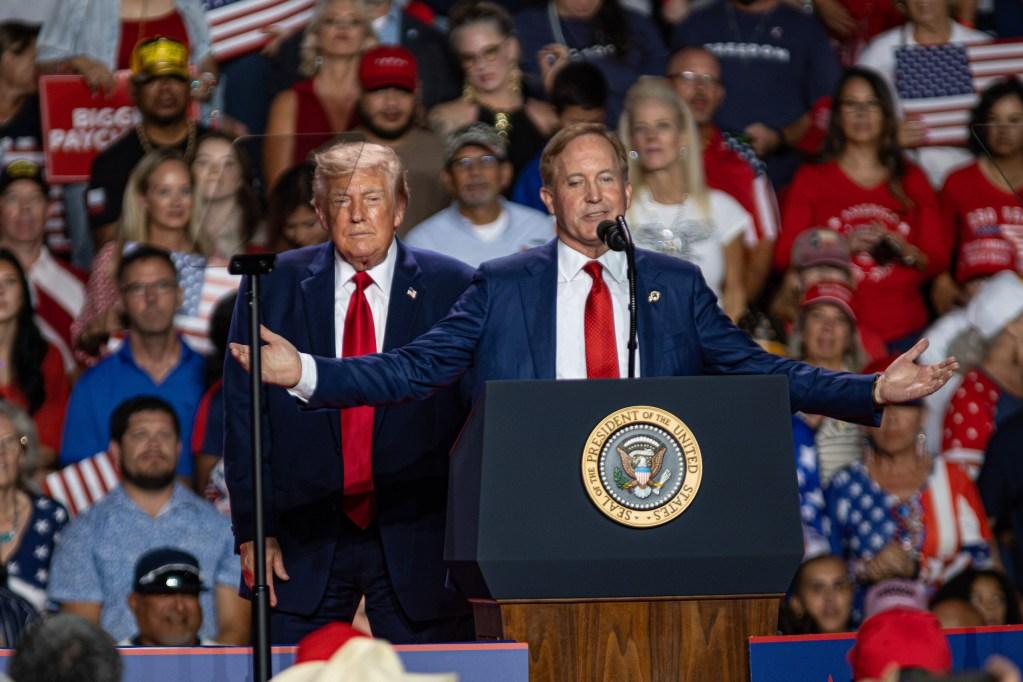







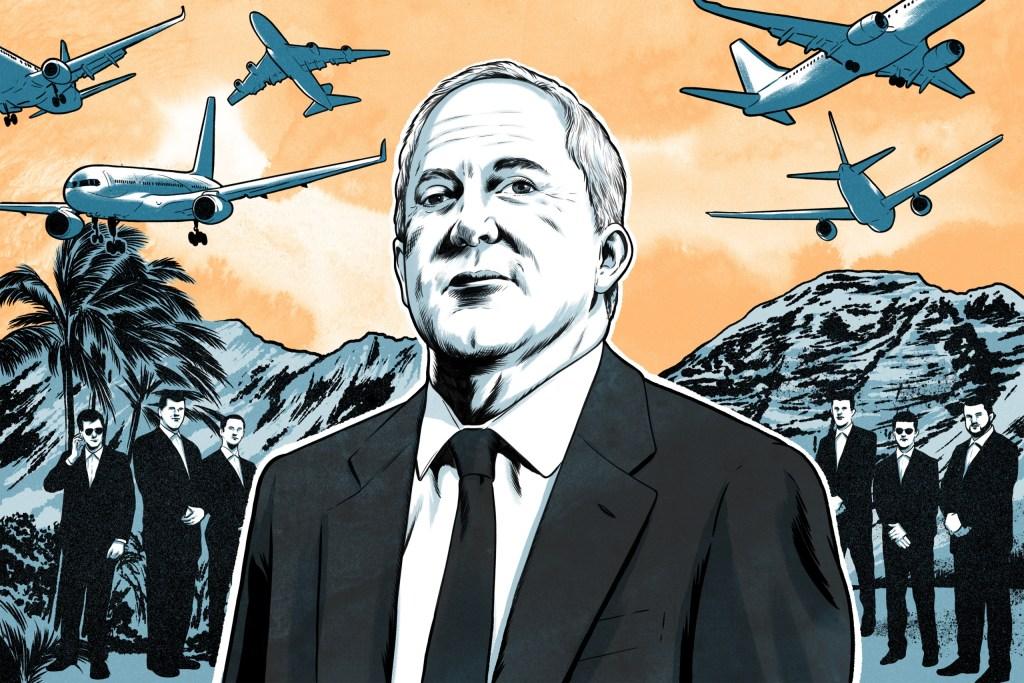
In the summer of 2023, following his impeachment for allegedly misusing his office for personal gain, Texas Attorney General Ken Paxton found himself suspended from his duties for over three months while awaiting a trial in the state Senate. During this period, Paxton embarked on an extensive travel schedule.
As a Republican candidate for the U.S. Senate, Paxton took at least 17 trips across a three-month span, visiting popular resort locations such as Park City, Utah, and Vail, Colorado. He also traveled to Oklahoma, where he owns a vacation lodge, and to a Utah golf resort community where he later acquired four condominiums. Each of these trips was accompanied by state police, resulting in substantial costs to taxpayers for personal journeys unrelated to his role as attorney general. Ultimately, the Texas Senate acquitted him of the impeachment charges.
However, Paxton’s use of taxpayer-funded security extended beyond this period, revealing a pattern that stands in stark contrast to his predecessor, other elected officials in Texas, and attorneys general from other states. An analysis by ProPublica and The Texas Tribune uncovered that Paxton has frequently traveled out of state while maintaining minimal records of his official calendar.
The investigation revealed that only one in every six of Paxton’s trips had a documented business purpose. Since taking office in 2015, he has undertaken nearly 1,000 trips with a state-funded security detail, incurring costs of $3.3 million. Of those trips, only 138—totaling approximately $553,000 in security expenses—were linked to official state business.
Records detailing Paxton’s travel across 36 states and 19 countries are often absent, raising ethical questions about his travel motives. Notable instances include a trip to Hawaii shortly before his family trust purchased land there, 24 trips to Utah where the trust owns multiple properties, and 53 trips to Florida, where he owns two homes and a townhome.
Chris Toth, a former executive director of the National Association of Attorneys General, highlighted the ethical implications of Paxton’s travel practices, suggesting that the security detail may have morphed into a taxpayer-funded subsidy rather than a legitimate protective measure. While Texas law permits the Department of Public Safety to provide security for state leaders, it does not mandate its use. Notably, Paxton has opted not to utilize the detail for official travel on numerous occasions.
Despite facing criticism over his use of office perks for personal gain, Paxton has largely dismissed these concerns and has not addressed inquiries regarding his wealth accumulation as a public servant. When contacted for further details regarding his travel, Paxton’s office issued a general statement, emphasizing the security threats he faces due to his work against violent criminals and drug cartels.
The Texas Department of Public Safety declined to comment on inquiries related to Paxton’s security arrangements.
To assess Paxton’s travel patterns, the analysis conducted by ProPublica and The Texas Tribune reviewed DPS logs and records from the attorney general’s office, revealing a stark contrast with his predecessor, Greg Abbott. While Abbott primarily traveled within Texas and incurred $203,000 in security costs during his last three years, Paxton’s average security expenses have ballooned to $24,300 per month.
Abbott’s travel records, however, are no longer available due to retention limits, preventing a complete comparison of business-related travel. In contrast, available records for Abbott as governor indicate that over two-thirds of his international trips had a listed business purpose, while Paxton documented only two out of 25 such trips during his entire tenure.
Paxton’s travel records show a lack of documented business purposes for trips to various countries, including Australia, Mexico, and England. The proportion of his travel with a specified business purpose peaked in 2018 and 2019 at 30%, aligning with the governor’s travel figures during that time. Since then, he has undertaken increasingly more out-of-state travel, with only five out of 91 trips last year classified as state business-related.
In certain instances, Paxton has traveled for business without a DPS detail, such as meetings in Nashville, Tennessee, and North Carolina. However, he did utilize the detail for campaign-related activities, including a flight to Maine for a television appearance shortly after his impeachment acquittal.
Experts in government ethics suggest that Paxton should bear the costs for security during personal trips and campaign events. Richard Briffault, a professor at Columbia Law School, emphasized that taxpayers should not fund trips that do not benefit the public.
Despite these concerns, there are no records indicating that Paxton or his campaign has reimbursed the state for security expenses incurred during personal travel.
Among the ten most populous states, Texas and New York provide security for their attorneys general, while Florida allows it on request. In contrast, North Carolina does not offer such provisions, and other states have not responded to inquiries regarding their policies.
Former Oregon Attorney General Ellen Rosenblum, who did not use a security detail during her 12 years in office, noted that while Paxton’s visibility might necessitate some level of protection, his extensive travel raises questions about his commitment to his official duties.
Interestingly, some of Paxton’s travels align with locations where he or his family trust has acquired properties since 2021. A recent analysis revealed that he owns or co-owns 15 properties valued at around $11 million. For instance, after attending a conference in Maui in 2021, Paxton’s family trust purchased a vacant oceanview lot for $410,000, which has now appreciated significantly in value.
Paxton has also frequently visited the Salt Lake City area, where his family trust acquired property in Eden. His travel record shows 19 trips to Utah, only twice for business purposes, coinciding with the trust’s purchase of a mountainside lot. Additionally, during his suspension in August 2023, Paxton traveled to St. George, Utah, where he purchased multiple condominiums at a golf resort.
Florida has seen the most frequent visits from Paxton, with 53 trips recorded, only two of which had documented business purposes. He has also traveled twice to Broken Bow, Oklahoma, where he purchased a $1.5 million vacation lodge.
Despite the scrutiny over his travel, Paxton’s office maintains that his responsibilities in securing significant legal settlements warrant ongoing travel. However, the overwhelming majority of his trips lack any documented business purpose.
Observing the evolving role of attorneys general, experts suggest that while occasional travel for work is reasonable, the extent of Paxton’s travel—especially in light of ongoing ethical concerns—raises questions about how he utilizes his office.
Paxton has not publicly addressed the scrutiny surrounding his use of the taxpayer-funded security detail. In a recent podcast interview, he expressed a fondness for various travel destinations, including Jackson Hole and Park City, revealing a personal preference for travel that may further complicate perceptions of his office’s priorities.