








A group of parents initiated a lawsuit earlier this year against a new Texas law mandating the display of the Ten Commandments in public school classrooms. State Senator Mayes Middleton, a Republican from Galveston, was prepared for the challenge.
“There is no such concept as ‘separation of church and state’ in our Constitution, and our schools are not devoid of God,” Middleton stated in an interview. However, a federal judge ruled otherwise, placing a block on the law across 11 school districts, citing a 1980 Supreme Court decision that invalidated a similar law in Kentucky. Despite this setback, Middleton pressed on, as his local school district in Galveston was not included in the injunction. He donated posters of the Ten Commandments and urged the district to display them. When the school board hesitated due to the ongoing lawsuit, Texas Attorney General Ken Paxton intervened with a lawsuit, resulting in a judicial order for the signs to be hung.
Throughout his decade-long tenure as a state legislator, Middleton has been a staunch advocate for integrating Christianity into public life. He has dismissed the separation of church and state as a “false doctrine” and emphasized that Texas must remain rooted in “Judeo-Christian principles that have made us strong,” while also taking a critical stance against what he refers to as the “Islamification of Texas.”
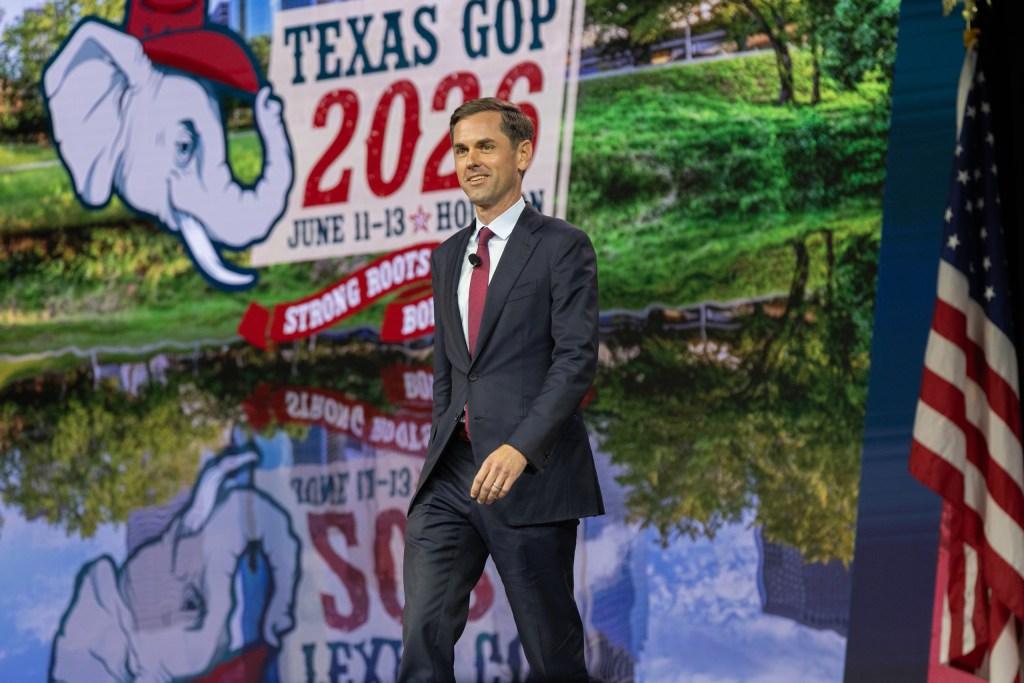
As he campaigns for the position of attorney general, Middleton’s stance has rallied significant support from a Republican base eager to challenge the traditional boundaries between religion and government. His candidacy has been endorsed by David Barton, a former Texas GOP chair and prominent advocate for establishing Christianity as the nation’s religion, who praised Middleton as a “man of sincere Christian faith.”
In a letter co-signed by Barton and other conservative Christian leaders, they urged Christians to mobilize and vote in the upcoming election, citing the increasing threats to religious liberties.
However, religious freedom advocates and non-Christian communities express concern that Middleton’s policies could marginalize the nearly 10 million Texans who do not identify as Christians. Annie Laurie Gaylor, president of the Freedom From Religion Foundation Action Fund, warned that Middleton’s election could lead to a scenario where non-Christians are treated as second-class citizens. She argued that if he were to become attorney general, he would possess significant authority to interpret laws in a way that diminishes the separation between religion and government.
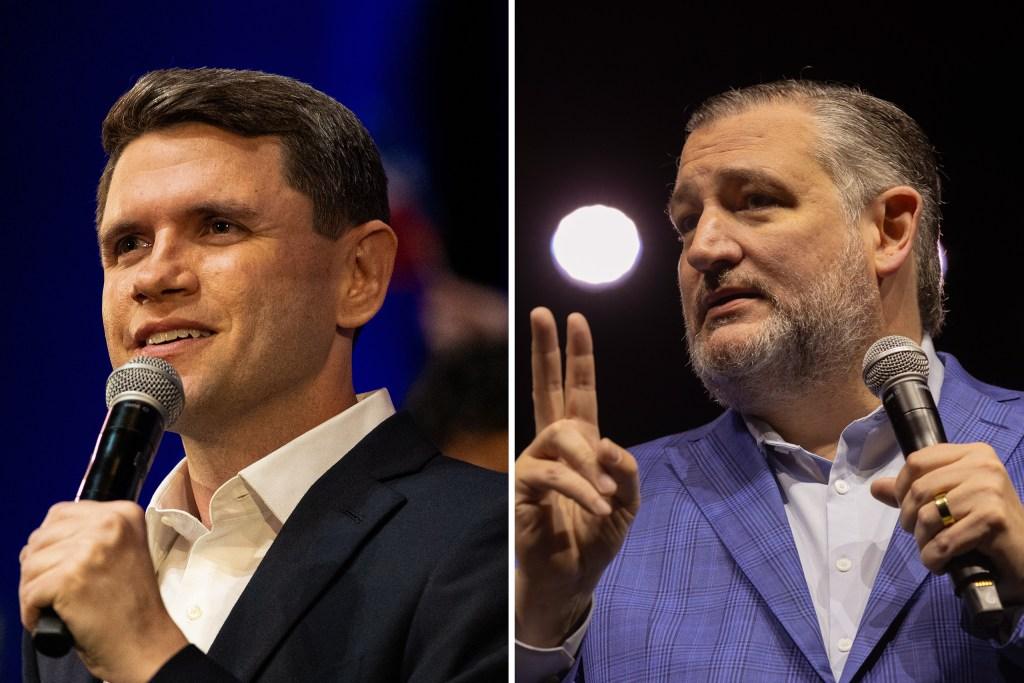
Middleton has not responded to inquiries regarding his campaign from the media, nor has he participated in any interviews. He has also declined to debate his opponent, fellow state Senator Nathan Johnson, who is trailing closely in the polls ahead of the November 3 election.
Johnson criticized Middleton’s perspective on the role of religion in government, deeming him “unfit” for the position of the state’s chief legal officer. He remarked on the importance of the separation of church and state, describing it as a foundational principle of American jurisprudence that should not be disregarded.
During an annual conservative event hosted by Texas Values, Middleton declared that his primary objective, if elected, would be to remind Texans that “our rights come from God, not government.”
Chaplains in Schools
In 2023, an evangelical Christian group proposed an unconventional solution to Texas’ shortage of guidance counselors: allowing religious chaplains to serve in schools. Middleton, who was already advocating for legislation to require the Ten Commandments in classrooms and to allow prayer during school hours, agreed to promote this initiative.
Opposition quickly arose, notably from state Representative James Talarico, an Austin Democrat and Presbyterian pastor, who condemned the move as a “Trojan horse” for unqualified religious individuals to indoctrinate students. Following the bill’s passage, the Freedom From Religion Foundation designated Middleton as their “Theocrat of the Week” for his role in promoting religious involvement in schools.
Even among conservative circles, Middleton’s actions were seen as a bold departure. Rick Green, a former state representative, remarked on the surprising nature of Middleton’s initiative. Currently, data indicates that there are six chaplains working across four Texas school districts.
Middleton acknowledged that such legislation would not have been feasible just a few years prior, crediting the recent appointments to the U.S. Supreme Court under President Trump for creating an environment conducive to these changes.
For decades, conservative Christian advocates have sought to challenge the Supreme Court’s ruling from 1971, which mandated a clear distinction between government and religion unless a secular justification exists. The court had emphasized that no specific religion should be favored or discriminated against, nor should there be excessive entanglement between church and state. However, a recent Supreme Court ruling in 2022, in the case of Kennedy v. Bremerton, signaled a shift in this paradigm, allowing for historical context in evaluating religious practices.
Upon the legislature’s return in 2023, Middleton took up the mantle for reintroducing religion into schools, reflecting constituents’ sentiments he encountered during his campaign. He claimed that the removal of prayer from schools was linked to a decline in discipline and mental health.
Legal experts, however, caution against misinterpreting the Kennedy ruling as a green light for religious advocacy in public schools. They assert that the Establishment Clause, which prohibits the endorsement of a state religion, remains a fundamental principle.
Middleton, undeterred by criticism, successfully passed both the Ten Commandments and prayer time initiatives, wearing the backlash as a badge of honor. He even showcased a letter of disapproval from the American Atheists during a Senate session.
The ensuing legal battles over the Ten Commandments mandate align with the desires of conservative activists, who hope the Supreme Court will seize the opportunity to overturn the 1980 precedent. Legal scholars suggest this represents a calculated risk for conservative advocates, as the justices have not yet revealed their stance on classroom-related cases.
The Role of the Attorney General
If elected attorney general, Middleton would wield considerable authority to influence legal interpretations and pursue religious liberty issues across Texas and beyond. The attorney general’s office has evolved over the past three decades into a more assertive entity, capable of initiating lawsuits, launching investigations, and shaping state jurisprudence.
Historically, the Texas attorney general has engaged in contentious legal battles concerning religion in schools. Notably, John Cornyn, the first Republican to hold the office since Reconstruction, represented a school district in a Supreme Court case regarding school prayer in 1995, ultimately losing the case. His experience later informed his discussions during Supreme Court nominations.
As conservative Christians gained influence in Texas politics, the attorney general’s office increasingly took on cases defending religious interests. Greg Abbott, a former attorney general, was involved in defending the monument of the Ten Commandments at the state capitol and supported students’ rights to display religious messages at school events.
Ken Paxton, Abbott’s successor, continued this trend with fervor, endorsing practices that favored Christian expressions while opposing those that accommodated Muslim students, indicating a selective application of religious freedoms.
As debates over religious representation in public spaces continue, advocates on both sides anticipate that Middleton would adopt a similar approach if he assumes the role of attorney general. Throughout his campaign, he has positioned himself against perceived threats to Christian values and has expressed commitment to ensuring that governmental decisions reflect his faith.