





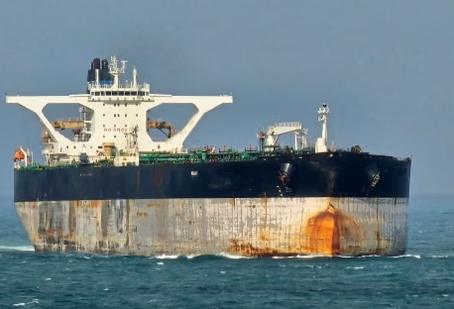
U.S. military forces are preparing to intercept an oil tanker, identified as the Marinera, which has a history of transporting Venezuelan crude oil and is currently under sanctions from the Treasury Department. This move comes as part of ongoing efforts to exert pressure on Venezuela, according to two U.S. officials familiar with the situation.
Since December, American forces have been actively tracking the Marinera, previously known as the Bella 1. The U.S. has intensified its actions against the Venezuelan regime, led by former President Nicolás Maduro, accusing the government of utilizing multiple vessels to smuggle drugs toward the United States.
Sources within U.S. intelligence have revealed that Venezuelan officials considered deploying armed military personnel on tankers, disguised as civilians for defensive purposes. Discussions regarding the potential use of portable Soviet-era air defense systems took place prior to the capture of Maduro and his wife by U.S. special forces over the weekend.
Insiders indicated that the U.S. would prefer to seize the Marinera rather than sink it, similar to the operation conducted last month involving the seizure of The Skipper, another crude oil tanker flagged out of Guyana. This operation was executed after the Justice Department obtained a warrant based on the ship’s previous involvement in Iranian oil trade.
Maduro has vehemently denied U.S. allegations regarding the usage of these vessels and instead accuses the U.S. of exploiting Venezuelan resources under the guise of law enforcement. This latest confrontation reflects a series of U.S. actions, which have included charging Maduro and his wife with narco-terrorism. Previous strikes on various vessels have resulted in over 100 fatalities in the Caribbean and Eastern Pacific regions.
The Marinera was previously flagged in Panama but was sanctioned by the Treasury Department in 2024 for its involvement in the Iranian oil trade during the Biden administration. The vessel is currently sailing under the Russian flag, a development that could complicate sensitive negotiations between the U.S. and Russia regarding the ongoing conflict in Ukraine.
According to the Russian Maritime Register of Shipping, the Marinera is now ported out of Sochi on the Black Sea. Reports indicate that the Russian government has formally requested that the U.S. cease all attempts to intercept the ship.
No comments were received from the White House, Pentagon, or State Department when contacted for information. Similarly, the Russian Embassy in Washington, D.C., did not respond to inquiries.
U.S. officials disclosed that the planned interdiction of the Marinera could occur as early as this week, although such military operations are subject to change. These officials requested anonymity to discuss sensitive national security matters.
Both the Marinera and The Skipper were sanctioned by the Treasury Department for their alleged involvement in an oil smuggling network that finances the Iranian Revolutionary Guard Corps and Hezbollah, an Iranian-backed militant group in Lebanon.
These vessels, including the Marinera, The Skipper, and the Centuries—another tanker recently seized—are part of a shadow fleet engaged in the illicit transportation of oil from sanctioned countries such as Russia, Iran, and Venezuela.
Former President Trump had previously imposed a “total and complete blockade” on Venezuelan oil tankers, emphasizing the extensive naval presence surrounding Venezuela. He indicated that the U.S. would continue to escalate its efforts until Venezuela returned resources taken from the United States.
Reports have surfaced indicating that at least 16 oil tankers have attempted to avoid the U.S. naval blockade by masking their geographical locations or disabling their transmission beacons.
If captured, the Marinera would mark the third oil tanker seized by the U.S. as part of its ongoing campaign against Venezuela, which began in early September.