








Eight years ago, during the peak of the shale-oil boom, industry leaders and public officials in Texas announced an ambitious initiative aimed at rendering Corpus Christi “drought proof.”
At a presentation to city officials, consultant Frank Brogan outlined a vision for the semi-arid coastal region of South Texas, emphasizing that the plan would allow industries to thrive despite water scarcity. “Industry can continue to operate,” Brogan declared, highlighting the potential for economic expansion.
The proposal was straightforward: major water-consuming corporations, including Texas giants like OxyChem, Valero, and Citgo, would finance the construction of the state’s first seawater desalination plant. This facility was expected to produce millions of gallons of freshwater daily with minimal costs to the public. In return, these companies would not be pressured to reduce operations during future droughts.
Brogan, a former executive at the Port of Corpus Christi, remarked, “We don’t want to have the reputation of having a water problem,” during the August 2018 presentation.
City officials promptly approved the project, viewing it as a groundbreaking collaboration where corporations would invest in a vital public resource. However, the initiative has since led Corpus Christi to the brink of a water supply crisis, costing taxpayers tens of millions and stirring political strife.
Despite the city spending over $50 million on the desalination plant, it has yet to be constructed, hampered by political dysfunction, the COVID-19 pandemic, inflation, and frequent changes in leadership. Meanwhile, the corporations that initially pledged funding now contribute only a fraction of the expected costs, leaving residents to foot the bill.
Throughout this period, Corpus Christi has maintained its commitment to the 2018 agreement, refraining from imposing water restrictions on industrial users even amid severe drought conditions.
By spring, the region’s primary reservoirs were nearly depleted. In response, industrial leaders rushed to drill emergency wells, while the city’s credit ratings declined, and local business owners warned of potential mass layoffs if water resources dwindled further.
Faced with this unprecedented crisis, city officials debated minor measures, such as closing public pools and imposing fines for car washing, without addressing the significant water usage by chemical plants and refineries that surpassed that of the city’s 500,000 residents.
Isabel Araiza, a college professor and founder of the community group For the Greater Good, criticized the industrial water consumption, stating, “The reason we were in the water crisis was because of their water usage.”
Bob Paulison, head of a trade group for the industrial sector, countered that the city’s failure to deliver on the promised water supply was to blame, suggesting that city leaders “kept dragging your feet until it was too late.”
Governor Greg Abbott echoed this sentiment, accusing Corpus Christi officials of squandering substantial state loans designated for the water project.
However, an examination of public records reveals that the industrial giants were also instrumental in shaping the flawed plan. Initially, they sought a private desalination plant for their own needs before opting for a public partnership that would grant them access to low-interest state loans.
This collaboration, once envisioned as a path to prosperity for Corpus Christi, has now become a cautionary tale about the risks associated with linking essential public resources to private industry ambitions.
Although heavy rains this summer alleviated the immediate water crisis, the near disaster has fueled resentment among residents towards the corporations that drive the economy of this key Texas industrial hub.
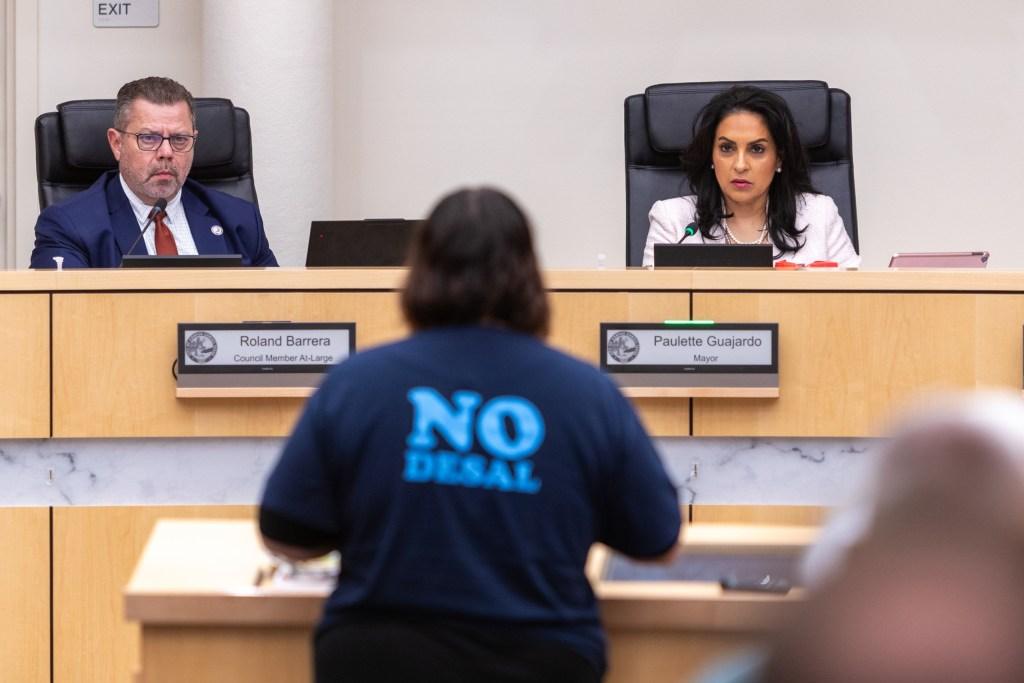
A proposal to repeal the 2018 plan is set to appear on the local ballot in November, driven by a successful petition campaign led by Araiza and fellow activists. This measure aims to eliminate the water usage exemptions granted to industrial giants and significantly raise their water costs during future droughts.
If approved, this would mark a significant shift in governance for a port city that has historically favored private sector leadership. “It’s a referendum against the system,” remarked Roland Barrera, a long-serving Corpus Christi City Council member, about the ballot initiative.
Former mayor Joe McComb, who supported the 2018 plan, warns that the city’s future hangs in the balance. He believes industry is essential for the city’s prosperity and cautions that punitive measures against businesses could threaten the region’s economic viability.
McComb stated, “If industry shuts down, Corpus Christi will be just a fishing village again.”
For McComb, the desalination project symbolized a long-sought solution to the recurring drought cycles that have plagued Corpus Christi. He recalled a dire situation during his first term on the City Council in 1984 when water supplies dwindled dangerously low, prompting a mandatory cut of 25% in water usage.
In response to that crisis, city leaders committed to never facing such a situation again, leading to the construction of a larger reservoir, Choke Canyon. Subsequent droughts prompted the city to build pipelines to other water sources, and as the last remaining options were exhausted, the Gulf of Mexico became the final frontier for securing water supply.
In 2014, a coalition of the region’s largest water consumers began discussions about building a desalination facility, recognizing the need to safeguard their interests.
City officials joined forces with the industrial sector, as the construction of a public facility would unlock access to state funding for water projects. “Public ownership offers significant cost savings,” Paulison told City Council members in 2016.
Despite concerns raised by Araiza about the reliance on public resources for private industry growth, the council unanimously supported the plan to move forward.
By 2018, the plan took shape, proposing to amend the city’s drought-contingency plan to exempt large industrial water users from fines in exchange for an immediate rate hike to fund the desalination plant. The City Council adopted this fee unanimously, viewing it as a critical step for the city’s future.
However, as the project progressed, costs began to balloon. Initially estimated at $140 million, the anticipated cost of the desalination plant surged to $220 million by early 2020, requiring the city to seek additional loans to cover the increased expenses.
The dynamics shifted further as the original industrial partners distanced themselves from the execution of the plan, leading to confusion and delays.
Despite hopes of breaking ground in 2021, the project stalled due to the pandemic, worsening drought, and increasing opposition from community activists concerned about environmental impacts.
As the city faced dwindling reservoir levels, discussions about imposing water restrictions for residents intensified, but industrial users remained exempt from these measures.
In July 2023, Araiza’s group launched a petition to repeal the drought surcharge exemption fee, highlighting the inequities faced by residents in contrast to large industrial users.
Following heavy rainfall in July, Corpus Christi’s reservoirs saw a temporary boost, but the underlying issues of sustainability and water security remain unresolved.
City officials have continued to explore alternative contractors for the desalination project, but the financial implications of abandoning the initiative loom large. The city would face significant costs in returning borrowed funds and potentially damaging its credit rating.
Despite the challenges, supporters believe the project is not yet dead. They hope that upcoming city council elections may usher in leaders more amenable to the desalination initiative. However, without substantial federal support, the path to securing a reliable water supply remains uncertain.