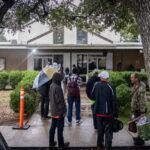








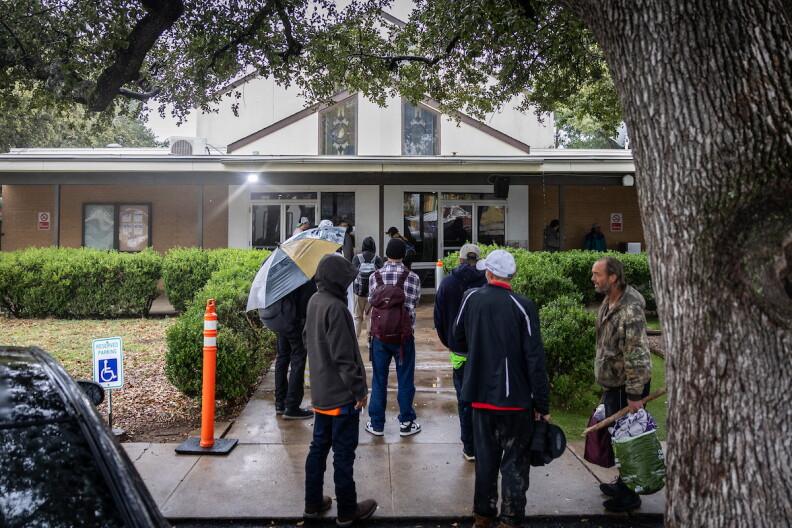
The future of the Sunrise Homeless Navigation Center has sparked significant debate in South Austin, with candidates vying for the District 5 seat emphasizing the need for proactive solutions to homelessness and the establishment of a permanent location for the center. Current Austin City Council Member Ryan Alter is seeking re-election for a second term, facing challengers David Weinberg, Liz Brink, and Farrah Abraham.
District 5, encompassing parts of South and Southwest Austin, is home to over 95,000 residents, and the median home sale price stands at approximately $475,000, according to city statistics.
Alter, who campaigned four years ago with a commitment to enhance affordability, reflects on the progress made during his tenure. “Four years later, we’ve achieved some amazing results,” he stated. “Housing costs are lower than any other major city in the country. We’ve nearly doubled the senior homestead exemption. We’ve made it so landlords can’t surprise renters with hidden fees.”
However, Alter’s opponents argue that the reality of affordability in Austin is not as optimistic as he suggests. They point to rising property taxes, increased utility fees, and the impact of inflation on everyday expenses, including groceries and gas.
Weinberg, who previously led the Texas League of Conservation Voters, believes addressing affordability requires a delicate balance between understanding community needs and delivering essential city services. “We need to have folks at City Hall who are doing a much better job of engaging with their communities and really meeting people in the middle,” he expressed, criticizing the current council for its distance from the needs of residents.
Abraham, a former reality TV personality, echoed concerns about rising costs affecting South Austin families while essential city infrastructure, such as parks and roads, remains neglected. “We need to focus on economic revitalization through B2B growth, filling empty commercial storefronts, and updating local land-use rules to protect our green spaces and watersheds without driving up property taxes,” she said.
Budgetary constraints have pressured the City Council to cut back on social services, including rental assistance and parks and recreation programs. Although Proposition Q failed last year, the city plans to present two bond measures to voters in November. The proposed $295 million bond package would lead to increased property taxes, with an estimated annual rise of $40 for the average home valued at $495,000.
Both Alter and Weinberg support the bond package, which allocates $260 million for park improvements and $35 million for library enhancements. Abraham, while endorsing strategic investments, insists on complete transparency regarding new debt before taxpayer approval.
Affordability is just one of several pressing issues discussed by the candidates. Alter and Weinberg participated in a panel hosted by KUT in September, while Abraham, unable to attend due to health reasons, submitted her responses via email. Brink did not reply to interview requests.
This November, Austin voters will consider Proposition I, a charter amendment mandating independent external audits of city finances. Candidates expressed their positions on this measure.
Alter opposes Proposition I, arguing that a recent audit, initiated by the council, would effectively assess departmental efficiency and cost savings. “I don’t support proposition I because it doesn’t do that,” he stated.
Weinberg supports Proposition I, highlighting widespread community frustration and distrust regarding city spending. “I won’t be telling anyone to vote against it,” he said.
Abraham also backs Proposition I, asserting that independent oversight is essential for accountability. She emphasized the need for audits to lead to actionable changes rather than merely documenting past spending issues.
Despite significant investments in addressing homelessness, challenges persist in preventing eviction and ensuring support for vulnerable individuals. Candidates shared their perspectives on the city’s homelessness response and potential improvements.
Weinberg pointed out troubling eviction trends that contradict claims of progress in affordability. “Homelessness is one of the most complex problems facing the city of Austin,” he remarked, acknowledging the absence of quick fixes.
Alter noted that investments in prevention have resulted in a decrease in the number of individuals entering homelessness for two consecutive years. “We have also in the past four years nearly doubled our shelter and housing capacity,” he asserted, emphasizing the need for continued efforts.
Abraham criticized the current approach to homelessness, advocating for a shift in funding towards structured recovery programs and mental health care while ensuring public spaces remain clean and safe.
The use of automated license plate reader cameras has recently faced public scrutiny due to privacy concerns, with candidates sharing their views on this technology.
Alter expressed opposition to Flock cameras in Austin, citing issues with the company’s practices. He suggested that while there is a place for basic surveillance tools, Flock cameras are not suitable.
Weinberg aligned with Alter, stating that mass surveillance tools are inappropriate for the city. He supports the idea of simpler, non-invasive camera technology.
Abraham acknowledged the potential benefits of technology in law enforcement but insisted on prioritizing civilian privacy rights, advocating for strict regulations on data usage and storage.
In a bid to improve emergency response times, the City Council approved plans for a standalone 911 call center, despite opposition from emergency services chiefs. Candidates shared their support or reservations regarding this change.
Weinberg endorsed the initiative, believing it would enhance dispatch efficiency for both police and mental health crises. “I think we can have a better system,” he stated.
Alter highlighted improvements made to the 911 service over the past four years, noting significant reductions in response times. He expressed his support for continuous improvement in emergency services.
Abraham sided with emergency service leaders, cautioning that administrative restructuring should not overshadow their expertise. She emphasized the need for focused efforts on staffing and resources to ensure the safety of South Austin.
Restoring trust within the community has been a recurring theme for the City Council. Candidates shared their strategies for rebuilding this essential relationship.
Weinberg criticized Alter’s spending practices, alleging misuse of office funds. “The council member betrayed that trust,” he stated.
In response, Alter defended his office’s spending as compliant with city policy and emphasized his commitment to transparency by voluntarily reimbursing funds. “We are a very lean and efficient staff,” he added.
Abraham proposed measures to foster trust through transparency and accountability, including eliminating campaign waste and implementing tools that allow constituents to track city responses to their issues.