








In the early years of Major League Soccer (MLS), many teams played their home games in stadiums originally built for American football. This was a continuation of practices from the North American Soccer League, where such venues provided essential facilities. While NFL and college stadiums offered ample seating and grassy fields, they were not ideal for soccer. Many had excessive capacity relative to ticket sales, some couldn’t accommodate a regulation soccer pitch, and the presence of football yard lines detracted from the soccer experience.
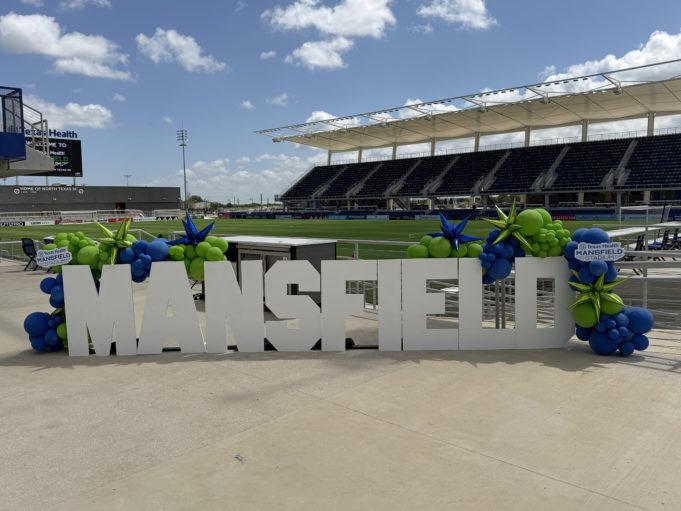
However, recent developments in Mansfield signal a significant shift in this paradigm. On Wednesday morning, a ribbon-cutting ceremony took place to inaugurate the Texas Health Mansfield Stadium, which will be the primary home for North Texas SC, a team competing in the MLS Next Pro league. While REV Entertainment and Hunt Sports Management plan to host various events at the venue, its design is primarily focused on soccer.
The Hunt family has long been advocates for soccer, even when the sport faced considerable challenges. At the ceremony, FC Dallas President Dan Hunt reflected on how pivotal his father, Lamar Hunt, was in advancing the sport. He highlighted the impact of Crew Stadium, which his father privately financed for an MLS team in Columbus, Ohio, back in the late 1990s. “Crew Stadium was what really catapulted Major League Soccer forward,” he stated.
Ali Curtis, president of MLS NEXT Pro, reminisced about the significance of Columbus Crew’s stadium as the league’s first soccer-specific facility. “I remember as a player in 2001, my rookie year, feeling like a true professional soccer player when I played there,” he shared, recalling the unique atmosphere that such a venue could provide.
Over the years, many MLS clubs have followed suit by building their own soccer-focused stadiums. This trend not only helped teams cultivate their identities and enhance the fan experience but also allowed them to manage their revenue more effectively. The result has been a flourishing soccer culture in the United States, now characterized by an exciting boom that includes 30 MLS teams and various lower-division clubs. The USL is also set to introduce a second Division I men’s league, alongside two Division I women’s leagues and a growing network of teams.
Texas Health Mansfield Stadium is designed primarily for soccer but can accommodate American football games, likely hosting some high school playoff matches and other events for women’s soccer, rugby, and more. This represents a significant departure from the traditional model, where soccer was often an afterthought. While football stadiums still play a crucial role in hosting major soccer tournaments like the World Cup, the vision of soccer gaining such prominence was once held only by a few, including Lamar Hunt. Now, the need for stadiums designed to host thousands of soccer fans is becoming a reality.
Mansfield Mayor Michael Evans proclaimed the new stadium as “the southern gateway of soccer in the DFW metroplex,” expressing his excitement that “it is soccer time in Mansfield, Texas.” Former Mayor David Cook referred to the stadium as “the front door of Mansfield.” This recognition of soccer as a central facet of community identity underscores the sport’s growing acceptance and popularity in the United States.