








A Japanese master delves into the complexities of military power in “The Samurai and the Prisoner,” a gripping murder mystery set in feudal Japan.
This film recently premiered at the AMC Parks at Arlington, where it will only be screened once a day. For those unwilling to journey further along I-30 to the Texas Theatre, this may be the only opportunity to experience this captivating narrative, which is rooted in historical events from the 16th century. Its availability in Arlington over the coming weekend appears uncertain, making it a timely adventure worth pursuing.
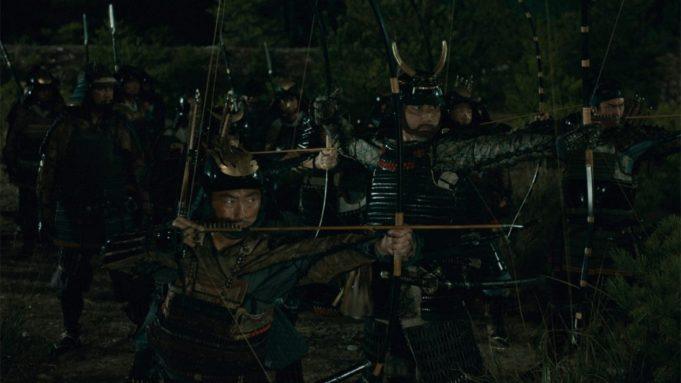
Adapted from Honobu Yonezawa’s novel, the story is inspired by real figures and occurrences from Japanese history. At its center is Lord Murashige Araki, a general under the legendary Oda Nobunaga, known for his military brilliance and unification of Japan. However, for reasons still debated by historians, Lord Murashige defied Oda and retreated to his castle, where Oda besieged him for more than a year.
In the film, portrayed by Masahiro Motoki, Lord Murashige grapples with more than just the siege. He breaches the samurai code, taking captive Oda’s envoy, Kanbei Kuroda (played by Masaki Suda), as well as the young son of a former ally who has sided with Oda. The boy’s death in his cell, apparently from an arrow, raises questions as no arrow is found at the scene. To prevent scandal, Murashige must enlist the help of the astute Kanbei, who is imprisoned, to unravel the mystery of the boy’s death, particularly with four loyal guards stationed outside the room.
Kiyoshi Kurosawa, known for his contemporary films exploring online culture, takes the helm as writer and director. His notable works include the influential horror films “Cure” and “Pulse,” as well as the e-commerce thriller “Cloud.” While Kurosawa is not related to the renowned Akira Kurosawa, he adheres to the unwritten tradition that encourages Japanese directors to craft a samurai film at some point. This film seamlessly integrates into the historical context, despite the potential absence of sword fighting, which some viewers may seek; an entire battle scene is notably bypassed, likely due to budget constraints. The film unfolds over 147 minutes, divided into four chapters that correspond with the seasons, as the mystery of the boy’s murder unfolds alongside further killings behind castle walls.
Kurosawa’s focus is less on action and more on the dynamics of military and political authority. Unlike Akira Kurosawa’s samurai films, which often depict warriors as adhering to the bushido code, this narrative questions the validity of that code altogether. Murashige opts not to execute his prisoners, despite their pleas for death, in an attempt to cultivate sympathy among the populace. Ironically, this decision alienates his own soldiers, who hold Oda’s ruthless reputation in high regard. The prevailing ethos of “victory or death” often culminates in the latter.
Characters invoke bushido whenever it serves their interests, disregarding it when it does not. When the identity of the murderer surfaces, it becomes evident that the common people are seldom the beneficiaries of bushido, as samurai wield the power to eliminate them without consequence. The film resonates with themes similar to those found in Christopher Nolan’s “The Odyssey,” illustrating the realization that relinquishing power might be the noblest course. The epilogue highlights that the historical Oda was betrayed by his own generals and ultimately committed seppuku, while Murashige outlived him, ultimately mastering the art of tea ceremonies.
The film also delves into pragmatic aspects, as Murashige and his men conduct experiments to understand the nature of the murders. He questions the loyalty of some of his Christian troops, intertwining with the murderer’s manipulation of Buddhist soldiers’ beliefs in divine retribution. Notably, the film does not reference that the real-life Kanbei Kuroda converted to Christianity after his experiences as Murashige’s captive.
Central to the narrative is the evolving relationship between Murashige and Kanbei, with the latter’s animosity serving as a navigational tool for the lord. The performances of the two leads are compelling, with Motoki, known for his role in the Oscar-winning “Departures,” effectively conveying the internal conflicts of Murashige, while Suda portrays a character whose intellect remains sharp despite physical confinement. While “The Samurai and the Prisoner” might benefit from additional action, its rich and intricate storyline compensates abundantly.
The Samurai and the Prisoner
Starring Masahiro Motoki and Masaki Suda. Written and directed by Kiyoshi Kurosawa, based on Honobu Yonezawa’s novel. Not rated.