





When Austin Councilmember Zo Qadri learned that the individual implicated in the tragic shooting at Buford’s bar had a possible Muslim background, he was engulfed by a wave of emotions: disbelief, shock, and a deep sense of concern. While disbelief and shock were anticipated reactions, his worry extended beyond the immediate community to the broader Muslim population, whom he feared might face unjust blame for a crime they did not commit.
The downtown shooting, coupled with the early speculation regarding the suspect’s religion, emerged in an already tense political landscape in Texas, where Republican leaders have intensified their criticism of Muslim organizations. For Qadri, whose district encompasses the site of the attack, this situation highlighted how quickly acts of violence can feed into larger narratives that unfairly place Muslim communities on the defensive.
By Sunday evening, Texas politicians were already embroiled in disputes over immigration and gun control policies. Social media platforms were inundated with hostile messages directed at Muslims, with anti-Islamic rhetoric and conspiracy theories flooding Qadri’s timeline.
The Muslim community is acutely aware of the implications. “I’ve had different folks reach out to me and say, ‘We’re concerned because we’re at our house of worship until late in the night, and we’re worried about a bad actor coming and causing trouble or causing harm,’” Qadri remarked. As the first Muslim elected to the Austin City Council, he is particularly attuned to the fears of those who are innocent and uninvolved in such violence.
The shooting occurred shortly before 2 a.m. on Sunday, when police reported that 53-year-old Ndiaga Diagne arrived at Buford’s bar on West Sixth Street, rolled down his windows, and began firing a pistol. After parking, he exited his vehicle with a rifle and continued his assault. Police and paramedics responded within a minute, but Diagne was shot and killed at the scene. Tragically, two individuals, 21-year-old Savitha Shan and 19-year-old Ryder Harrington, lost their lives, and a third was expected to be taken off life support, with 14 others injured.
Investigators emphasize that it is premature to ascertain a definitive motive. However, FBI officials have indicated that certain aspects of the attack might suggest a connection to terrorism. Among the evidence are images from the scene showing Diagne wearing a sweatshirt emblazoned with “Property of Allah” and a shirt featuring an Iranian flag design during the shooting.
This incident unfolded against the backdrop of U.S. and Israeli airstrikes in Iran, coinciding with Ramadan, the sacred month of fasting, prayer, and reflection for Muslims.
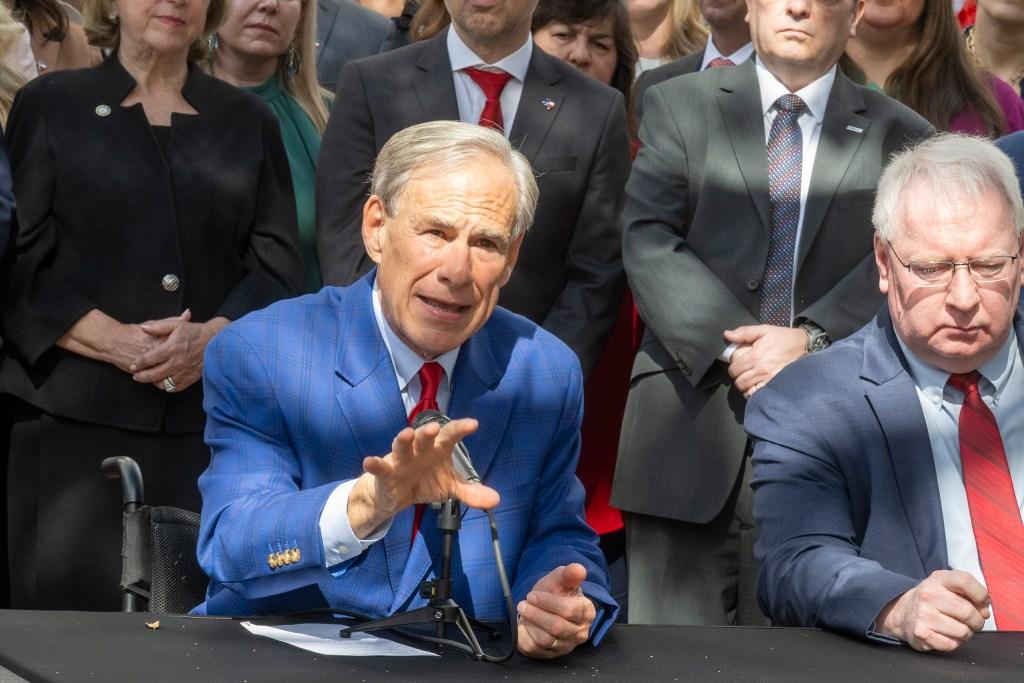
The shooting occurred amid a climate in Texas where aggressive actions against Muslim organizations have become commonplace, leading many in the Muslim community to feel increasingly scrutinized. In November, Governor Greg Abbott designated the Muslim Brotherhood and the Council on American-Islamic Relations (CAIR) as foreign terrorist organizations, prohibiting them from acquiring land in Texas. CAIR subsequently filed a lawsuit challenging this designation.
In a further escalation, Attorney General Ken Paxton recently filed a lawsuit aiming to shut down CAIR, labeling it a “radical terrorist organization” intent on undermining governmental authority and imposing Sharia law.
In the wake of the shooting, politicians across Texas and the nation began to criticize immigration policies, a reaction that did not surprise many Muslims who have experienced the fallout of such rhetoric in their daily lives, often leading to harassment and negative sentiments.
Imam Sajid Iqbal, who leads a mosque on the outskirts of Austin, understands the pervasive atmosphere of fear that arises following violent incidents involving individuals with suspected ties to terrorism. He describes his community as one that champions peace, embodying the motto “love for all, hatred for none.”
“When we see that people are making these comments toward our population in general, it does hurt us,” Iqbal explained, noting that these remarks often come from neighbors and coworkers. “At the end of the day, we don’t have an answer or rebuttal because all we can do is pray for them and show with our example what true Islam actually is.”
Safety remains a paramount concern at his mosque during prayer gatherings. Congregants rely on volunteers to oversee security and ensure a safe environment.
Haris Tarin, vice president of policy and programming at the Muslim Public Affairs Council, observes that violent incidents involving Muslims invariably become politically charged. “This is not a new phenomenon,” he stated. “It will continue. Politicians often exploit tragedies like this instead of addressing the underlying issues such as mental health.”
He warned that the political fervor surrounding such events can embolden individuals to commit acts of violence against Muslims, leading to attacks on mosques and community members. “When these narratives spread widely, they foster violence and escalate anxiety within our communities,” Tarin added.
On Monday, while police continued their investigation into the shooting, Qadri’s office organized a blood drive outside City Hall. He views his role as both a city leader and a member of the Muslim community, emphasizing his commitment to represent all constituents. “All I’m trying to do,” he said, “is be the best example of a public servant, of a person, as I can be to give folks hope during this really difficult time.”