



Austin’s city leaders are currently divided over a proposed bond election aimed at enhancing the city’s roads and parks. Zilker 351, a nonprofit organization dedicated to preserving the natural and recreational assets of Zilker Park, is advocating for bond funding to improve the public areas surrounding Barton Springs.
In a recent council meeting, the majority of the Austin City Council instructed staff to prepare a bond package focusing on parks, transportation, and cultural arts, leading to a proposed budget of approximately $400 million.
Council Member Ryan Alter emphasized the urgent need for investment in the city’s infrastructure, stating, “We have a lot of deferred maintenance and just other capital needs. This includes our parks, sidewalks, and roadways. As a growing city, these are essential investments.”
However, some council members, including Mayor Kirk Watson, express reservations about the timing of such a request. A bond election this November would follow closely on the heels of last year’s rejection of Proposition Q, a property tax increase aimed at generating over $100 million in revenue.
The council has yet to finalize the bond package, leaving the potential financial impact on taxpayers uncertain. Council Member Paige Ellis remarked that while the council aims to consider taxpayers’ concerns, it must also prioritize long-term investments. “Voter-approved bond projects are often the only opportunity for certain neighborhoods to receive the improvements they need,” she noted.
Voter-approved bonds can provide immediate financing for significant infrastructure projects like libraries, roads, and parks, with repayments sourced from a separate increase in property taxes rather than from funds allocated for essential city services like public safety and homelessness.
In recent years, Austin voters have approved three bond measures. In 2018, a $925 million bond was passed to support various sectors, including housing, parks, libraries, public safety, and transportation. Following this, a $460 million mobility bond was approved in 2020, and a further $350 million was allocated for affordable housing in 2022. However, city data indicates that millions from these previous bonds remain unspent.
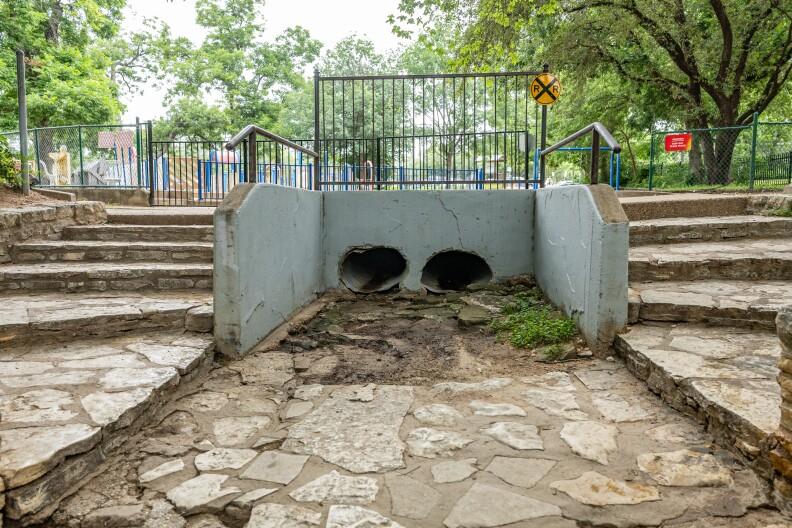
Despite this, several council members and community advocates believe the time is ripe for another bond initiative. Supporters within the community, including members of Zilker 351, are pushing for a parks bond in November, particularly to restore the shores at Barking Springs, the free section of Barton Springs Pool.
Fleetwood Jacobs, the executive director of Zilker 351, highlighted the project’s significance, saying, “The restoration will enhance water quality in one of the most popular swimming areas, stabilize an eroding shoreline, and improve access and safety. It’s crucial to preserve the natural character of Barking Springs.”
The restoration would also introduce more suitable amenities, such as benches and picnic tables. Jacobs noted that this project has been on hold since it was included in the Barton Springs Pool master plan approved in 2009, and the need for action is increasingly urgent.
The city’s bond advisory task force, established in 2024, has pinpointed $4 billion in needs throughout Austin. For this bond proposal, the focus has been on park, transportation, and cultural arts projects that can be completed within six years, according to task force chair Mary Hager.
<p"This is the future of the city," Hager asserted. "While operating budgets fluctuate, long-term improvements are vital, and we cannot afford to be indecisive about them."
Council Member Mike Siegel expressed support for a bond, differentiating it from last year’s failed property tax increase. He argued that tangible projects like park renovations and new community amenities stand to directly benefit residents.
Despite this support, not all council members are convinced that a bond election this November is advisable. Mayor Watson has raised concerns about the city’s financial policies and the need to rebuild taxpayer trust, emphasizing that the timing may not be right given the recent defeat of the tax rate election.
<p"While the city has ongoing needs, the rejection of the tax increase was a clear message about responsible governance," Watson stated, adding that any bond funding ultimately impacts taxpayer finances.
Council Member Marc Duchen echoed these sentiments, cautioning that voters are wary of decisions that may elevate living costs and feel that city leadership is not adequately addressing affordability issues.
Should the council decide to pursue a bond, city staff have suggested a cap of $400 million and recommended postponing the election until 2028 to allow for the successful implementation of existing bond projects.
The city staff will return in July with a potential bond package, and the council has until August to determine if it will present the measure to voters in November.