









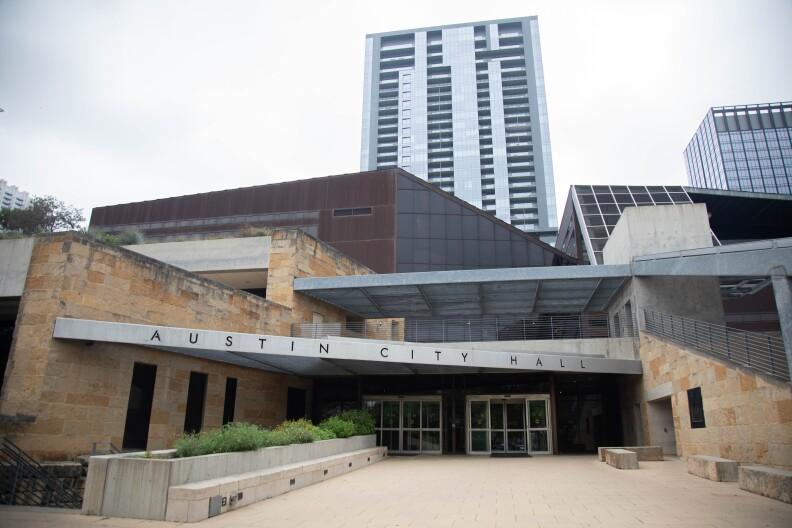
Austin’s City Council has decided against implementing stricter spending regulations for its members and their staff, despite growing concerns from residents about financial management. The newly adopted policy does not incorporate as many limitations as some council members had hoped but aims to improve transparency regarding expenditures by officials.
This policy was developed with input from city staff and was recommended by the Audit and Finance Committee, which is chaired by Mayor Kirk Watson and composed of various council members.
The committee had suggested rules that would have restricted council offices from carrying over more than $50,000 in unused funds to the following fiscal year. Any excess would revert to the city’s general fund. However, the City Council ultimately chose to reject this recommendation, opting instead for a rule that mandates that transfers of funds to other city departments require council approval. To enhance transparency, the city will also publish an annual report detailing council expenditures on its website.
Mayor Watson expressed disappointment at the council’s decision, viewing it as a missed chance for greater accountability. He acknowledged that while the policy changes are an improvement, the removal of the rollover cap undermines fiscal responsibility. “It wasn’t long ago that we received a clear message from voters regarding concerns about spending,” he noted.
Alongside Watson, council members Marc Duchen, Vanessa Fuentes, and Krista Laine supported the tighter spending regulations. Conversely, six members—Ryan Alter, Paige Ellis, Natasha Harper-Madison, Chito Vela, José Velásquez, and Zo Qadri—voted against the rollover cap, while Mike Siegel abstained from the decision.
Fuentes pointed out that without the rollover cap, Austin would be an “outlier” compared to other cities. She expressed discomfort with the idea of having such a financial policy governing their office budgets, which differ from those of city departments.
In previous years, council members have utilized unspent office funds to support local improvements, like park enhancements. For instance, in 2022, Ellis allocated $100,000 from her office to the parks department for upgrades at Dick Nichols Park, while Alter similarly contributed $100,000 for enhancements at Garrison Park and Piney Bend Neighborhood Park.
“Many of us use our office funds in various ways to meet the diverse needs of our constituents,” Ellis remarked.
Most office budgets are primarily directed towards salaries and personnel expenses, but remaining funds can be allocated for supplies, furniture, software, and media subscriptions, as well as certain travel and meal expenses. For example, Siegel incurred over $3,000 in costs for attending an international biodiversity conference in Berlin, which included flights and accommodations, a practice also followed by other council members for similar events.
City officials and staff are still permitted to attend such events if they serve a city-related purpose, though the policy prohibits first-class or luxury travel, with exceptions requiring city staff approval.
Andrew Cates, a political law attorney specializing in Texas ethics, noted that state regulations permit travel expenses using public funds, provided the individual’s engagement at the event is substantive. Participation in panels or speaking engagements would meet this criterion. “Professional development can enhance visibility and networking for the city,” Cates explained.
Meal expenses follow similar guidelines, with numerous council offices spending significant amounts on food for public engagement events. However, expenditures for individual meals, such as breakfast tacos or salads, may be viewed as personal use, which is not permitted. The use of city funds for alcohol and event tickets not directly related to city business is also banned.
“Everything has a line,” Cates concluded. “You must consider whether the expense is reasonable and justifiable for the city.”
Correction: An earlier version of this story inaccurately stated that five council members voted against the rollover cap. The correct number is six, including Council Member Zo Qadri.