






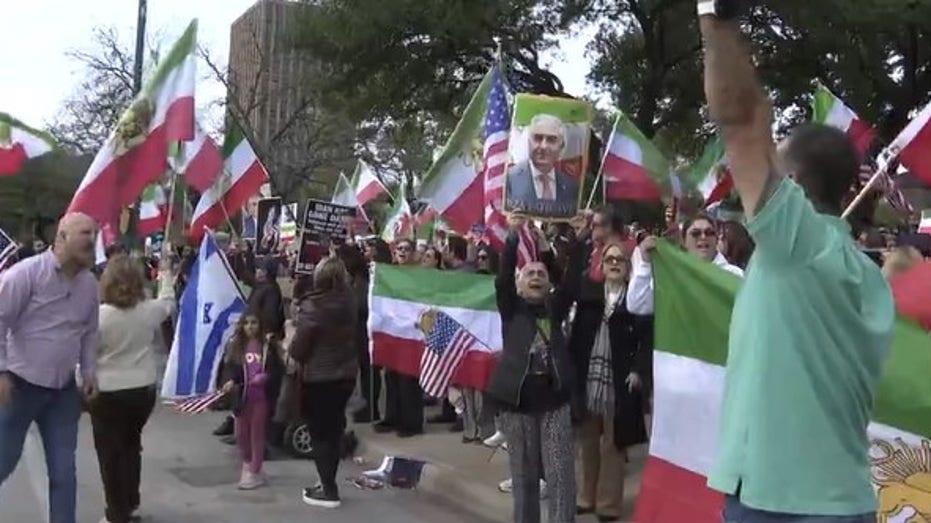
A significant demonstration took place at the Texas State Capitol on Sunday, where hundreds rallied to voice their support for anti-government protests occurring in Iran. These protests, fueled by economic turmoil and rising inflation, have turned increasingly violent, with activists reporting over 500 fatalities and roughly 10,000 detentions amid a government-imposed internet blackout.
Chants of “Freedom for Iran” echoed through the crowd as participants expressed their desire for the current Iranian government to be overthrown. The protests erupted two weeks prior, as citizens took to the streets in response to escalating economic hardships.
The situation has become dire, with confrontations between demonstrators and security forces resulting in at least 544 deaths. Activists indicate that 496 of the deceased were protesters, while 48 were members of the security forces. Additionally, millions of Iranians have been cut off from the internet since the blackout began, complicating communication and the dissemination of information about the ongoing unrest.
Personal stories from the demonstrators revealed the emotional toll of the situation back home. Avat Kiomarsi, who escaped Iran years ago, shared her anguish, saying, “We are all crying when we are watching the news. We are all crying, you know, bursting to tears because we cannot do anything about that.” Her parents currently participate in the protests, emphasizing the courage of those risking their lives for change.
Neda Alrobaire, an organizer of the protest, noted that many participants have relatives still living in Iran. She recounted her last conversation with her cousins just days before the blackout, expressing concern for their safety amidst the turmoil.
Many demonstrators, like Kiarash, who left Iran years ago, cited the oppressive political and religious climate as a primary reason for their departure. He reflected on the fear instilled by the regime, stating, “As soon as you speak up, obviously you get killed, or we have to flee the country.” Neda echoed similar sentiments, explaining that her reasons for seeking asylum in the U.S. were rooted in her faith, as she is not Muslim.
The protesters not only called for freedom in Iran but also urged the U.S. government to take a stand in support of the demonstrators. Shouts of “Donald Trump help Iran” resonated throughout the crowd, with Kiarash expressing his expectations for the former president to make decisions that would benefit the Iranian people.
Many carried signs depicting Reza Pahlavi, the exiled son of Iran’s last shah, who was overthrown during the 1979 revolution. Some in the crowd view him as a potential leader should the current regime fall. Kiarash articulated this sentiment, stating, “Prince Reza Pahlavi is the best alternative that one can find at the moment.” He urged President Trump to recognize Pahlavi as a viable option for Iran’s future.
In the days leading up to the protest, President Trump made his stance on the matter clear, asserting that the U.S. would intervene if the Iranian government continued to harm its people. Discussions within his administration have included various military and cyber strategies as potential responses to the escalating crisis in Iran.
As the situation unfolds, the calls for U.S. intervention and support for the Iranian people are growing louder, reflecting the urgent need for action in the face of rising violence and oppression.