






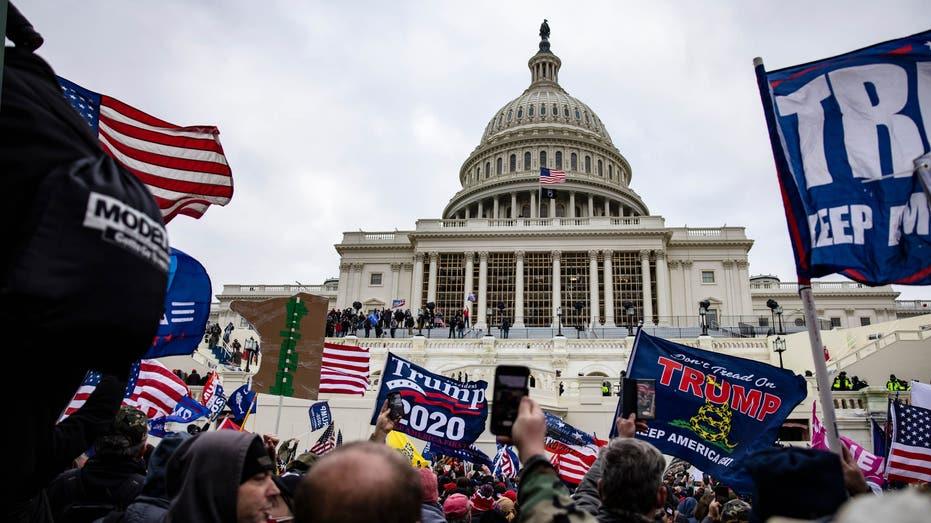
A federal judge has officially dismissed a conspiracy case connected to the January 6, 2021, Capitol riot, which included charges against a resident of North Texas. The ruling, made reluctantly by the judge, marks a significant moment in the ongoing legal proceedings surrounding the incident.
U.S. District Judge Amit Mehta announced the dismissal of the remaining criminal cases against Oath Keepers founder Stewart Rhodes and eight others, effectively concluding the Department of Justice’s prosecutions related to the Capitol attack. These defendants had previously been released following President Trump’s commutation of their sentences, which was part of a broader clemency order affecting nearly all individuals charged in connection with the riot. Unlike most defendants from January 6, the nine in question received commutations instead of full pardons, maintaining their convictions until the Justice Department opted for dismissal.
Rhodes, who was serving an 18-year sentence prior to the commutation in January 2025, has consistently denied any wrongdoing, asserting that he did not enter the Capitol during the riot.
The Justice Department justified the dismissal, citing President Trump’s directive upon returning to office to terminate all remaining January 6 cases. Despite Trump’s assertions that the prosecutions represent a “grave national injustice,” the prosecutors did not use these claims as a basis in court.
Judge Mehta expressed strong criticism towards the administration’s decision, stating that it undermines accountability for the events of January 6. He remarked, “Today’s epilogue diminishes the gravity of that day, denigrates the work of the prosecutors and law enforcement officers who secured these convictions, and excuses criminal acts that caused a centuries-long pillar of our democracy — the peaceful transfer of presidential power — to buckle.” He acknowledged his lack of legal grounds to reject the dismissal request, concluding, “This is the last of the prosecutions seeking to hold accountable those responsible for the events of January 6. That book is now closed.”
Trump has maintained that the January 6 defendants faced inequitable treatment within the justice system. He described the pardons as a means to rectify a significant injustice against the American people and to initiate a process of national reconciliation.
The dismissal of these cases marks the closure of one of the Justice Department’s pivotal prosecutions concerning January 6. Rhodes and other Oath Keepers leaders were previously convicted of seditious conspiracy for their involvement in efforts to obstruct the peaceful transfer of power following Trump’s defeat in the 2020 election.
In a broader context, the Justice Department has also sought to vacate seditious conspiracy convictions involving leaders of the Proud Boys, reversing its earlier stance under the Biden administration, which had defended those convictions as essential for accountability. Over 1,200 individuals have been convicted in association with the Capitol attack, including approximately 200 who pleaded guilty to assaulting law enforcement officers. Most January 6 defendants received “full, complete, and unconditional” pardons from Trump, while he commuted the sentences of Rhodes and several others convicted of seditious conspiracy. Additionally, he instructed the attorney general to dismiss around 450 pending January 6 cases, effectively concluding the largest criminal investigation in the history of the Justice Department.