





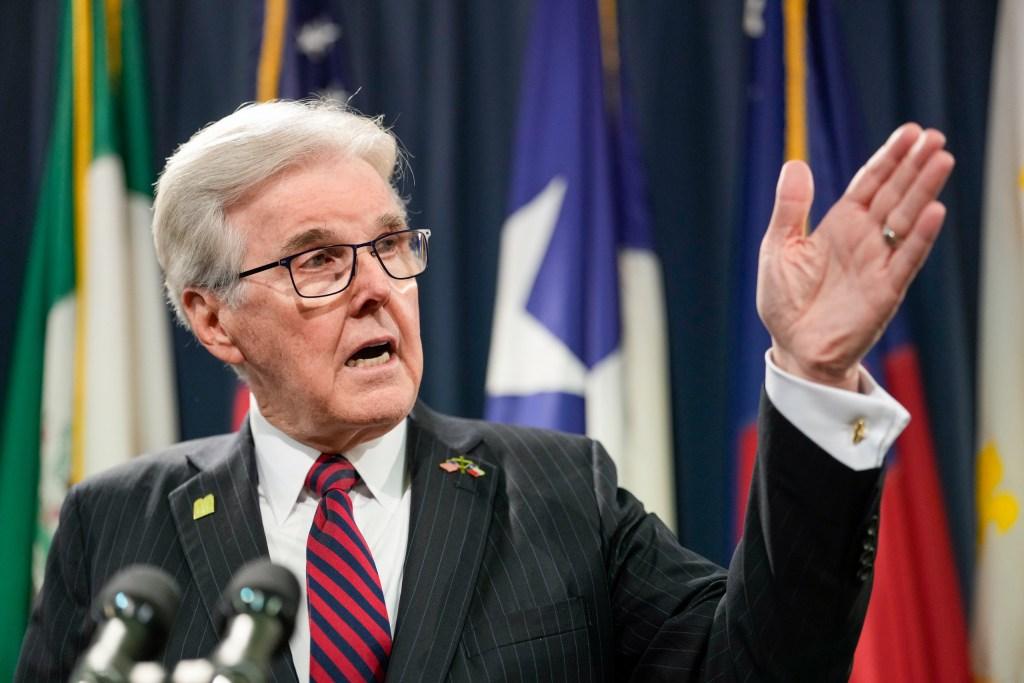
On Friday, Lieutenant Governor Dan Patrick directed state senators to explore a wide array of policy topics in preparation for the upcoming legislative session. This includes areas such as prediction markets, data centers, and THC regulation, building upon an initial set of priorities that also highlighted concerns like the prevention of Sharia law and the investigation of Medicaid fraud.
Patrick’s updated list of interim charges aligns with many of the objectives outlined by House Speaker Dustin Burrows just a day prior.
Data centers emerged as a focal point in Patrick’s agenda, appearing multiple times. He tasked various committees with investigating the water usage associated with these “energy-intensive technologies.” Furthermore, he emphasized the necessity of balancing the economic development advantages of these centers against their effects on landowners, private property rights, water infrastructure, and community integrity. Another directive is to assess the financial implications of the sales tax exemption currently granted to data centers.
Additionally, Patrick reiterated his commitment to prohibiting hemp-derived THC products. He assigned the Health and Human Services Committee the responsibility of examining the influence of THC on rising healthcare costs, mental health crises, and the likelihood of THC-induced psychotic disorders. A ban on these products was a significant priority for Patrick during the last legislative session; however, the bill that was passed ultimately received a veto from Governor Greg Abbott.
Prediction market gambling has also come under Patrick’s scrutiny. With platforms like Kalshi and Polymarket gaining traction in Texas due to a federal loophole, he instructed the state affairs committee to investigate the rapid growth of prediction market gambling and to provide recommendations that would uphold the integrity of Texas elections and sports.
On the topic of property taxes, Patrick reaffirmed his strategy, dubbed “Operation Double Nickel.” This plan aims to reduce property taxes by increasing the portion of a home’s value that is exempt from taxation to support public schools, known as the homestead exemption. It also proposes lowering the age at which Texans can qualify for additional relief on their school tax bills.
Patrick’s approach contrasts with the strategies generally supported by House leadership, which favor reducing property taxes through school district rate compression and lower appraisal caps. Meanwhile, Governor Abbott has introduced a separate plan that aims to eliminate school property taxes for homeowners, potentially leading to a legislative conflict in the coming year.
Election security and efficiency have also made Patrick’s list of priorities. He directed the State Affairs Committee to ensure access for poll watchers, review various methods employed by counties for marking and counting ballots, and assess the use of countywide polling sites during primary elections. Recent incidents in Dallas County, where numerous voters mistakenly went to the wrong polling locations, have underscored the need for such evaluations.
Patrick’s agenda includes a focus on immigrant truck drivers, tasking the Transportation Committee with ensuring English proficiency among drivers and enhancing safety standards for driving schools through unannounced audits.
Reproductive issues are also addressed in Patrick’s directives. He has instructed senators to investigate the unethical exploitation of surrogacy and fertility industries in Texas, as well as the ongoing risks posed by abortion pills that are unlawfully distributed in the state. The previous legislative session saw restrictions placed on the manufacturing and distribution of these abortion pills.
In conjunction with the House, Patrick has tasked the Health and Human Services Committee with examining the factors contributing to rising healthcare costs. Many Texans are experiencing increased premiums this year following the decision by the Republican-controlled Congress not to extend enhanced subsidies under the Affordable Care Act.
Lastly, the newly established Committee on Religious Liberty, initiated by Patrick this month, has been commissioned to recommend any necessary legislation aimed at enhancing the previous measures requiring public schools to display the Ten Commandments and permitting designated time for prayer during school hours.