








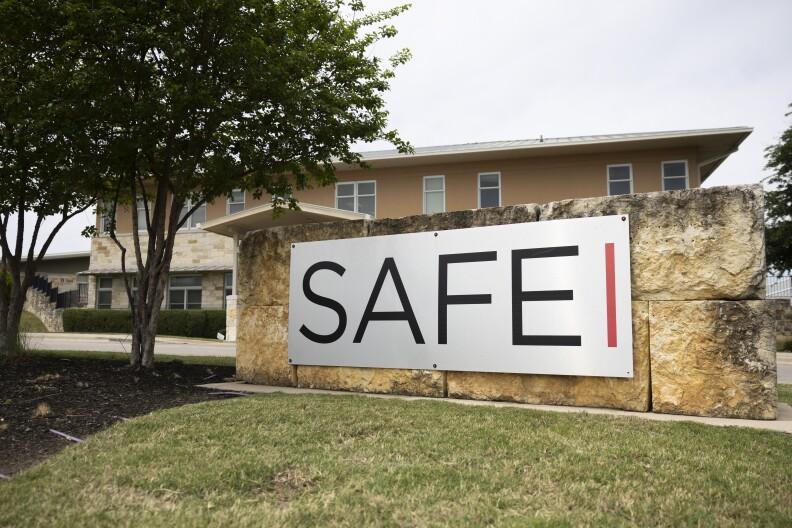
The SAFE Alliance, an organization dedicated to aiding survivors of domestic and sexual violence, is facing a dire financial situation that could result in the termination of essential programs. Over the past year, the Alliance has experienced a loss of approximately $4 million, prompting plans for significant budget cuts that will commence this summer. These reductions may lead to the closure of a downtown shelter and the discontinuation of vital housing assistance services for those escaping abusive situations.
Pierre Berastaín, CEO of the SAFE Alliance, indicated that about $2 million of the impending cuts are due to decreased funding from local, state, and federal sources. He emphasized the interconnectedness of the various services the Alliance provides, stating, “If an organization were operating just a domestic violence shelter they wouldn’t have access to that whole ecosystem.” He highlighted the range of services offered, from safe housing to therapeutic support, which play a crucial role in the recovery of survivors.
The Alliance’s comprehensive approach has proven effective, but the loss of these programs could have severe consequences for individuals and families in need. Berastaín pointed out that as public funding has dwindled, private donations have also decreased, largely due to inflation and rising living costs. “For quite a long time now the SAFE Alliance has provided some core services that benefit Austinites and benefit systems that are now under threat if we don’t have an appropriate multi-party investment in our services,” he explained.
The SAFE Alliance runs approximately 20 programs that support thousands of survivors each year. Without additional funding, Berastaín warned that more families could be left vulnerable, potentially facing homelessness. Currently, the organization’s two overnight shelters accommodate around 1,000 individuals each night, including a downtown facility that caters specifically to families and is at risk of closure in October. “Right now, we have 55 children in that shelter,” he stated, “And what happens if that shelter closes is that you have 55 children… who have nowhere else to go.”
Among the programs slated for termination are SAFE Futures, Planet SAFE, and the Eloise House, which provides crucial medical care and forensic exams for sexual assault victims.
Survivor Makani Couk, who now serves as a peer support specialist for the SAFE Alliance, shared her personal journey of escaping domestic violence. She emphasized the importance of the services provided by the Alliance, which aided her in finding stable housing and receiving counseling for her trauma. “We’ve been braced for impact for so long,” Couk remarked, “It takes a long time to gain traction and to heal, and we have to have that long-term sustained support.”
Couk’s experience included living in a tent with her young daughter after fleeing an abusive partner. The SAFE Alliance offered her shelter and an array of services that helped her regain stability. Today, she continues to rely on the program for her daughter, who benefits from Planet SAFE, a structured child exchange initiative that is also facing closure.
In addition to providing shelter, the SAFE Alliance works to reunite families. Jo Meier, who struggled with substance abuse and lost custody of her daughter, was able to regain her child with the help of the SAFE Futures program. She expressed gratitude for the support she received, stating, “She was able to help me in ways that nobody else could.”
Elia Mondragon, another survivor, shared her journey of healing after leaving a 22-year abusive marriage. Recommended by her divorce attorney, she found solace in counseling services through SAFE, which helped her reclaim her independence. “It is step by step… to be able to say I am no longer in this situation,” she reflected.
In an effort to address the financial crisis, Berastaín is actively engaging with city and state officials, as well as local healthcare institutions, to explore solutions for recovering the lost funds. He stressed the necessity for a collaborative approach, stating, “It’s not on the city alone to figure out. It’s not on the county alone to figure out.”
Mayor Kirk Watson expressed optimism about finding a way to sustain the vital programs. “This challenge calls for a community solution,” he noted, “We will continue working to achieve a result that the victims of sexual assault and domestic violence deserve.”