









Historic Trading Routes in Texas
The vast expanse of Texas is more than just its iconic landscapes and rich cultural heritage; it also serves as a critical point in the tale of American trade and commerce. From the early indigenous trading paths to the bustling routes that emerged in the wake of European colonization, Texas has woven a complex tapestry of trade networks essential to its development. The state’s trading routes played a pivotal role in shaping both regional and national economies, making them not only points for commercial exchange but also intersections of cultures and communities.
As the United States expanded westward, Texas stood as a gateway, with its trading routes evolving in response to the changing needs of the times. Understanding these historic trading routes provides insight into how communities flourished, goods were distributed, and the economic foundations were laid for what Texas has become today. The intertwining of commerce, conflict, and cooperation among diverse stakeholders paints a comprehensive picture of Texas’s trading history.
The Origins of Texas Trading Routes
Texas’s trading routes can trace their origins back to indigenous tribes who utilized strategic paths for commerce long before European settlement. Tribes such as the Comanche, Apache, and Caddo established intricate networks that facilitated the exchange of goods like furs, food, and crafts among each other and with neighboring tribes. These routes were not only practical for transporting goods but also served as important cultural corridors, where languages, traditions, and stories were exchanged.
During European colonization, these established routes were adapted and expanded upon by settlers, who brought new goods and technologies. Spanish explorers like Alonso Álvarez de Pineda and later settlers began mapping these paths for trade, paving the way for a new era of commerce in Texas. The San Antonio River, for instance, became a vital route for supplies and trade between Mexico and the burgeoning Anglo-American communities. The Spanish missions established along these rivers not only sought to spread Christianity but also aimed to create centers of agriculture and trade.
By the 19th century, as Texas pushed towards independence and statehood, trading routes transformed once again. Key developments such as the construction of roads and railroads dramatically increased the volume and speed of trade. The Texas Revolution in 1836 further fueled the need for efficient supply lines as independence sparked new economic opportunities, ultimately leading to a surge in commerce driven by both local and foreign interests.
The Role of Cattle Drives
One of the most famous aspects of Texas’s trading history is the cattle drive, which played a significant role in the economic landscape of the 19th century. Following the Civil War, the demand for beef surged in the Eastern United States, laying the groundwork for the iconic cattle drives that would become synonymous with Texas history. With the burgeoning railroads reaching further into the state, ranchers capitalized on the opportunity to drive their herds to railheads, where cattle could be shipped to markets across the nation.
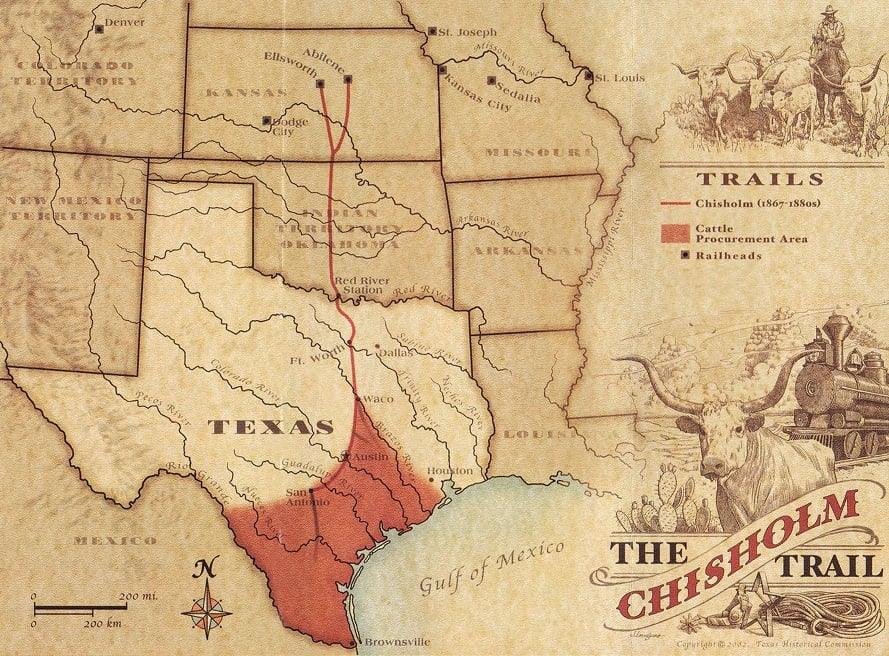
Routes such as the Chisholm Trail became legendary for their role in connecting Texas with Kansas railroads. This trail spanned over 1,000 miles and was used extensively from the late 1860s to the 1880s, allowing ranchers to get their cattle to markets efficiently. The Chisholm Trail was more than just an artery for beef; it was a dynamic cultural convergence point, where cowboys, settlers, and Native Americans met, often leading to both camaraderie and conflict.
Furthermore, the impact of cattle drives extended beyond economic gains. They nurtured a rich folklore that influenced Texas culture, inspiring literature, music, and art. The stories of cowboys and their adventures became a part of the American identity, cementing the connection between Texas and its pioneering spirit in the larger narrative of American history.
The Importance of Railroads
The advent of the railroad in the late 19th century revolutionized trade and transport in Texas, significantly diminishing the reliance on traditional cattle drives. Tracks crisscrossed the state, connecting rural areas to urban markets and facilitating faster, more efficient movement of goods. This development not only transformed the landscape of Texas trade but also influenced the socio-economic dynamics of the region.
Railroads such as the Texas & Pacific Railway and the Southern Pacific Railroad linked major cities like Houston, Dallas, and San Antonio. This connectivity allowed local produce, livestock, and goods from remote areas to reach broader markets and bring manufactured products back to those areas, creating a circular flow of economic vitality. The railroad system also enabled the rapid growth of towns and cities along its routes, fostering communities that thrived on commerce.
The establishment of these railroads was not without its challenges; land disputes and competition with existing wagon and cattle routes created tensions. However, the economic benefits were undeniable, leading to an intriguing evolution of Texas’s trade landscape. By the end of the 19th century, railroads transformed Texas into a crucial hub for trade, setting the stage for further economic expansion in the 20th century.
Modern Trading Networks and Their Legacy
Today, Texas stands as one of the largest economies in the United States, with a modern trading network that is an extension of its historical routes. The legacies of early trading paths still resonate in contemporary business practices and logistics. Modern highways and roads are built upon these historic routes, reflecting the continued importance of efficient transportation in trade.
Moreover, Texas’s strategic location at the southern border of the United States enables it to serve as a vital conduit for international trade, particularly with Mexico. The North American Free Trade Agreement (NAFTA), now the United States-Mexico-Canada Agreement (USMCA), has amplified trade across this border, underscoring Texas’s integral role in North American commerce. Key thoroughfares such as Interstate 35 have become pivotal for transporting goods, echoing the trading routes of yesteryear.
The growth of energy industries, technology, and agriculture also demonstrates how historic routes have influenced economic trends. Texas is a leader in oil and gas, agriculture, and tech industries, and the historical trading routes have laid the groundwork for distribution channels and resource management that enhance these sectors. Institutions of higher learning in Texas continue to research and innovate, linking historical trade practices to modern economic strategies.
Cultural Significance and Preservation Efforts
Texas’s rich trading history is not solely confined to economic narratives; it is also a part of the state’s cultural and historical identity. Various museums, heritage sites, and historical markers throughout Texas commemorate the routes and the individuals who shaped them. These efforts to preserve Texas’s trading history allow current and future generations to appreciate and learn from the past.
Organizations such as the Texas Historical Commission have launched initiatives to highlight the significance of historic trading routes, encouraging locals and visitors alike to explore this vital part of Texas’s heritage. They organize educational programs, create interactive exhibits, and support restoration projects aimed at maintaining landmarks associated with trade.
Local festivals and gatherings also celebrate this rich past. Events such as cattle drives reenactments and trade fairs connect contemporary Texans with their historical roots, reinforcing community ties and fostering a collective appreciation for the heritage that has shaped the state’s identity. Such activities bring together diverse groups, allowing people to engage with history in personal and meaningful ways.
The Future of Trading in Texas
As Texas marches into the future, the legacy of its historic trading routes continues to influence contemporary practices in trade and commerce. The state faces modern challenges, such as the vital importance of sustainability and adapting to changing global trade dynamics. However, the foundational principles laid by historic trading routes remain relevant today.
Innovation in technology and logistics allows for new avenues of trade, while the ongoing demand for goods underpin the necessity for efficient distribution systems. Texas’s role in the economy will likely expand as it harnesses the power of contemporary technology and embraces new trading partnerships on both national and international stages.
The evolution of Texas trading routes reflects not just a historical narrative but a roadmap for future commerce. As new technologies and trade agreements emerge, the emphasis on efficient routes will remain crucial. Texas stands poised to continue its legacy as a significant hub for trade, building from its historical roots while navigating the complexities of modern commerce.