







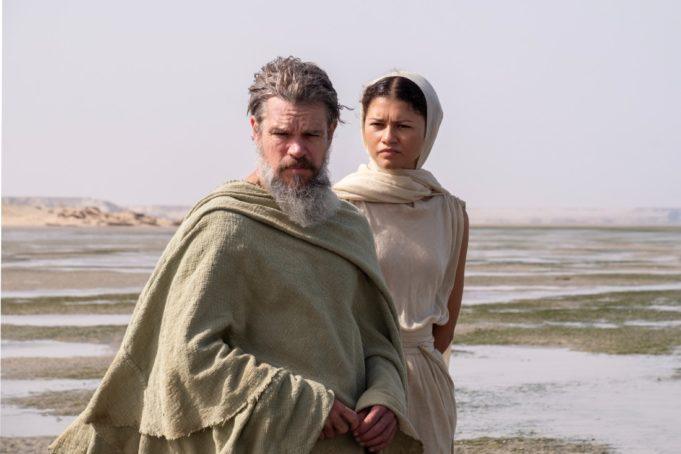
This past weekend, “The Odyssey” surpassed all expectations at the box office, grossing over $260 million globally. This remarkable achievement underscores Christopher Nolan’s status as one of the most consistent filmmakers in contemporary cinema.
With many studios strategically avoiding competition with “The Odyssey,” I find myself without a new film to review this week. This fortunate turn of events has given me the opportunity to reflect more deeply on the film after a second viewing. While I had initially covered a great deal, there were still numerous points I wished to address. Below are some additional insights, complete with spoilers.
Evaluating Nolan’s Latest Work
In the context of Nolan’s filmography, I consider his top works to be “The Dark Knight,” “Inception,” and his 2002 remake of “Insomnia,” which may be a minority view. I would place “The Odyssey” just below these films but still above his other projects.
One significant aspect I didn’t touch on previously is the character of Antinous, portrayed by Robert Pattinson. He plays the suitor vying for Penelope’s affection, but I found his performance underwhelming. The character presents an opportunity for villainy that Pattinson doesn’t fully embrace, leaving the role lacking in depth. His attempts to persuade Penelope to choose a new husband come across as unconvincing; he performed better in another film alongside Zendaya.
Creative Adaptations
The film introduces a notable twist to the original epic: Antinous is depicted as a wealthy man’s son who avoids military service by paying a poor shepherd named Sinon, played by Elliot Page, to take his place. This decision leads to Sinon’s death early in the film, but his spirit later confronts Odysseus in the underworld about the sacrifice. At a pivotal moment, Odysseus invokes Sinon’s name to unsettle Antinous before killing him, a plotline that draws from Virgil’s “Aeneid” rather than Homer’s “Odyssey.”
Interestingly, there was speculation online that Page would portray Achilles, which spurred backlash from some groups. Although this turned out to be unfounded, it raises questions about the dissemination of information in the digital age. If this was a clever tactic by someone involved with the film, it would be reminiscent of Odysseus’ cunning.
Controversial Casting Choices
The casting of Lupita Nyong’o also ignited outrage from some, including Elon Musk, who put forth baseless arguments claiming a Black actress couldn’t embody the epitome of beauty in the story. This echoes past controversies surrounding diverse casting in major franchises. Despite the outcry, box office receipts have proven the film’s success, showcasing a disconnect between certain vocal critics and the general audience.
In a twist, Musk has announced plans to create a “historically accurate” adaptation of Homer’s work using AI, a notion that raises eyebrows. I can’t help but anticipate the absurdity of such an endeavor, especially in envisioning how Tilly Norwood might portray characters in ancient Greek.
Critical Perspectives
Greek-American writer Katherine Kelaidis offers a compelling examination of the relevance of race in discussions surrounding Homer’s work, which provides valuable insight into these ongoing debates.
For those interested in an alternative perspective, consider Uberto Pasolini’s “The Return,” which focuses solely on the latter parts of Homer’s narrative. Ralph Fiennes’ portrayal of Odysseus is driven by a profound sense of shame, a stark contrast to Damon’s character, who spares those who choose not to fight. Both interpretations resonate within their respective films, reflecting different facets of the hero’s journey.
War and Morality
While Pasolini’s film features a confrontation with Antinous that emphasizes the waste of life, “The Odyssey” takes a different approach. Zendaya’s character, Athena, appears in a flashback as a Trojan woman, a choice that raises questions about the portrayal of violence against women in war. Nolan contrasts the glory often associated with heroism in battle by depicting the Greeks’ return as barbaric rather than triumphant, which some critics argue strays from Homer’s original intent.
The narrative suggests that charity and community are essential to civilization, challenging prevailing ideologies that prioritize wealth accumulation. This theme resonates with contemporary audiences, illustrating how modern interpretations can shed light on timeless narratives.
Ultimately, “The Odyssey” aligns with other recent films that advocate for empathy and community support in challenging times, delivering a powerful message about the importance of looking out for one another, regardless of differences. In a landscape filled with films that tackle such themes, we are fortunate to witness two such well-executed examples.