








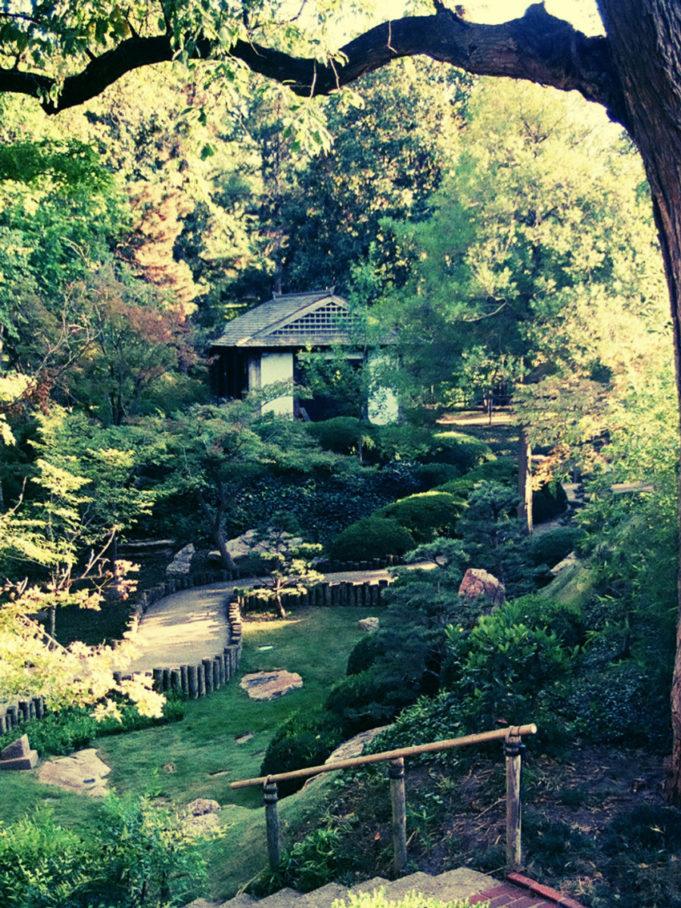
A lot can change in a decade, particularly regarding the preservation of the Japanese Garden at the Fort Worth Botanic Garden.
Since the Botanic Garden began its significant transformation nearly ten years ago, one of the most notable changes has been the introduction of admission fees. While access to most areas was previously free, non-members are now required to pay $14 for adults and $8 for children aged 3 to 5, with free entry for toddlers under two. However, the garden continues to offer several free-admission days throughout the year, including on Juneteenth, the Celebramos Kick-Off, Veterans Day, and Earth Day in 2027.
While it was anticipated that the new fees might limit accessibility, they have also contributed to essential repairs and enhancements that began in the 2020s. Without this funding, the question might not be “Can I afford to go?” but rather “Why should I go at all?”
The Japanese Garden has reaped the benefits of these broader improvements, focusing on preserving its unique character rather than overhauling the space. Visitors to this serene strolling garden can appreciate the meticulous care devoted to the bamboo plants, cherry, magnolia, and maple trees, along with the 1,200 koi fish that inhabit its 7.5 acres. In collaboration with the Fort Worth Japanese Society, the garden hosts biannual Japanese Festivals in April and November, featuring cultural demonstrations, tea ceremonies, and live performances, including taiko drumming by the band Goisagi.
The management transition from the city to the Botanical Research Institute of Texas (BRIT) in October 2020 prompted a reevaluation of the garden’s master plan. This shift was aimed at addressing long-standing maintenance issues and updating aging facilities across the property. The Fort Worth Botanic Garden and BRIT now work closely together, offering programming that encompasses conservation, education, and scientific research for a wider audience.
Although improvements have progressed more slowly than anticipated, they are well underway. Some areas have faced challenges before seeing improvements—such as the Rainforest Conservatory, which was closed until 2019 due to safety concerns during significant repairs.
One ambitious project, the long-discussed family garden, is finally taking shape. With over $17 million raised towards a $19 million goal, construction of the Baker Martin Family Garden, an interactive green space designed for children, has commenced.
In addition to the family garden, public funding has facilitated enhancements to the Moncrief Garden Center, the Rose Garden, and Tinsley Rock Springs Woods. Meanwhile, the Southwest Quadrant, which encompasses the Backyard Vegetable Garden, Compost Outpost, and the Horseshoe and Trial Gordon Gardens, has been intentionally left as an unprogrammed area for the time being.
The Fort Worth Botanic Garden now boasts a more vibrant calendar of events than ever before. From the beloved Butterflies in the Garden event to LEGO and dinosaur installations, winter holiday light strolls, and the recurring Japanese Festival each spring and fall, there is a wealth of activities for visitors to enjoy. Upcoming events include “Blooms & Beats,” featuring live music by Tom Sless on May 8, and a variety of art classes, docent-led tours, forest bathing sessions, and homeschool-day activities.
Recent visits by publisher Lee Newquist and contributor Juan R. Govea to the Japanese Garden have inspired an artistic showcase for this special issue. Their photography, paired with the creative interpretation by Art Director Ryan Burger, enhances the visual narrative throughout the publication. O-tanoshimi kudasai, or “enjoy!”