








Sign up for The Brief, a daily newsletter designed to keep readers informed about the most important news in Texas.
The audio recording has been automated for accessibility, but the story itself was crafted and edited by humans. We welcome your feedback regarding our AI policy.
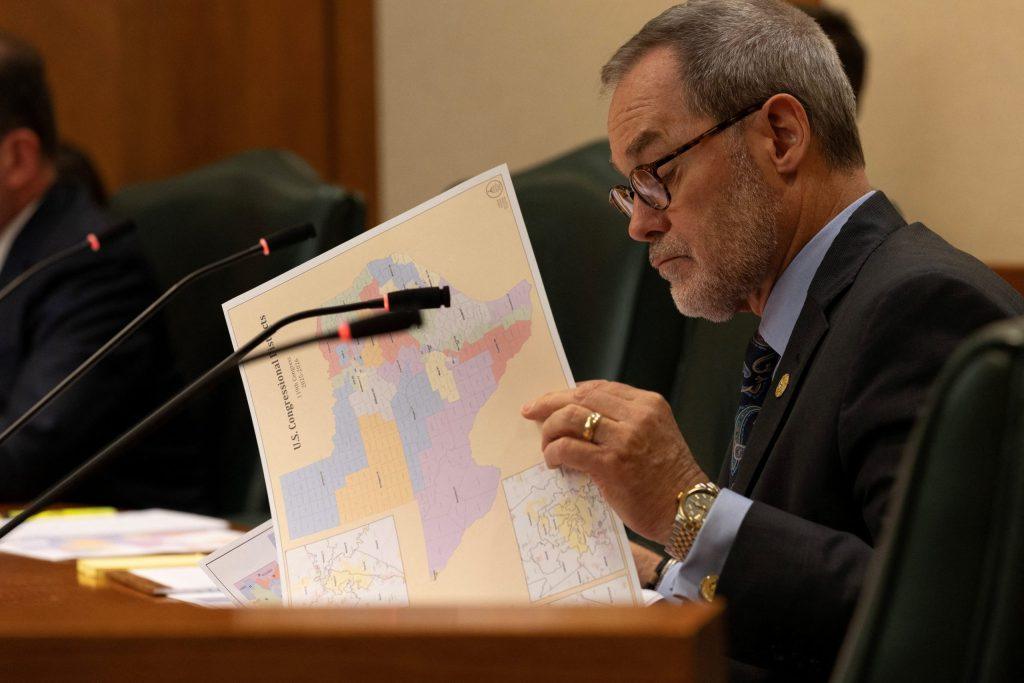
The U.S. Supreme Court has decided that Texas can utilize its newly drawn congressional map while a legal dispute is ongoing, temporarily suspending a lower court ruling that had prohibited the map’s implementation.
With the candidate filing deadline set for December 8, the high court’s ruling is expected to allow Texas’ new map to be used in the upcoming 2026 midterm elections.
Justice Samuel Alito stated that it was “indisputable” that the motivation behind Texas’ redistricting was purely partisan advantage, which the court has previously acknowledged as permissible. He dismissed claims that the state engaged in racial gerrymandering.
This ruling represents a significant victory for Republicans both in Texas and nationally. Former President Donald Trump had urged Texas to revise its congressional map during the summer, aiming to secure five additional GOP seats to strengthen the party’s slim majority in the U.S. House ahead of the midterms.
On November 18, however, two federal judges prohibited Texas from employing the new map for the 2026 elections, citing evidence that state lawmakers had engaged in racial gerrymandering during the redistricting process. Judge Jeffrey Brown, appointed by Trump and presiding in Galveston, authored the opinion that mandated Texas revert to its 2021 map, while Judge Jerry Smith from the 5th U.S. Circuit Court of Appeals strongly dissented.
The state sought to have the Supreme Court completely overturn Judge Brown’s ruling, a process that could take weeks or even months, particularly if the justices opt to hear arguments in Washington, D.C. With Thursday’s ruling, the justices have paused Brown’s decision, allowing for a more extended legal process to unfold.
The Supreme Court’s ruling highlighted that the lower court, under Brown’s direction, “improperly inserted itself into an active primary campaign, causing much confusion and upsetting the delicate federal-state balance in elections.”
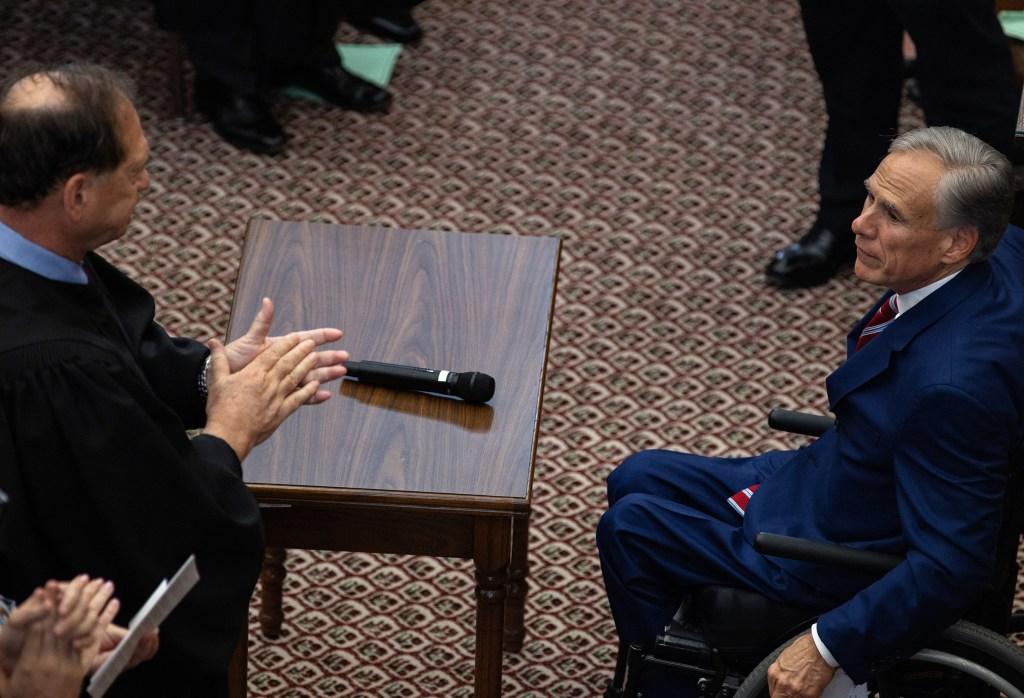
The new congressional map, which was approved by the Texas Legislature and signed into law by Governor Greg Abbott in August, is designed to secure Republican control of 30 out of Texas’ 38 congressional districts, an increase from the 25 they currently hold under the 2021 configuration. Numerous Republican candidates have emerged to run in the newly favorable districts, while several Democratic incumbents have been pushed into neighboring districts already occupied by other Democrats, compelling them to consider primaries or retirement.
Judge Brown’s ruling disrupted these political calculations. However, with the Supreme Court’s restoration of the new map, Republicans contesting in the redrawn districts will likely campaign under the new boundaries in 2026.
Attorney General Ken Paxton hailed the ruling as a victory for Texas and conservatives who are weary of watching the left attempt to disrupt the political landscape with frivolous lawsuits.
In contrast, Texas Democrats criticized the ruling. House Democratic Caucus Chair Representative Gene Wu from Houston stated that the high court had “failed” the people of Texas.
“This is what the end of the Voting Rights Act looks like: courts that refuse to protect minority communities even when the evidence is glaring,” Wu remarked.
Justice Elena Kagan, in her dissent, criticized the court for overturning Brown’s comprehensive 160-page ruling “based on its review, over a holiday weekend, of a cold paper record.”
“Today’s order disrespects the efforts of a District Court that did everything possible to fulfill its directive,” Kagan wrote on behalf of the liberal justices. “Today’s order does a disservice to the millions of Texans whom the District Court found had been assigned to their new districts based on their race.”
Discover more about the policies of The Texas Tribune, including its collaboration with The Trust Project to enhance transparency in journalism.
You have read articles this month. Enjoy unlimited access to our content, as we do not operate a paywall.
Texans deserve the truth. Join us in our mission to report it.
Independent reporting in Texas requires your support. The Texas Tribune provides fact-based journalism for Texans, by Texans. Our work is made possible by a community of members and readers who contribute. Help us deliver in-depth news and information to you and millions of others. Will you support our nonprofit newsroom with a donation of any amount?
Support Independent Texas News. Become a member today.
Independent reporting in Texas relies on your support. The Texas Tribune offers fact-driven journalism for Texans, by Texans. Our efforts are sustained by a community of members and readers who contribute. Help us continue providing comprehensive news and information. Will you support our nonprofit newsroom with a donation of any amount?
$18 $20 $25 Other Donate Now
You have read articles this month. Enjoy unlimited access to our content, as we do not operate a paywall.
Texans deserve the truth. Join us in our mission to report it.
Independent reporting in Texas requires your support. The Texas Tribune provides fact-based journalism for Texans, by Texans. Our work is made possible by a community of members and readers who contribute. Help us deliver in-depth news and information to you and millions of others. Will you support our nonprofit newsroom with a donation of any amount?
Support Independent Texas News. Become a member today.
Independent reporting in Texas relies on your support. The Texas Tribune offers fact-driven journalism for Texans, by Texans. Our efforts are sustained by a community of members and readers who contribute. Help us continue providing comprehensive news and information. Will you support our nonprofit newsroom with a donation of any amount?
$18 $20 $25 Other Donate Now
Tagged: 2026 elections, Greg Abbott, redistricting, Texas Legislature
Eleanor Klibanoff is a reporter specializing in law and politics, based in Austin. She covers the Texas Legislature, the Office of the Attorney General, state and federal courts, as well as broader political matters.