







Sign up for The Brief, a daily newsletter that keeps readers informed about the most crucial news from Texas.
Audio recording is automated for accessibility. The article is written and edited by humans. Please review our AI policy and provide your feedback.
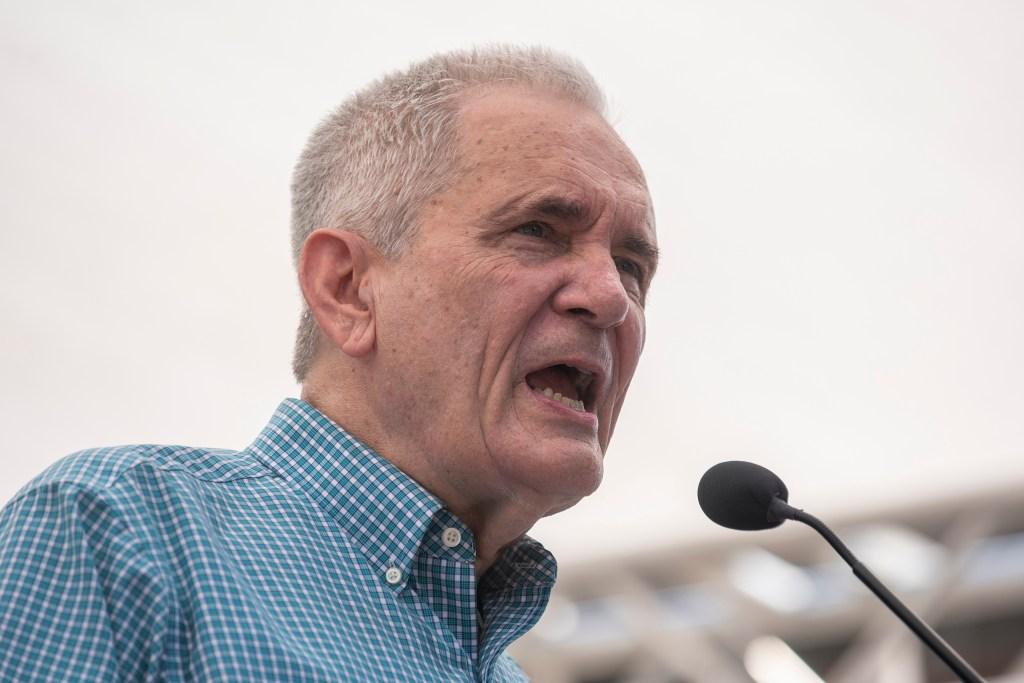
WASHINGTON — U.S. Representative Lloyd Doggett’s plans for reelection have taken a series of unexpected turns as Texas’s new congressional maps navigate the legal system. Initially drawn at the request of former President Donald Trump, these new boundaries are designed to secure more seats for the GOP in the upcoming midterm elections, putting Doggett in direct competition with fellow Austin Democrat, Rep. Greg Casar.
On Thursday, the Supreme Court ruled that Texas can implement the new map starting in 2026, overturning a prior lower court decision that deemed the boundaries unconstitutional.
On Friday, Doggett announced that he is once again considering retirement. “I will continue to work with the same urgency and determination as if next year were my last, which it will be in public office,” he stated. “After that, I will look for new ways to engage with my community and make a difference in the only city I have ever called home.”
Democratic campaign organizations, elected officials, and candidates have criticized the court’s decision as unjust. With no further legal recourse available for this election cycle and the filing deadline approaching on Monday, Doggett and his colleagues are faced with a stark reality: contemplating retirement or competing against fellow incumbents in primaries.
Meanwhile, Republican candidates have regained promising opportunities in the newly drawn districts. “The Supreme Court has confirmed what we already knew: Texas has created a Big Beautiful Map!” declared state Rep. Briscoe Cain, R-Deer Park, who is campaigning for a Houston-area seat that has been redrawn to favor Republicans.
This ruling positions Republicans advantageously in Congressional Districts 9, 32, and 35, compelling Democratic incumbents to either seek election elsewhere or step down. Moreover, it enhances Republican prospects in Congressional Districts 28 and 34 in South Texas, where Trump voters have been added to previously competitive districts.
In these districts, U.S. Reps. Henry Cuellar and Vicente Gonzalez will confront challenging reelection campaigns in areas that Trump had previously won under the old district lines, which have now been adjusted to benefit the GOP. Under the new boundaries, Trump would have triumphed in each district by ten percentage points. House Minority Leader Hakeem Jeffries, while denouncing the redistricting, asserted that the incumbents would prevail regardless. “Our battle-tested Democrats in Texas, including Congressmen Vicente Gonzalez and Henry Cuellar, will win their newly redrawn districts, rendering this Republican scheme ineffective,” Jeffries said.
In Dallas and Houston, Democratic incumbents are grappling with tough choices. Republicans have reconfigured longtime Houston Rep. Al Green’s district, merging it with most of his constituents into the 18th Congressional District, which is now vacant following the death of Democratic Rep. Sylvester Turner. A special runoff election is set for January 30 between former Houston City Council member Amanda Edwards and Harris County Attorney Christian Menefee. The winner will serve in Congress for about a month before facing a March 3 primary against Green, who confirmed his intent to run in the 18th District.
Green expressed that the redistricting and subsequent court ruling have only intensified his resolve to continue fighting. “We understand what the president’s goal is… to have me removed from Congress,” Green stated. “Well, the president is not going to run me out of office. That won’t happen.” Edwards, Green, and Menefee have all filed to be on the ballot for the March primary in the 18th District.
In North Texas, three congressional Democrats — Reps. Jasmine Crockett, Julie Johnson, and Marc Veasey — are likely to see their numbers dwindle to two. The 32nd Congressional District, currently held by Johnson, has been redrawn to extend into East Texas, transforming a seat that former Vice President Kamala Harris won by approximately 24 percentage points in 2024 into one that Trump would have carried by 18 percentage points.
The newly configured 30th District, presently occupied by Crockett, retains a significant portion of her previous district while incorporating part of Tarrant County, home to Veasey’s political base. The 33rd District is now entirely within Dallas County and features a nearly equal distribution of voters from each of the three Democrats’ former districts.
Crockett’s potential candidacy for the U.S. Senate adds another layer of uncertainty to the Democratic landscape in North Texas. If she decides to pursue the Senate seat — a choice she has indicated she is considering — this would clear the way for Veasey and Johnson to run in separate districts. Veasey intends to campaign in the 30th Congressional District, while Johnson has announced her plans to contest the 33rd Congressional District.
“TX-33 encompasses many families, small businesses, and neighborhoods that I have proudly represented over the years,” Johnson remarked in a statement on Friday. “I’m running in TX-33 because these communities need someone dedicated to showing up, listening, and fighting for them — no matter how the lines are drawn.”
However, if Crockett opts to remain in the House, she could claim either the 30th or the 33rd Congressional District, complicating the plans further. Veasey has indicated he does not wish to run against her, which would lead to a primary battle between Veasey and Johnson, placing one of them in a position to retire early or face a significant challenge from a neighboring Republican candidate.
Veasey has already submitted his candidacy for District 33 but may alter his filing before the Monday deadline. Neither Crockett nor Johnson has officially filed yet.
Former Democratic state Rep. Domingo Garcia might also influence the race in the 33rd District. Garcia, a former national president of the League of United Latin American Citizens, has established an exploratory committee to run for that district, which includes heavily Latino areas of Dallas.
The actions taken by Texas Republicans have sparked a nationwide redistricting arms race, prompting Democratic responses in states like California, which has passed a ballot initiative aimed at creating a new map that could yield five additional Democratic seats.
The implications of the Supreme Court’s ruling will extend beyond Texas. In Virginia, where legislative Democrats are pursuing their own mid-decade redistricting efforts, Democratic state Sen. Louise Lucas is advocating for a redraw of Virginia’s 6-5 map to achieve a 10-1 advantage for Democrats. “I’ve got something waiting for Texas…” she remarked on social media shortly after the ruling.
Independent reporting in Texas is vital. Support our efforts to provide fact-based journalism tailored for the residents of Texas. Your contributions help us deliver comprehensive news and information. Will you support our nonprofit newsroom with a donation of any amount?
Support Independent Texas News by becoming a member today.
Your support is crucial for independent reporting in Texas. Help us bring you and millions of others in-depth news and information.