






In the realm of Korean cinema, Park Chan-wook is often synonymous with the cult classic “Oldboy.” Despite its release over two decades ago, Park has yet to achieve the global recognition enjoyed by his contemporaries, such as Bong Joon-ho. Nevertheless, his latest film, “No Other Choice,” is a testament to his evolution as a filmmaker, showcasing a marked improvement in his craft since the days of that iconic revenge story.
Opening this weekend in Tarrant County theaters, “No Other Choice” has already garnered notable acclaim, securing a spot on several critics’ year-end Top 10 lists, including my own. The film serves as both a thrilling narrative and a darkly humorous commentary on the ways the global economy can turn ordinary individuals into desperate figures.
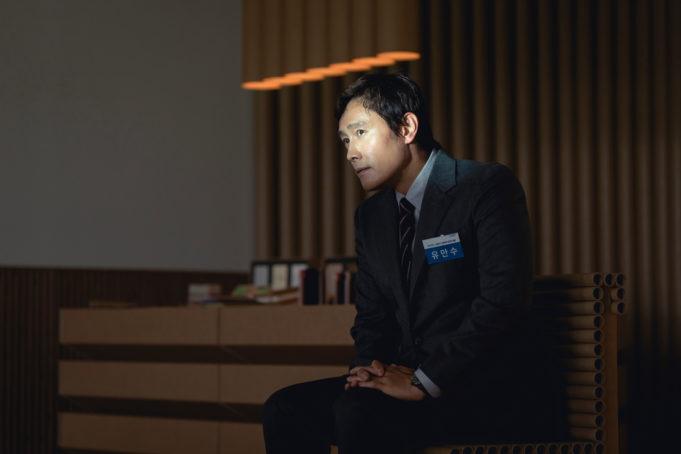
The protagonist, Yoo Man-su, portrayed by Lee Byung-hun, is a line manager who has dedicated 25 years to a paper company in Seoul. The story unfolds on a picturesque summer evening, where he embraces his wife Mi-ri, their two children, and their two golden retrievers. He exclaims, “I’ve got it all!” However, this blissful moment is short-lived; the eel he is grilling is not a token of appreciation from his employer, but rather a farewell gift from the American corporation that has just acquired the company, leading to his impending dismissal.
Park masterfully utilizes a sweeping tracking shot as Man-su tails a rival from a larger paper company, contemplating a drastic move to eliminate him. Yet, instead of resorting to murder, he cleverly devises a plan to solicit resumes from fellow unemployed papermakers, aiming to eliminate those who pose a threat to his job prospects.
The film draws inspiration from Donald E. Westlake’s novel “The Ax,” and the intricate details woven throughout the narrative are striking. Elements such as Man-su’s gardening hobby, a keepsake from his father’s time in the Vietnam War, and his greedy neighbor’s interest in purchasing his ancestral home enrich the plot. Complicating matters further, Man-su’s 10-year-old daughter, who has autism, is a cello prodigy requiring costly university lessons to ensure her future success. As Man-su clandestinely investigates his competitors, the boundaries between his personal and professional life begin to blur, leading him to question his own marriage as he observes infidelity around him.
Amidst these tensions, the film also explores themes of alcoholism, particularly through Man-su’s interactions with Gu Beum-mo, a rival and fellow recovering alcoholic. The comedic relief comes through Gu’s humorous yet tragic reaction upon discovering his wife’s betrayal, juxtaposed with Man-su’s own struggles with sobriety, which ultimately falter as he descends deeper into his schemes.
Park’s adept scene transitions maintain a seamless flow, effectively connecting disparate moments, such as a vibrant dance party transitioning into a looming thunderstorm. The film balances violence and humor, exemplified in a chaotic struggle over a gun involving Man-su, Gu, and Gu’s wife, showcasing the absurdity of their circumstances.
Lee Byung-hun navigates his role with finesse, balancing the absurdity of Man-su’s plight with poignant moments, such as when he resolves to buy his daughter proper shoes for her first recital. This scene becomes increasingly tragic when he ultimately takes the life of a rival who shows compassion.
“No Other Choice” begins with Man-su expressing solidarity with his fellow workers and celebrating their shared history. Ironically, the film concludes with him reveling in a sterile, AI-controlled factory, symbolizing the isolation brought on by his ascent. While Bong Joon-ho’s “Parasite” illustrates how capitalism breeds conflict among the impoverished, this film poignantly reveals how those who appear prosperous can also succumb to desperation. Such insights into societal flaws are masterfully depicted by these Korean filmmakers, making “No Other Choice” a remarkable achievement.
No Other Choice
Starring Lee Byung-hun and Son Ye-jin. Directed by Park Chan-wook. Written by Park Chan-wook, Lee Kyoung-mi, Don McKellar, and Lee Ja-hye, based on Donald E. Westlake’s novel. Rated R.