








Most individuals don’t snack due to a newfound nutritional awareness; rather, they find themselves reaching for whatever is at hand around 3:14 p.m., long after lunch has passed. This often leads to the discovery of a crushed granola bar, a handful of chips, or some indistinguishable item from a vending machine.
For years, the appeal of snack food relied heavily on its convenience. Quick, salty, and sweet options were the norm. However, this approach is beginning to wear thin. While convenience remains important, consumers are now seeking snacks that offer more than just a fleeting moment of satisfaction and don’t leave them feeling as though they’ve consumed cardboard. Fortunately, a new balance is emerging between unhealthy junk food and uninspiring health snacks.
Snack food has had an unfair advantage for too long, primarily because it is readily accessible. This is why adults often resort to stale crackers as if they are a reliable source of sustenance, treating them as a bridge to the next meal. The criteria for snacks have not typically included flavor, substance, or lasting satisfaction, but rather, “I found this first.”
However, this standard is evolving. Consumers are now in search of snacks that can withstand a long workday, a road trip, or a mid-afternoon slump without tasting like they were designed for a gas station shelf over a decade ago. Consequently, an increasing number of shoppers are gravitating toward options rich in omega-3 fatty acids and scrutinizing ingredient labels more closely. The desire is simple: a better snack should be crunchy, flavorful, and possess enough authenticity to justify its place in their desk drawer.
For too long, the snack aisles presented two unappealing choices. One side offered brightly packaged junk food that barely resembled real nourishment, while the other was filled with health snacks that often equated blandness with virtue. One option masqueraded as candy, while the other felt dry and uninspiring.
This divide is beginning to blur. More snacks are now made with recognizable and desirable ingredients, transforming the snacking experience. Simple staples like nuts, seeds, and dried fruits fulfill the essential roles of a snack: they taste good, provide sustenance, and help prevent an afternoon slump. No one needs every bite to feel virtuous; they simply want a better option.
While many nutrition buzzwords can feel uninspiring, omega-3 has remained relevant for a reason. People have learned that omega-3-rich foods are beneficial rather than merely trendy. In a snack aisle filled with miracle powders and misleading labels, this recognition holds significant value.
The ingredients themselves are often quite ordinary. Nuts and seeds are natural choices for snacks, delivering both crunch and richness, ensuring that the experience is far from insubstantial. Consumers are drawn to food that not only tastes good but also feels like a genuine choice.
Trail mix has undergone a transformation as well. Once regarded as a compromise, it could be a bit worthy yet dusty, often ruined by a single unpalatable raisin. Conversely, some variations strayed too far and became dessert-like, with only a few nuts included for legal reasons.
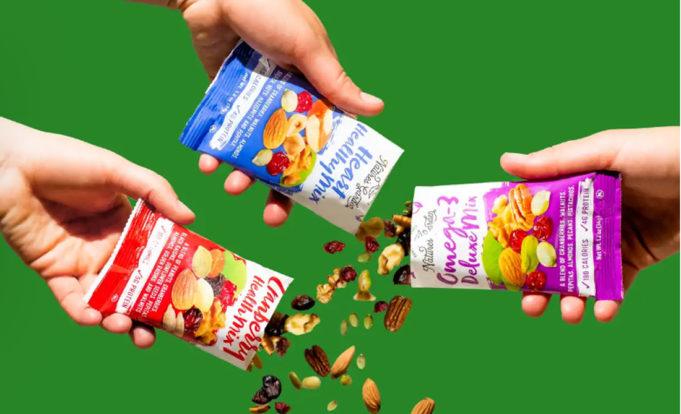
The best mixes find a balance, relying on walnuts, almonds, pumpkin seeds, pecans, pistachios, and dried fruits for a more grounded experience. This blend offers a satisfying contrast rather than chaos, combining crunch, chewiness, saltiness, and sweetness in one handful. It remains a snack, but with added substance.
Most snack choices are not made with a farmer’s market mindset. They occur in traffic, between meetings, after school pickups, or just moments before an event. Therefore, convenience often overshadows healthier intentions. When individuals are tired or distracted, they gravitate toward whatever is nearby.
This reality can be advantageous. An acceptable snack need not be heroic; it just has to be available when the less desirable option presents itself. A resealable mix of nuts, seeds, and dried fruit can comfortably reside in a bag, desk, glove box, or kitchen cabinet without being seen as a relic of a less appealing time. The most effective snack is rarely the most ambitious one but rather the one that remains accessible and avoids immediate regret.
Welcome to the anti-garbage era. While people still crave convenience and the familiar satisfaction of salt, crunch, and sweetness, they are increasingly unwilling to settle for the old dichotomy of snacks that were either overtly junky or painfully “healthy.” This division never made much sense, and it appears even more outdated today.
The improved middle ground is becoming more apparent. Snacks made primarily from nuts, seeds, and dried fruits represent a corrective shift from years of processed filler, sugary indulgences, and hollow health claims in flashy packaging. This change is significant as it prompts reflection on how food can influence mood and the overall atmosphere of an afternoon.
No one requires a flawless snack drawer; instead, they seek one that is less embarrassing. A modest handful of something decent may not overhaul your life, but it has the potential to salvage an afternoon, bridge the gap between meals, and make the everyday act of eating feel less chaotic. For many, this represents a small yet meaningful victory over subpar options.