









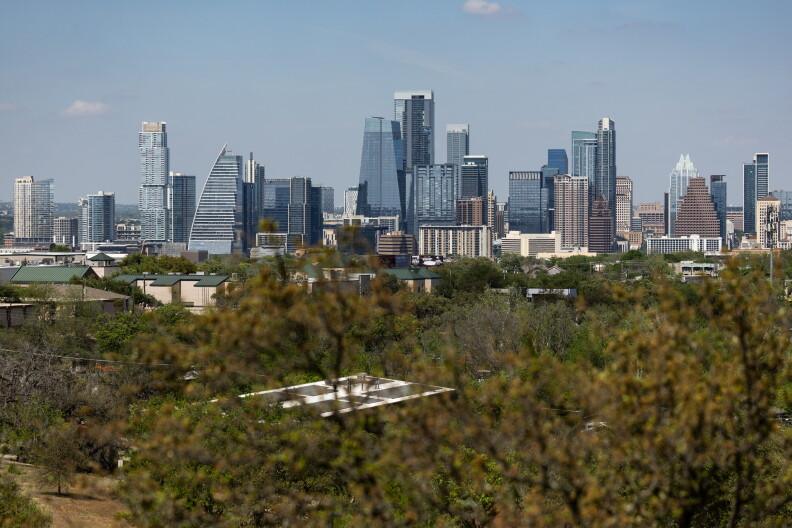
The Travis County Commissioners Court has approved a $2.3 billion budget for the upcoming fiscal year, emphasizing increased funding for affordable housing, mental health services, and disaster preparedness. This budget reflects an overall 4% increase, although a slight dip in property values means some residents will see a minor reduction in their tax bills. For instance, a homeowner with a property valued at $372,633 will pay approximately $1,439 in county taxes, which is about $30 less than the previous year.
Travis County’s revenue primarily stems from property taxes, which account for about one-fifth of the average Austin resident’s property tax statement. The budget encompasses a variety of essential services, including funding for the county jail, the Sheriff’s Office, courts, and community infrastructure like roads and parks. Notably, it also allocates resources for unexpected areas such as affordable childcare and mental health services. County Judge Andy Brown emphasized that counties are increasingly required to provide more with limited resources due to budget cuts at state and federal levels.
One of the most significant allocations in the budget is towards mental health services. Brown pointed out that while the state is responsible for providing indigent mental healthcare, it falls short in funding and capacity. In response, Travis County is dedicating approximately $15 million to its mental health diversion program, which aims to redirect individuals accused of minor offenses to mental health facilities instead of jails. This initiative is complemented by an additional $54 million recently approved by Central Health for mental health services. Brown noted that this year marks the county’s largest investment in the diversion program, which is anticipated to ultimately reduce costs by decreasing the jail population, often described as the county’s most expensive mental health facility.
The budget also designates $2 million for the construction of affordable housing units aimed at preventing homelessness and allocates $3 million for hiring additional lawyers to represent indigent clients, including $1.6 million specifically for senior lawyers to handle complex felony cases.
In response to recent climate-related disasters, the budget increases the county’s disaster reserve fund from $18 million to $35 million. This decision comes after the county depleted its savings during the response to the July 2025 floods, which tragically resulted in nine fatalities and nearly 200 destroyed homes. Brown highlighted the urgency of this investment, stating that the county must prepare for the potential of larger disasters in the future, whether from flooding or wildfires affecting extended areas.
Additionally, the budget includes $200,000 for what Brown hopes will be the final study on a proposed passenger rail line connecting Austin and San Antonio. This study aims to assess the economic implications of constructing the rail, as well as the potential drawbacks of not proceeding with the project. The findings will build upon a feasibility study funded the previous year, which estimated the cost of establishing the rail line from scratch at $13.5 billion.