









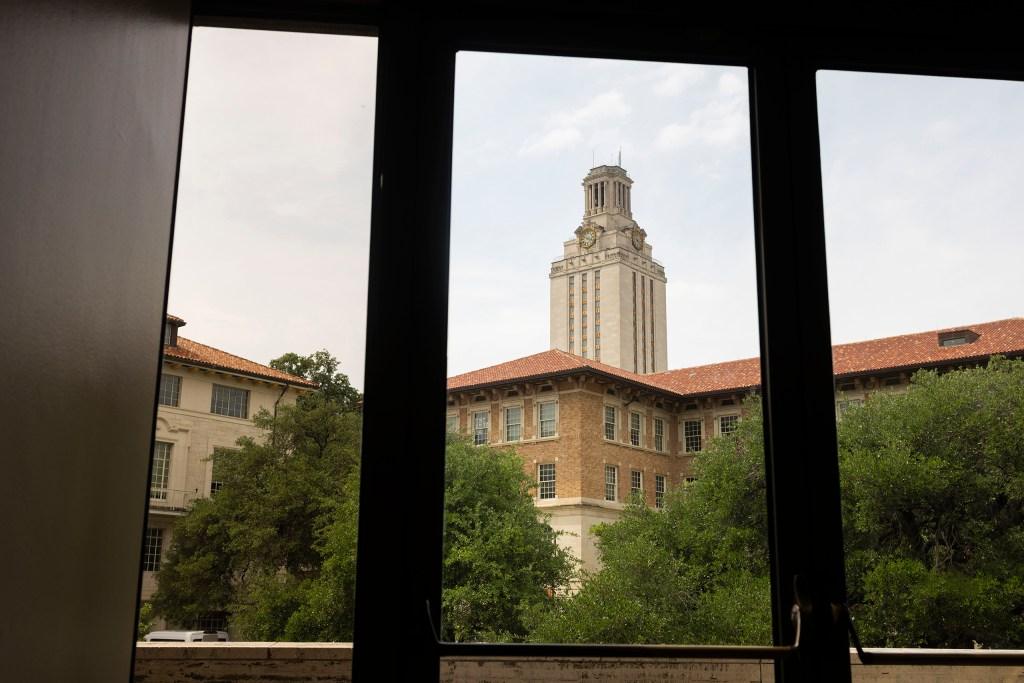
New students enrolling at the University of Texas at Austin will no longer be able to pursue majors in African and African diaspora studies, Mexican-American and Latino studies, or women and gender studies. This significant change was implemented by university officials, who have instead directed faculty to propose a new major by the end of the semester. Current students already engaged in these programs will still have the opportunity to complete their degrees, according to a university spokesperson.
Danielle Clealand, the interim chair of UT-Austin’s newly established Department of Social and Cultural Analysis, informed faculty of this decision through an email earlier this week. She indicated that the provost’s office, which manages academic affairs at the university, rejected proposals aimed at preserving these majors.
“The frustration from continually receiving disappointing news weighs on me, as I’m sure it does for all of you,” Clealand expressed in her message to staff. “I’m here to convey whatever message we want to share; I just wish I didn’t have to.”
In her communications, Clealand noted that university officials decided to retain programs focusing on American history and culture, as well as urban growth and development. However, the removal of the aforementioned majors from admission applications was executed without public awareness, and it appears that even the dean was not informed prior to the decision, she stated in a subsequent email. Interestingly, the university’s website still lists these degree programs.
Requests for comments from representatives of William Inboden, the executive vice president and provost, as well as from UT-Austin’s media department, went unanswered.
Historically, faculty at UT-Austin played a formal role in evaluating academic programs and job positions before any cuts were made. However, a recent state law has allowed the University of Texas System, which encompasses UT-Austin, to modify that process. The new policy grants campus presidents considerable authority to decide on program cuts based on factors such as cost, student interest, or alignment with the university’s mission. Importantly, professors no longer have the right to appeal these decisions.
The dissolution of these majors coincides with a broader trend among Texas universities that are facing political pressure from Republican leaders aiming to limit discussions on race, gender, and sexuality in both K-12 and higher education. For instance, Texas Tech administrators have warned that professors could face repercussions for failing to comply with mandates restricting the discourse surrounding these subjects. Additionally, Texas A&M has also eliminated its women and gender studies program.
Earlier this year, UT-Austin merged several departments, including African studies, Latino studies, and gender studies, into a single program dedicated to “Social and Cultural Analysis.” While the departments were consolidated, the individual majors remained available, with hundreds of students currently pursuing degrees in these areas.
However, the recent decision to eliminate these majors sends a discouraging message to students, implying that such fields lack value as independent academic paths, according to Karma Chávez, the former chair of the Mexican American and Latina/o Studies department and a leader of the campus chapter of the American Association of University Professors. “Students are uncertain about the legality of taking courses related to gender, race, or ethnicity due to the prevailing climate of hostility,” Chávez remarked, emphasizing the ideological pressure at play.
UT-Austin was among the institutions requested by the Trump administration to define gender strictly and to eliminate academic departments viewed as antagonistic to conservative viewpoints. Federal officials indicated that funding would be prioritized for campuses that adhered to this request. Jim Davis, the president of UT-Austin, later clarified that the federal proposal was meant to gather feedback rather than serve as a binding mandate.
As one of the most diverse states in the nation, Texas has a population where Hispanic, Black, and Asian Texans comprise approximately three-fifths of the demographic landscape. Politicians, both external and internal to the university, have conveyed “clear messages about which students are welcomed and valued on this campus,” remarked Lauren Gutterman, a professor in the Department of Social and Cultural Analysis.
This major policy shift occurred shortly after Bo French, a candidate for Texas railroad commissioner, faced backlash for making racist remarks about South Asian students during a UT-Austin football game. The incident drew further attention when UT quarterback Arch Manning was criticized for laughing at an AI-manipulated video that showed head coach Steve Sarkisian striking ESPN reporter Holly Rowe.
Gutterman highlighted that such events underscore the necessity for courses and degrees centered on these subjects, stating, “We need these programs now more than ever.”