
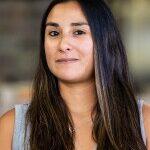

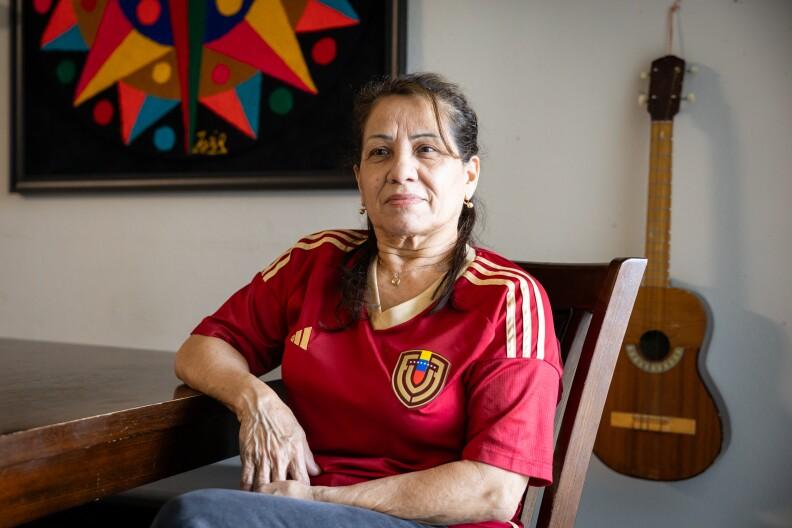
Betty Nava longs for her children to experience the freedom of living in Venezuela, the land of their birth. Upon learning of the capture of Venezuelan President Nicolás Maduro and his wife Cilia Flores by U.S. authorities, she returned to bed, gripped by panic. The thought of facing disillusionment once more overwhelmed her.
“I thought Maduro would be released within hours, that he would return,” Nava expressed in Spanish, indicating her reluctance to celebrate. The prospect of genuine change in her homeland seems distant and uncertain.
Nava, along with her husband and two sons, has resided in Austin since 2021. Their escape from Venezuela was prompted by political persecution following their protests against Maduro’s regime. Just a month shy of retirement, she was dismissed from her position at a public university, while her husband faced threats from government officials, and she received alarming anonymous calls regarding her college-aged sons.
After initially fleeing to Peru in 2018, the family visited Austin in 2021 on a tourist visa but chose to remain in the U.S. and seek asylum. While awaiting a decision, the Biden administration introduced Temporary Protected Status (TPS) for Venezuelans. However, this program was terminated by the Trump administration the following year.
With the recent detention of Maduro, federal officials have indicated that Venezuelans in the U.S. who once held TPS might now return to a peaceful country. Yet, Nava and many others contend that the reality is far more complex.
While some Venezuelans hoped for a complete overhaul of Maduro’s cabinet, Delcy Rodríguez, the current vice president, was recently inaugurated as interim president, casting doubt on the potential for meaningful change.
Leany, a Venezuelan lawyer residing in Austin, emphasized that the presence of Maduro’s former officials in power poses a significant risk to those in exile. Due to concerns for her family still in Venezuela, KUT has opted to use only her first name.
“Even if they claim that conditions in Venezuela have improved, we know that’s not the truth,” she stated in Spanish. “It will take time to see true progress and to ensure that we are no longer at risk of persecution.”
Having previously served as a judge in Venezuela, Leany lamented the rampant corruption that has infiltrated all levels of governance over the past two decades. She stressed the necessity for comprehensive reforms before Venezuelans abroad can safely return to their homeland.
Currently, Leany faces limitations in communicating with those in Venezuela regarding the ongoing situation. Friends and family opposing Maduro’s regime express fears about sharing their views, even through text messages.
“There’s still a long road ahead for Venezuela to achieve freedom,” Leany remarked. “Only when we witness celebrations inside the country and the release of political prisoners will we know Venezuela is truly free.”
Nava also worries about relatives still living in Venezuela, advising them to erase any messages that criticize Maduro. She recognizes that a return to her homeland would not be straightforward; political divisions have split her family, with some members supporting the government while others oppose it.
“I often question them about their continued support for those who have devastated our future and separated us,” Nava shared, noting that she rarely receives satisfactory answers. Nevertheless, she still sends financial support when possible.
In the wake of Maduro’s capture, Venezuelans in the U.S. have encountered inconsistent information regarding immigration policies. Secretary of Homeland Security Kristi Noem stated that TPS holders could apply for refugee status, a claim that was later contradicted by the department via social media.
Leany expressed confusion about the refugee application process, highlighting the requirement that individuals must be outside of their home country to apply.
Families like Nava’s continue to await asylum or any form of legal protection. She conveyed a willingness to leave the U.S. rather than remain without legal status. Although she cherishes her life in Austin, she would contemplate relocating to a fourth country if her status were to become uncertain.
“Navigating immigration processes and adapting to a new environment is challenging,” she said. “I aspire to find peace until I can return home, because no one leaves a place they love, and I was truly happy in Venezuela.”