





In a striking display of financial prowess, Texas Republicans seeking state-level offices outperformed their Democratic rivals in fundraising during the latter half of 2025. This significant financial gap raises concerns about whether Democratic candidates will possess the necessary resources to capitalize on what appears to be a favorable political landscape this fall.
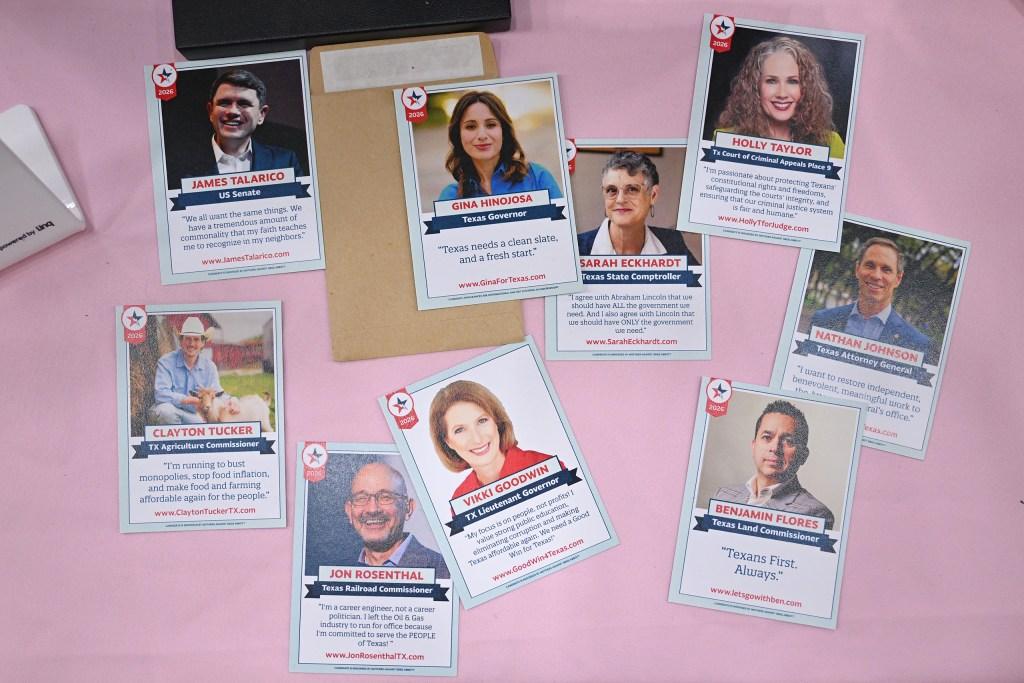
The disparities in campaign financing, revealed in recent reports, were particularly pronounced in the gubernatorial race. State Representative Gina Hinojosa from Austin, the leading Democratic candidate for governor, reported raising $1.3 million in the final ten weeks of the year, which included a $300,000 personal loan to her campaign. In contrast, Governor Greg Abbott amassed over $1.6 million from a single donor, Midland oil executive Javaid Anwar, contributing to a remarkable total of $22.7 million raised from July to December. This substantial influx has augmented his campaign fund to an astounding $105.1 million.
In the race for lieutenant governor, Democratic state Representative Vikki Goodwin generated $368,000, a notable increase compared to her previous campaign as a Texas House candidate in 2024. However, this amount still fell short of Lieutenant Governor Dan Patrick’s impressive $3.7 million haul, leaving Goodwin with a war chest that is 234 times smaller than Patrick’s total of $37.7 million by year’s end.
The comparatively modest fundraising efforts by Democrats place them at a disadvantage as they head into 2026, particularly in Texas—a state known for its high campaign costs due to its vast size and numerous expensive media markets. This financial landscape grants Republicans the flexibility to allocate resources to support candidates in lower-tier races, such as Abbott’s ambitions to sway Harris County to the GOP’s favor.
Nonetheless, Democrats have outperformed their fundraising from the same period in the 2018 election cycle, which also featured a well-funded U.S. Senate race and a challenging political climate for the GOP under President Donald Trump. State Representative James Talarico, another Democratic contender, has so far raised $13 million since launching his campaign in September, positioning his party more competitively in this year’s Senate race.
In comparison, during the equivalent period in 2018, Democratic gubernatorial candidate Lupe Valdez raised a mere $55,250, a minuscule fraction of Hinojosa’s current total. Mike Collier, the Democratic nominee for lieutenant governor at that time, garnered just over a third of Goodwin’s current fundraising. Both Valdez and Collier ultimately lost their general election bids, and at this point in 2018, Abbott and Patrick had significantly less cash on hand than they do today.
Democrats have criticized their Republican opponents, particularly Abbott and Patrick, for amassing such vast campaign funds through connections with wealthy donors and special interest groups. Hinojosa remarked on the challenge ahead, stating, “When I launched this race, I knew it would be a David and Goliath fight — just like it’s always been when I’ve taken on Greg Abbott’s corrupt machine.” She emphasized the rising enthusiasm among Texans for change, despite Abbott’s financial backing.
Abbott’s recent donations came from over 48,000 contributions across all Texas counties, reflecting his longstanding support from a diverse base. His campaign manager, Kim Snyder, highlighted this widespread backing, asserting that it underscores the values Texans expect their governor to uphold, especially as other states see socialist candidates succeed.
Following Anwar, Abbott’s largest contributors in the latter part of 2025 included casino mogul Miriam Adelson and the Texas Republican Leadership Fund, both donating $1 million. Additional significant contributions came from notable figures such as Dallas Cowboys owner Jerry Jones and Roku founder Anthony Wood, each contributing $500,000.
Among other statewide races, state Senator Nathan Johnson from Dallas emerged as the top Democratic fundraiser, aside from Hinojosa, with $653,000 aimed at the attorney general position. However, this still falls short of the Republican candidate with the least funding, state Senator Joan Huffman, who reported $2.7 million on hand.
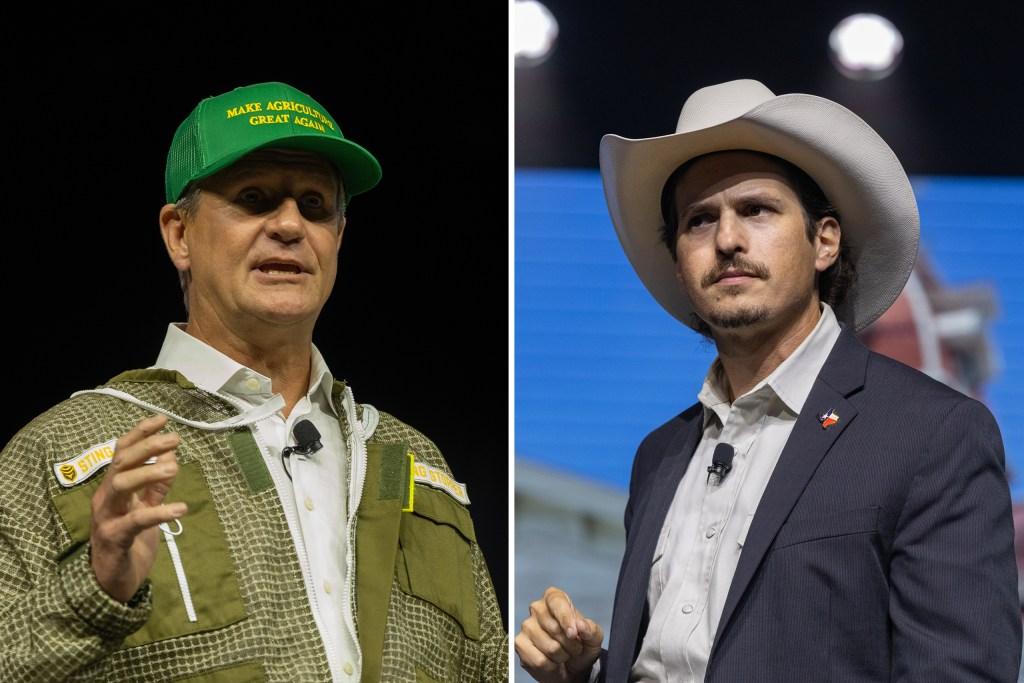
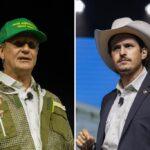
In the comptroller race, Democratic state Senator Sarah Eckhardt raised $113,000—just five percent of Acting Comptroller Kelly Hancock’s total and one-tenth of former Republican state Senator Don Huffines’ amount. Meanwhile, in the agriculture commissioner race, Democrat Clayton Tucker gathered $108,000, while incumbent Sid Miller raised nearly $291,000, with his Republican challenger, Nate Sheets, bringing in over $506,000.
Democratic strategist Matt Angle noted that the fundraising disparity is not unexpected. He pointed out that the challenge for Democrats is not merely to match or exceed Republican fundraising but to garner enough support to demonstrate viable alternatives to the current leadership. He stated, “We don’t have to be stuck with burnt-out and sold-out Greg Abbott and Dan Patrick.”
As the March 3 primary approaches, there is potential for Democrats to ramp up their fundraising efforts following the nomination process. Candidates in lower-tier races may also benefit from the momentum created by the U.S. Senate race, where both Talarico and U.S. Representative Jasmine Crockett have shown strong fundraising capabilities and competitive polling against their Republican opponents.
Despite having well-funded candidates at the top of the ticket in recent years, Democrats have struggled to break their three-decade losing streak in statewide contests. Notable past candidates like former U.S. Representative Colin Allred and Beto O’Rourke, despite raising substantial funds, were unable to secure victories against their Republican opponents in close races.