







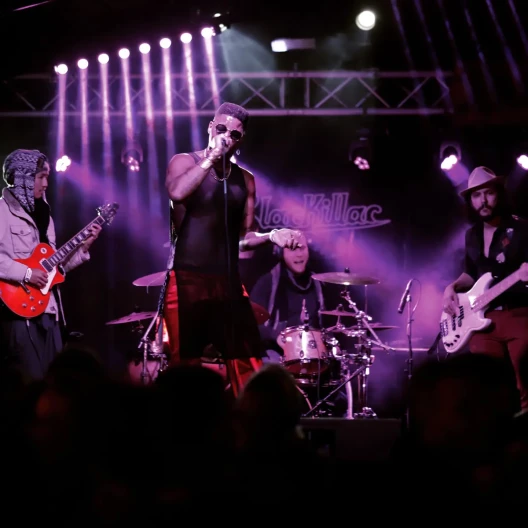
The recent rollout of the Live Music Fund grants in Austin has sparked confusion and frustration among local musicians, as showcased in a January 2025 meeting of the Austin Music Commission. Theo Love, an Austin musician and member of the advisory panel for the nonprofit Austin Texas Musicians, shared feedback from a survey about the city’s grant program. Comments ranged from disappointment that funds were awarded to musicians who had not performed in years to praise for the financial assistance that allowed for crucial equipment purchases. However, the overall sentiment reflected significant dissatisfaction with the process.
Love articulated the widespread concerns regarding the grant distribution during the virtual meeting, noting a recurring theme of mistrust surrounding the selection process. Questions arose about the criteria used to allocate funds, with speculations about biases related to diversity, equity, and inclusion (DEI), personal income, or political favoritism. A detailed examination of the 2024 grant applications, city policies, and related communications indicated that the selection process was influenced by three main factors: priorities, scoring metrics, and a general atmosphere of confusion.
Shifting Priorities and Scoring Metrics
The city’s staff emphasized diversity in their prioritization but opted against direct inquiries about race, instead focusing on related topics such as healthcare access, financial stability, and residency in economically disadvantaged areas. The scoring system itself allocated half of the total points to equity measures, with 65 out of 130 points reserved for factors such as limited access to services and overall accessibility.
Compounding the issue was a lack of understanding among musicians regarding the application grading system. Many believed their musical experience would carry more weight than it did and were unclear about the documentation required to support their applications. Furthermore, numerous artists did not receive their scores, as city staff claimed they lacked access to this critical feedback, leaving them in the dark about how to improve their chances in future applications.
In March, the city is set to announce the recipients of $7 million in Live Music Fund grants, with over 800 applications submitted and 380 expected to be awarded. City officials have stated their intention to enhance transparency this time around, with plans to include applicants’ scores in notification letters and to produce an explanatory video about the scoring process.
Historical Context and Recent Changes
For 45 years, the city has utilized Hotel Occupancy Taxes to fund grants for various cultural artists, generating more than $20 million annually for the arts. The Live Music Fund, established in 2019, aimed to provide financial support specifically for musicians, independent promoters, and live music venues, allowing them to cover expenses such as band payments, album recordings, and venue rentals.
However, the COVID-19 pandemic significantly delayed the implementation of this program, forcing the city to distribute emergency funds to support artists during a time of widespread financial distress. Once the pandemic subsided, the Live Music Fund began to take shape, overseen by the Economic Development Department, which enlisted the Long Center to manage the application scoring and data oversight.
In 2023, $3.5 million was awarded to 368 out of 660 applicants, with grants ranging from $5,000 to $10,000. Love was among the recipients, using his grant to promote his music and support fellow artists. Despite his success, many musicians expressed dissatisfaction with the complexity of the application process, which they felt was more focused on tourism and events than on supporting artistic creation.
Reactions to the 2024 Grant Cycle
As the 2024 grant results were released, a wave of discontent swept through the artistic community. Many established musicians were baffled by their exclusion from funding, feeling penalized for having adequate healthcare or financial resources. The scoring system contributed to this discontent; of the 130 available points, a significant portion was based on local economic impact and previous funding history, leaving many applicants feeling overlooked.
The application process relied heavily on automation, with initial scores generated by a computer program that reviewed submitted materials. Reviewers then verified these applications against the evidence provided, such as proof of accessibility features. If applicants failed to supply adequate documentation, points were deducted, leading to further frustration when the final results were revealed.
Despite not securing a grant in 2024, Love reflected on his experiences and recognized areas for improvement, particularly regarding accessibility and audience diversity. Ruby Dice, a country soul musician who won a $30,000 grant, reported that her understanding of the application process had evolved, allowing her to create a proposal that resonated with the local music scene and led to the production of a documentary focused on Austin’s musical landscape.
Looking Forward
In the wake of the recent grant cycle, many musicians expressed ongoing frustration with the lack of transparency in the application process. Feedback from artists indicated a strong desire to understand their scores and the reasoning behind them. City officials acknowledged these concerns, promising that applicants could request their scores and feedback.
As of late 2024, the Live Music Fund continued to be a contentious issue. An audit revealed that the former head of the Economic Development Department had approved grants for ineligible arts groups, prompting the city to create a new department dedicated to cultural arts and live music grants. The department is currently undergoing a “creative reset,” aimed at addressing funding distribution challenges and incorporating community feedback into the application process.
For the 2025 grant cycle, the application criteria have shifted to focus less on equity-related questions and more on applicants’ experience and local economic contributions. Although the funding available will not meet the demand, officials express optimism about the evolving process. As the landscape of artistic funding continues to transform, there is a collective hope that the system will become more equitable and accessible for all musicians in Austin.