









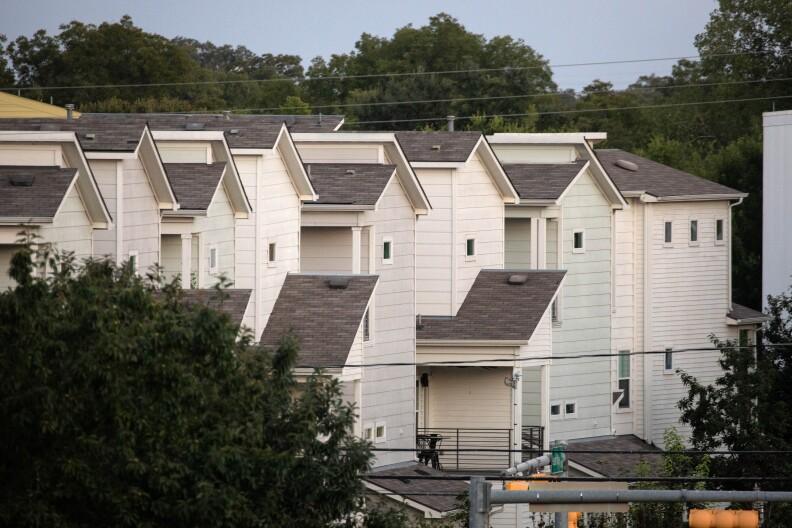
City officials in Austin are set to explore potential changes to zoning regulations in an effort to facilitate the construction of smaller, more affordable housing options. This initiative aims to introduce new zoning districts that would support developments such as townhomes, cottage courts, and small-scale multi-unit buildings, collectively known as “missing middle housing.”
On Thursday, the Austin City Council approved a resolution directing city staff to investigate how these zoning changes could increase the availability of affordable housing in the market. Additionally, the resolution encourages the examination of mixed-use developments that integrate both residential and commercial spaces.
Council Member Paige Ellis, the resolution’s author, emphasized the importance of expanding housing options to foster walkable, transit-oriented communities. “Over the past 40 years, less than 1% of the housing built in Austin has been ‘missing middle,’ and I think they are really good uses of property,” Ellis stated. “I believe they create walkable neighborhoods and are more environmentally sustainable than some of the other options.”
This initiative is informed by a January study highlighting that Austin’s housing inventory is predominantly limited to single-family homes and large apartment complexes. The current land development code, established in 1984, primarily accommodates these two types of housing.
The proposed zoning changes aim to provide developers with the flexibility to construct diverse housing types that meet various needs, such as multi-generational living or options for those looking to downsize. This could enhance homeownership opportunities for families who find single-family homes financially out of reach. Furthermore, the study suggests that these changes could improve access to parks, schools, and employment.
Many residents have expressed support for the introduction of varied housing options. Judah Rice, a District 3 resident, argued that such diversity would enable individuals to live closer to their workplaces and leisure activities, facilitating commutes by walking or biking. “Because neighborhoods are more than a sum of their buildings,” Rice remarked. “A neighborhood is made up of people and families, and right now those people and families cannot afford to live in our single-family exclusive housing.”
However, not all community members are in favor of the proposed changes. Bruce Greiner, a resident of Northwest Austin, voiced his opposition, describing the potential zoning reform as a “direct attack on the character and nature” of single-family neighborhoods. “Affordable housing can be encouraged without destroying single-family neighborhoods,” Greiner argued, emphasizing the value many place on living in areas designed for single-family homes with safe streets and yards.
The community’s strong opposition has resulted in a gradual approach to updates in the land development code over recent years. A significant overhaul attempt in 2018 was halted after residents successfully sued the city. In 2023, the city amended regulations to permit multiple homes on a single lot, and in 2024, it reduced the minimum land requirement for building houses. New rules have also eliminated parking mandates for residential projects and allowed for denser, taller apartment constructions in exchange for affordable housing units.
Council Member José Velásquez noted that these zoning changes could serve as a valuable tool in addressing the city’s housing challenges. “This is a great opportunity to highlight how duplexes, quadruplexes, townhomes, and row homes all give people a more affordable, transit-oriented part of Austin,” Velásquez stated. “No single zoning change will solve Austin’s housing and affordability issues, but our goal as a city is to add more tools to the toolbox to create more housing options.”
City staff are expected to present recommendations for code updates by next March, with opportunities for public input before any changes are put into effect.