





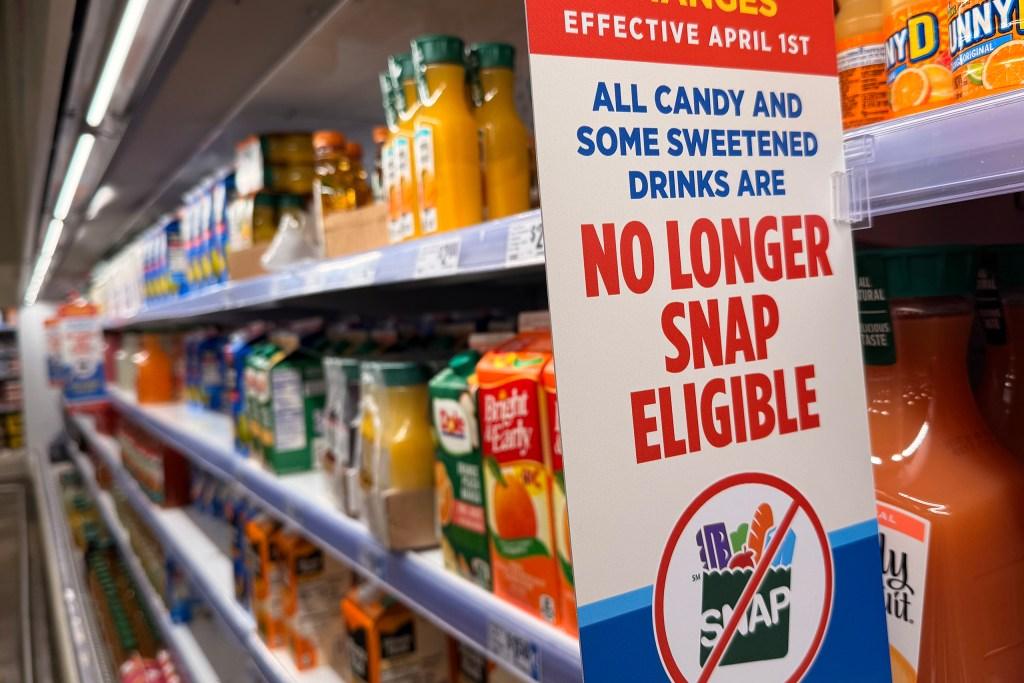
While refueling at a gas station recently, Janell Britton experienced a sudden darkening of her vision and excessive sweating, symptoms of her hypoglycemia, a condition defined by consistently low blood sugar levels. With cash in hand spent on gas, Britton resorted to her SNAP card to buy soda, the quickest source of sugar to prevent her from passing out.
However, new restrictions on SNAP purchases mean this method of rapid relief is no longer an option.
Effective April 1, Texans enrolled in the Supplemental Nutrition Assistance Program (SNAP), commonly referred to as food stamps, are prohibited from using their benefits to buy sweetened drinks and candies. While health professionals agree that individuals with diabetes and hypoglycemia should focus on nutritious foods to manage their conditions, many argue that the new SNAP limitations hinder their ability to quickly access necessary sugar during critical moments. Critics claim these restrictions create an unfair disparity, as wealthier individuals with similar health issues can still purchase these items without difficulty.
“By restricting certain foods, it inadvertently sets people such as myself up for an emergency,” Britton, a substitute teacher in Everman, near Fort Worth, stated. “This is a life-threatening situation and can end badly. It may sound good on paper, but in practice, it is not a good thing.”
Numerous diabetics and their families voiced similar concerns on Texas Health and Human Services’ Facebook page following the announcement of the SNAP changes. Comments included: “Diabetics with hypoglycemia require sugar like in candies and juices to avoid going into a coma,” and “My husband drops low a lot, we can’t afford sodas or juices.”
Supporters of Senate Bill 379, which introduced these SNAP restrictions, claim the legislation aims to reduce the intake of unhealthy foods. Senator Mayes Middleton, the Galveston Republican who sponsored the bill, argued that taxpayers should not fund the purchase of sweetened beverages and candies that exacerbate health issues among SNAP recipients, leading to increased healthcare costs.
Despite attempts to seek comments from Middleton and the chairs of the Senate and House health committees, no responses were received regarding the implications of the SNAP restrictions on diabetics and hypoglycemics.
Hypoglycemia and diabetes stem from complications in the body’s insulin production, a hormone crucial for regulating blood sugar levels. Individuals with hypoglycemia face dangerously low glucose levels, while those with diabetes may experience drops due to their insulin medication. Severe drops in glucose can lead to diabetic coma, a critical condition that results in unconsciousness.
Since her diagnosis a year and a half ago, Britton has experienced hypoglycemic episodes approximately every two months.
Britton transitioned from being a stay-at-home mom for 25 years to working after an unexpected divorce. Following an injury while loading trucks, she applied for SNAP benefits. She relied on her benefits to buy soda and candies for her emergency pack, essential for managing unpredictable hypoglycemic episodes.
“I’m having to put the money that I normally put toward paying my bills … I’m now going to have to set aside an amount just for making sure that I have hard candies and soda available,” Britton explained.
As of March, SNAP serves about 3.1 million low-income residents in Texas, including approximately 1.5 million children. Eligibility for SNAP requires individuals to earn $2,152 a month or less, while a family of four must have an income of $4,421 a month or less. Texas households receive an average monthly benefit of nearly $400.
While excessive consumption of candy and sweetened drinks is linked to obesity and type 2 diabetes, factors like healthcare access, living conditions, education, and income play significant roles in health outcomes. Experts note that many impoverished individuals with type 2 diabetes rely on SNAP. However, officials from the Texas Health and Human Services Commission do not gather health information from clients.
Chris Carmona, Chair of the Texas Diabetes Council, stated that restricting SNAP purchases of candy and sugary drinks is a pragmatic public health initiative, particularly in light of rising obesity and type 2 diabetes rates.
“The important point is that there are effective ways to treat low blood sugar that do not depend on sugary sodas or candy,” Carmona asserted.
For those accustomed to using candies or sugary beverages to stabilize blood sugar, alternatives like fruit juice, honey, or glucose tablets are recommended by Sarah Williams-Blangero, Chair of the South Texas Diabetes and Obesity Institute. However, Britton prefers soda because it is liquid and absorbs into the body more rapidly.
“At that moment, when you feel shaky or like you might pass out, you want something that works fast and is easy to take — and for many people, that’s soda,” Britton remarked.
Many SNAP recipients reside in food deserts, limiting their access to quick alternatives for managing hypoglycemic episodes or fresh produce. Julie Zuniga, a researcher and nursing professor at the University of Texas at Austin, argues that instead of implementing purchase restrictions, the state should focus on improving food accessibility and enhancing education on healthy eating practices.
“Sometimes we’re at a loss on how to eat well and how to feed our bodies without having very much money. If we look, what [SNAP enrollees] are buying isn’t much different than people who don’t have SNAP,” Zuniga noted. “I don’t think that just taking this away will change behaviors. There are ways to improve people’s diets that are more collaborative and compassionate.”
Nancy Guillet, another nursing professor at UT, works at an Austin charity clinic offering diabetes management classes for low-income individuals. She pointed out that many patients lack basic knowledge about diabetes, stressing the need for education regarding the condition, medications, and blood sugar monitoring.
“Let’s say my parents live in poverty, and they have to work day and night … just to pay the rent. Healthy nutrition is not there,” Guillet explained. “People in poverty, they have everything against them to succeed.”
The recent restrictions are part of a series of changes to SNAP instigated by Republican-backed legislation. The One Big Beautiful Bill Act, effective July, mandates that able-bodied individuals aged 18 to 65 without dependents must work or participate in a work program for at least 80 hours monthly to receive benefits. The bill also restricts SNAP eligibility to certain lawful permanent residents and U.S. citizens, while imposing penalties on states that fail to accurately manage overpayments or underpayments to recipients.
The Texas Health and Human Services Commission is currently surveying SNAP recipients to assess the impact of the new restrictions on shopping and eating habits.
Celia Cole, CEO of Feeding Texas, the state’s organization for food banks, emphasized the critical question of whether these restrictions will genuinely decrease the consumption of sodas and candy or simply shift the burden away from SNAP purchases.
“Bringing about behavioral change is hard,” Cole commented. “Nutrition education and evidence-based behavioral change interventions that help people understand what foods are best for their health should be part of the solution as well.”